Best Hookah Dive System Options for Safe, Portable Underwater Breathing
Exploring underwater environments with a hookah dive system offers an accessible alternative to traditional scuba setups. This guide highlights five prominent, portable options that balance performance, reliability, and ease of use for American divers and hobbyists. Each product blends constant air supply with user-friendly features, helping divers stay submerged longer without heavy tanks. Below, compare key capabilities, including depth limits, battery life, and multi-diver support, to help you choose the right hookah system for your needs.
| Product | Diving Depth | Air Flow / Time | Diver Support | Weight |
|---|---|---|---|---|
| TUDIVING Professional Tankless Diving System | Up to 18 m | 65 L/min | 2 Divers | 39 lb |
| HQLYZJDV Scuba Dive System (2 Divers) | Single up to 18 m; Dual up to 5 m | 60 L/min | 2 Divers | Varies by model |
| TUDIVING Upgraded Underwater Breathing Device | Up to 12 m | 60 L/min | 1–2 Divers | ~24.2 lb |
| HQLYZJDV Scuba Diving System (Dual, 60 ft Hose) | Up to 18 m (single) | 60 L/min | 2 Divers | Varies by setup |
| THIRD LUNG The Scout Diving System | Dive without tanks | Not specified | 2 Divers | Compact |
TUDIVING Professional Tankless System

The TUDIVING Professional Tankless Diving System combines portability with a robust regulator setup. It features a low battery alarm and a flashing indicator when power drops below 20%, helping divers plan air use during deeper or longer sessions. With a maximum depth around 18 meters and a rated air flow of 65 liters per minute, it supports smooth breathing and steady performance in typical recreational environments. The system weighs about 39 pounds, making it manageable for transport to offshore or freshwater sites. Built for durability, it includes waterproof controls and components designed to resist wave impact.
Key specifications include quick visual battery status, a 7–10 hour operational window on a full charge, and a design that emphasizes portability without sacrificing safety. The device is suitable for two divers for shared exploration, and the battery warnings help maintain situational awareness during dives. This unit is well-suited for recreational adventures where pool-like or shallow-water dives precede more ambitious outings.
HQLYZJDV Scuba Dive System (Two Divers)

This upgraded system from HQLYZJDV is designed to deliver a reliable air supply from the surface through a durable compressor and air line. It supports two divers with a continuous flow of oxygen, eliminating the need for heavy cylinders. The unit emphasizes safety with a fully waterproof tumbler design, an intake pipe that prevents water ingress, and a clear power display that helps monitor battery levels and overall performance. Depth capability reaches up to 18 meters for one diver, while dual-diver operation covers broader exploration, suitable for novices and seasoned divers alike. The compact, portable design is ideal for shore-based trips or boat excursions.
TUDIVING Upgraded Underwater Breathing Device
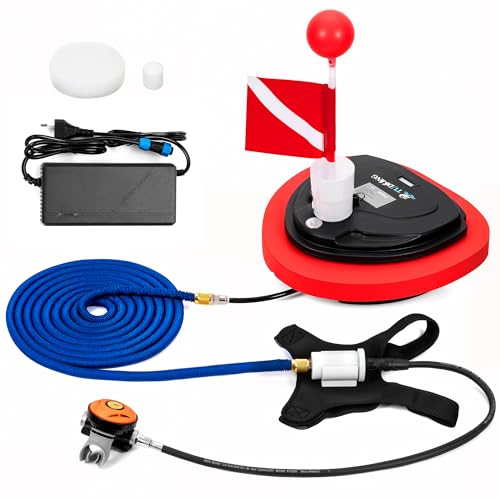
This upgraded underwater breathing device from TUDIVING offers an extended battery life with a 52,500 mAh capacity, supporting up to 3.5 hours of continuous operation. It includes a low battery alarm that triggers a bottom-mounted flash when power dips below 20%, enhancing safety during longer sessions. The tankless system allows up to 12 meters of depth and 60 L/min flow for steady breathing. At about 24.2 pounds, the unit remains relatively portable for a hookah setup and is designed for easy transport to outdoor diving locations. It is suitable for divers seeking longer solo sessions or family-friendly aquatic outings.
HQLYZJDV Scuba Diving System (Dual, 60 ft Hose)

This dual-diver system from HQLYZJDV delivers a robust air supply with a 60 L/min rate through a 60-foot hose. It supports two divers with an adaptable depth profile and a waterproof design aimed at preventing water intrusion. The device integrates a clear display for monitoring battery and system status, making it suitable for both novice and professional divers who require reliable performance during extended underwater sessions. The emphasis on safety, portability, and straightforward operation makes it a practical choice for group underwater exploration or guided dives.
THIRD LUNG The Scout Diving System

The Scout from THIRD LUNG is designed for hours of underwater enjoyment with a two-diver setup that enables diving without traditional tanks. While specific performance metrics are not listed, the system emphasizes ease of use, portability, and the family-friendly appeal of non-tank diving extensions. Its compact form factor supports quick deployment for shallow recreational sites or guided underwater outings, offering a practical alternative for divers seeking minimal equipment while exploring underwater habitats and aquatic life in a relaxed, low-stress manner.
Buying Guide: Key Purchase Considerations For Hookah Dive Systems
- Air supply reliability: Look for systems with continuous air flow, clear battery indicators, and alarms for low power to minimize unexpected air depletion during dives.
- Depth and duration: Compare maximum depth ratings and expected dive times. Tankless designs typically offer lengths of 2–5 hours depending on battery capacity and air flow.
- Portability and weight: Heavier units require transport planning; lighter, compact models are advantageous for on-boat or shore-based trips.
- Safety features: Waterproof components, anti-water ingress designs, splash-proof controls, and fail-safes (e.g., automatic shutdown or indicators) are important for user safety.
- Multi-diver capability: If you dive with a buddy, choose systems that support two divers with a stable air supply to avoid reliance on alternative air sources.
- Maintenance and durability: Look for robust construction, corrosion-resistant materials, and easy access to replacement batteries or parts.
- Portability vs. performance trade-offs: Higher air flow and longer run times may come with increased weight or price. Match capabilities to your typical diving environment.
- Regulatory and travel considerations: Some units are designed to be airline-friendly or easily transported, which is beneficial for travel-heavy hobbyists.
- Use case scenarios: For beginners, a lighter, simpler system with straightforward operation is preferable. For enthusiasts, models with higher flow rates and longer endurance may be more suitable.
In sum, choosing the right hookah dive system requires aligning depth, air delivery, and battery life with your typical dive profiles. Consider whether you will dive solo or with a partner, the regularity of trips, and how much gear you’re willing to transport. The selected models above provide a range of options from compact, single-user devices to more capable dual-diver configurations, enabling informed decisions for safe, extended underwater exploration.