Best Kids’ Mailboxes for Classroom Use
Finding the right mailbox for a classroom setting supports literacy, routine, and student engagement. The following selections focus on durability, kid-friendly design, and practical features for daily mail-related activities, role-play, and classroom organization. Each option emphasizes safe materials, easy access for young readers, and opportunities for imaginative play or real-world message exchange. The list below highlights five standout choices that work well in American classrooms and play spaces.
| Product | Brand | Best Use | Notable Feature |
|---|---|---|---|
| Boley Educational Mailbox Set | Boley | Early literacy and pretend play | 16-piece set with letters, envelopes, postcards, stamp sheet, wipe-clean pens |
| Children’s Factory Post Mailbox | Children’s Factory | Classroom role-play and dramatic play | Front mail slot and rear opening for mail retrieval |
| S&S Worldwide Unfinished Wood Mailbox | S&S Worldwide | DIY decorating & crafts | Unfinished wood; ready to decorate with paint or markers |
| TOPPERFUN Mini Tin Mailbox | TOPPERFUN | Decorative use & small-group activities | Tinplate, versatile as present box or classroom prop |
| 4E’s Novelty Mini Mailbox | 4E’s Novelty | Valentines & small items exchange | 5 x 3 inches; swinging flag; DIY craft potential |
Boley Educational Mailbox Set for Toddlers and Kids
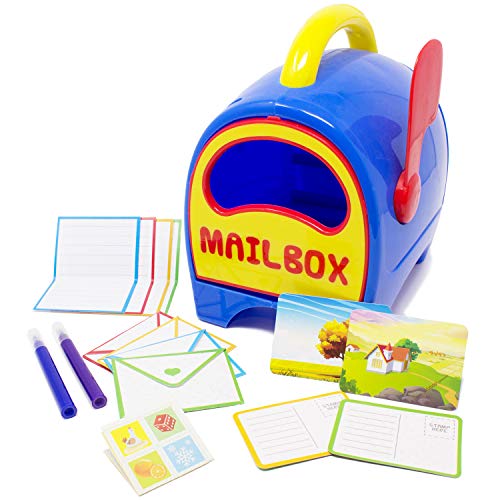
The Boley Educational Mailbox Playset offers a comprehensive 16-piece kit designed to teach letters, writing, and mail concepts through pretend play. Includes a mailbox, four envelopes, four letters, four postcards, a stamp sheet, and two wipe-clean pens. This set supports handwriting practice, reading activities, and sequencing as children simulate sending and receiving mail. The playful elements foster imaginative interaction and cognitive skill development.
Children’s Factory Post Mailbox for Outside and Classroom Use
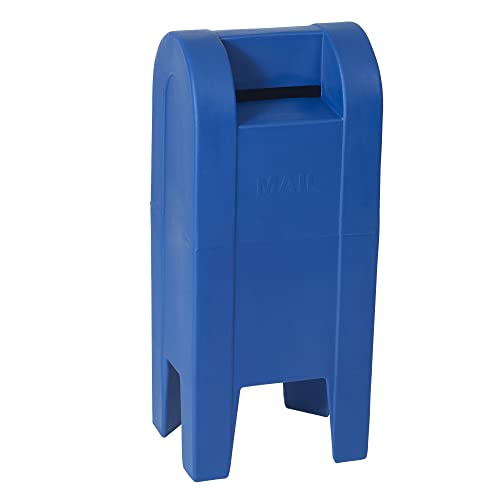
Designed for classrooms and playhouses, this blue mailbox supports year-round mail play. The unit features a front slot for sending mail and a rear opening to retrieve messages, encouraging social interaction and imaginative play. It’s suitable for children ages 4-7 and aligns well with early literacy and cooperative activities, making it a durable option for group centers and dramatic play corners.
S&S Worldwide Unfinished Wood Letter/Mail Box

This unfinished wood mailbox is a prime craft project. It comes fully assembled and ready for decorating with paint, stain, markers, or natural finishes. The sturdy wooden construction includes sandpaper and finishing tips, making it ideal for art centers or as a customizable keepsake project that doubles as a visual display piece in a classroom setting.
TOPPERFUN Mini Tin Mailbox

With a compact 6×4-inch tinbox design, this mailbox is suited for small-group activities, classroom corners, or decorative use. Made from tinplate, it offers stable construction with a stylish white finish. It can serve as a present box, storage container, or a role-play prop in classroom scenarios, helping students engage in organized, creative play.
TOPPERFUN Mini Tin Mailbox – Second Option

This second TOPPERFUN tin mailbox offers another compact option for classroom role-play and DIY handcrafts. The tinplate construction supports long-term use in play areas, with an emphasis on easy handling for young students as they simulate mail delivery or seasonal crafts in an organized, interactive environment.
4E’s Novelty Mini Mailbox

At 5 x 3 inches, this tiny mailbox is ideal for bedroom doors, valentines crafts, or classroom keepsakes. Crafted from durable tinplate, it supports pretend play scenarios and offers a swinging flag and accessible lid, encouraging children to exchange notes, cards, or small tokens as part of a themed classroom activity.
Buying Guide: Key Purchase Considerations
- Durability and materials: For classroom use, opt for sturdy construction (wood, tinplate, or durable plastics) that withstand daily handling and occasional mishaps.
- Age appropriateness: Choose sizes and features suited to your students’ age range; larger mailboxes are easier for younger children to handle.
- Educational value: Look for sets that promote literacy (letters, envelopes, stamps) or dramatic play (front and rear mail slots, act-out roles).
- Decorative vs. functional: Some options are ideal for display and crafts, while others emphasize practical mail sorting and storage.
- Storage capacity: Consider the number of slots or the volume of mail pieces your activities will require—more slots support larger groups.
- Maintenance: Wipe-clean surfaces and simple assembly help classroom staff manage daily use with minimal effort.
- Versatility: Tin mailboxes can double as present boxes or decorative storage; unfinished wood invites customization, enhancing student engagement.
- Safety: Ensure finishes are non-toxic and materials do not contain sharp edges that could pose risks to younger students.
In evaluating options, teachers may weigh the balance between ready-to-use play sets (with envelopes and cards) and craft-ready pieces that students can decorate themselves. For literacy routines, a mailbox with included letters and postcards supports consistent practice. For rooms emphasizing creativity, unfinished wood or tin options provide extensive art and design opportunities. Finally, consider how the mailbox integrates with a larger classroom mail system or classroom management activities to maximize instructional value.