Best Learning Clocks for Toddlers: Fun Ways to Tell Time and Sleep Better
Finding the right clock helps toddlers learn to tell time while keeping bedtime routines calm. This guide compares top-rated learning clocks designed for young children, emphasizing ease of use, interactive features, and sleep aids. Each option below supports hands-on practice, encourages independence, and offers kid-friendly designs that fit classrooms or bedrooms.
The following summary table highlights the selected products, focusing on how each device supports time-telling skills, quiet operation, and child-friendly storytelling features.
| Product | Brand | Key Benefit | Sleep Feature |
|---|---|---|---|
| BEST LEARNING Learning Clock | BEST LEARNING | Interactive tell-time practice with quiz mode | Sleep Mode with 10 classical melodies |
| Oyster&Pop Learning Clock | Oyster&Pop | Labelled minute marks and hands for clarity | Silent operation; classroom-friendly |
| Learning Resources Big Time Mini Clock | Learning Resources | Hands-on time skills with hidden gears | Quiet classroom use (no sleep mode) |
| Learning Resources Tock The Learning Clock Pink | Learning Resources | Analog and digital time with interactive play | Dabbles with multiple modes (song and quiz) |
| V-Opitos Clock Learning Musical Toy | V-Opitos | Seven learning sections; multilingual options | Music cues to engage yet steer learning |
Best Learning Clock For Toddlers: Interactive Time Lessons

The BEST LEARNING Learning Clock emphasizes award-winning design and engaging play to teach time. It features a bright yellow hour hand and a red minute hand, allowing children to align the hands with the clock face before triggering a reading of the time. In Quiz Mode, the clock challenges children to read times, reinforcing accuracy through interactive prompts. A Sleep Mode option activates classical music and a night-light-like function with multiple timer choices, supporting calmer bedtimes and a predictable routine.
Oyster&Pop Learning Clock: Quiet Time, Clear Time

Designed by educators and parents, the Oyster&Pop Learning Clock prioritizes clarity and calm learning. Its 10-inch wall design presents labelled minute hands and quarters, helping kids grasp fractions of an hour. The rainbow-inspired face adds visual appeal, supporting memory through color-coding. It also offers a free e-book with classroom and home activities, making it a practical tool for both classrooms and bedrooms. The clock operates quietly, making it suitable for study spaces and nighttime learning alike.
Learning Resources Big Time Mini Clock: Classroom Ready

The Big Time Mini Clock from Learning Resources delivers hands-on time practice with hidden gears that reveal the internal mechanics as users manipulate the clock hands. Color-coded hour and minute hands align with corresponding markings, reinforcing the associations between positions on the dial and actual times. This model is well-suited for small-group activities and independent practice in early elementary settings, where tactile learning is valued and quiet operation is appreciated in shared spaces.
Learning Resources Tock The Learning Clock Pink
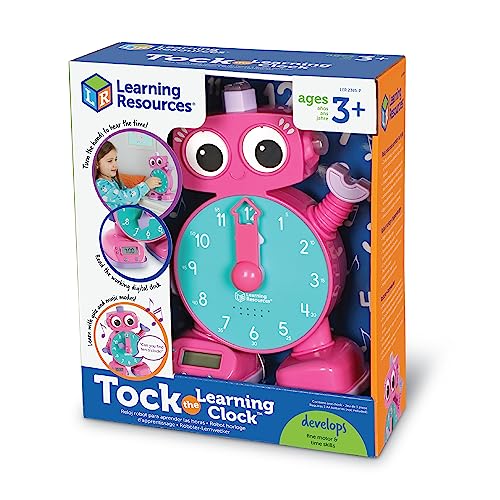
Tock The Learning Clock combines analog and digital displays to teach time through interactive play. Modes include music and quiz, encouraging kids to match hands to digital time and respond to prompts. The OK to WAKE feature provides a green light cue, helping parents shape healthy wake-up routines while gradually building independence in morning tasks. This clock appeals to homes and classrooms that emphasize multi-modal learning and routine-building.
V-Opitos Clock Learning Musical Toy

The V-Opitos clock is a multi-function learning toy designed for travel and home use. It includes seven sections: time learning, quizzes, two-volume controls, bilingual options, music, repetition, and numbers/shapes. Its portable design and interactive choices keep children engaged across different play modes, supporting both time-telling skills and cognitive development. The clock lights up during play, inviting children to progress through each learning stage while maintaining a playful, low-pressure environment.
Buying Guide: Key Purchase Considerations
When choosing a toddler clock, consider how a device aligns with learning goals and family routines. Look for simplicity in setup and operation, color-coding to reinforce time concepts, and interactive modes that match the child’s learning pace. Important factors include:
- Time-telling methods: Analog emphasis helps children understand the hour and minute hands, while dual displays (analog and digital) can reinforce comprehension.
- Engagement and interactivity: Quizzes, melodies, and reward systems motivate practice without causing frustration.
- Sleep and wake features: Sleep modes, gentle lights, and OK-to-Wake cues support consistent bedtimes and morning routines.
- Sound levels: Quiet operation is essential in bedrooms and study areas; silent or low-noise designs reduce distraction.
- Durability and age appropriateness: Sturdy builds with large, easy-to-grasp hands are ideal for toddlers, with safety-minded design for younger users.
- Maintenance and batteries: Battery-powered or rechargeable options influence long-term use and portability; consider clear battery indicators and easy access.
From an educational standpoint, clocks that offer guided practice, visual cues, and built-in assessment help caregivers monitor progress without relying on external materials. For households seeking bedtime support, clocks with sleep modes or soothing lights provide a practical balance between learning and rest. In classrooms, models with teacher-friendly features—such as clear labels, color-coded components, and durable construction—support small-group instruction and independent practice. Evaluate which combination of features best matches your child’s learning style and daily schedule to maximize effectiveness over time.