Best Learning Materials for Toddlers: Engaging Books and Toys
Finding effective learning materials for toddlers means balancing fun with skill-building. The right mix supports language, numeracy, fine motor control, and social-emotional growth. This guide highlights top picks that combine play with early learning themes, so parents and caregivers can choose resources that fit their child’s interests and development pace.
| Product | Brand | Key Focus | Age Range |
|---|---|---|---|
| Huijing Montessori Preschool Learning Activities Busy Book | Huijing | Fine motor, writing, color perception, logic | 3+ |
| Imitation Book: Learn To Talk Board Book | Twin Cities Speech Therapy Publishing | Early language, speech development | 0-4 |
| Hadley Designs 16 Educational Posters | Hadley Designs | Language, reading, daily skills | 3-7 |
| Airbition Talking Flash Cards | Airbition | Vocabulary, speech therapy, autism support | 1-4 |
| Dailyfunn Montessori Color & Shape Sorting Box | D Dailyfunn | Color & shape recognition, fine motor | 1-3 |
Huijing Montessori Busy Book: Learning Through Play
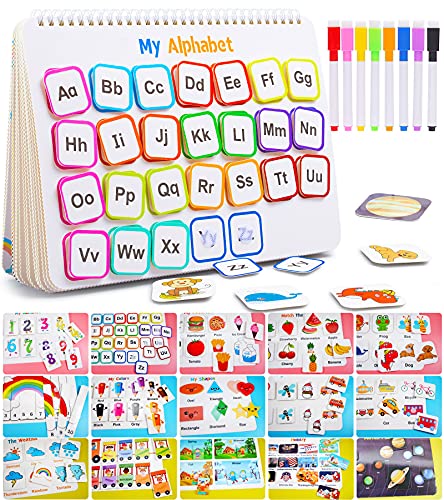
The Huijing Busy Book emphasizes learning through hands-on activities in a single binder. It targets thinking, color perception, and basic logic using 15 themes, plus 14 drawing and writing pages with eight colored pens. Designed for children over three years old, the book supports multi-sensory experiences that develop fine motor skills, verbal abilities, and memory. Parents can actively participate to extend engagement and reinforce concepts, making it a versatile tool for homeschoolers and preschool classrooms alike.
Imitation Book: Learn To Talk Board Book

This interactive board book is written with input from speech therapists to support early language development. It focuses on foundational speaking skills, modeling common phrases, sounds, and word structures that toddlers can imitate. The compact format makes it ideal for car trips, waiting rooms, and daily routines, while its therapist-backed approach provides structure for parents seeking targeted language practice.
Hadley Designs Educational Posters

These 16 large educational posters are designed for preschoolers and early elementary learners. With waterproof, tear-resistant materials and 11×17 inch dimensions, they’re built for classroom use or home study. The posters cover a broad range of topics, including the alphabet, days of the week, months, geography, weather, basic math concepts, and emotions. Laminated surfaces allow writing with markers for repeated practice, supporting visual learning and daily repetition in a fun, interactive way.
Airbition Talking Flash Cards: 224 Words

This talking flash card set offers 224 colorful illustrations with sounds to aid vocabulary growth. It supports early literacy and is designed to be useful for children with autism and those undergoing speech therapy. A user-friendly reader provides standard American pronunciation, animal sounds, and a repeat option, with a five-level volume control. The device encourages independent exploration while offering parent-guided opportunities for language practice.
Dailyfunn Montessori Color & Shape Sorting Box
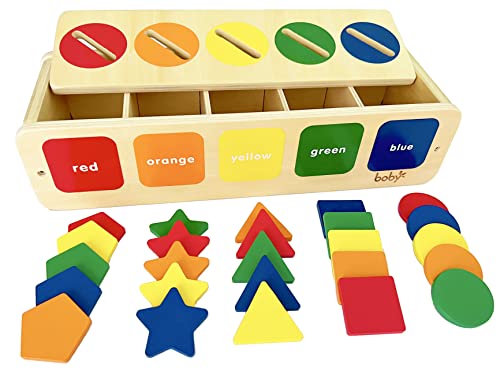
This color and shape sorting kit includes 25 solid wood pieces along with 13 answer cards for an advanced mode. Rooted in Montessori principles, it encourages independent play and hands-on exploration. Children practice shape and color recognition, improve fine motor precision, and build confidence through guided tasks and self-directed challenges. It’s a durable, kid-friendly option for home or classroom settings, designed to grow with a child’s abilities.
Buying Guide: Key Purchase Considerations And Comparisons
When selecting toddler learning materials, consider the child’s interests, developmental stage, and family routines. The following factors help compare options across categories like books, flash cards, posters, and hands-on toys.
- Developmental targets: Identify whether the resource emphasizes language, early math, motor skills, or social-emotional learning. For example, language-focused tools may pair well with reading activities, while Montessori-inspired items support independent play and practical life skills.
- Age appropriateness: Check recommended age ranges and look for materials that can adapt as a child grows. Some items are ideal for 1-3 year olds, while others are designed for 3-5 or older.
- Durability and materials: For toddlers, sturdy construction and non-toxic materials matter. Laminated posters, wooden pieces, and color-fast inks tend to withstand daily use better than fragile alternatives.
- Multi-sensory options: Resources that combine visuals, sounds, and touch (e.g., talking cards, tracing books, and busy books) tend to enhance engagement and retention.
- Parental involvement: Some products encourage caregiver participation, which can strengthen language exposure, reading routines, and guided play. Decide whether you want activities that require active supervision or more autonomous materials.
- Portability and setup: Consider the ease of transporting materials for travel or quiet-time use. Compact busy books and pocket flash cards fit well into bags and car trips.
- Learning progression: Look for sets offering escalating challenges, such as additional themes, more complex tracing, or expanded vocabulary, to avoid stalling a child’s growth.
- Compatibility with home routines: Align products with daily activities—mealtime language, bedtime stories, or structured learning sessions—to maximize consistency and habit formation.
In practice, a mix that combines visual storytelling (books and posters), language practice (speech-focused tools and cards), and hands-on manipulation (sorting boxes and busy books) provides a well-rounded early-learning environment. For families with diverse needs, such as toddlers with speech delays or autism, targeted tools like narrative boards and sensory-friendly devices can offer meaningful support while remaining engaging and age-appropriate.