Best Learning Tablets for Toddlers Aged 2
Finding the right learning tablet for a curious toddler can support early literacy, numbers, shapes, and language skills while keeping playtime engaging. The options below focus on age-appropriate, educational features, safety, and user-friendly interfaces. Each entry highlights the core learning benefits and key considerations for families evaluating tablets for two-year-olds and older toddlers who are transitioning to more independent play.
Summary of selected products
| Product | Brand | Key Learning Focus | Language Modes |
|---|---|---|---|
| Peacurh Trilingual Learning Toy Tablet | Peacurh | Vocabulary, cognition, pronunciation | English, Spanish, French |
| LeapFrog LeapPad Academy | LeapFrog | Educational apps, guided learning | English (kid-friendly content) |
| Amazon Fire 7 Kids Tablet | Amazon | Core literacy, pre-K content, parental controls | English |
| hahaland 5-Language Tablet | hahaland | Multilingual vocabulary and early concepts | English, Spanish, French, German, Italian |
| BEST LEARNING Touch & Learn Tablet | BEST LEARNING | Alphabet, basic words, shapes, music | English |
Note: Each product is evaluated for suitability for toddlers around age 2, focusing on safety, screen-time guidance, durability, and age-appropriate content. The list avoids pricing and emphasizes educational value and parental controls where applicable.
Peacurh Trilingual Learning Toy Tablet

The Peacurh learning tablet is designed for early language development with a trio of languages: English, Spanish, and French. It features 39 icons representing alphabets, shapes, colors, numbers, animals, and more, enabling toddlers to connect words with sounds. Four play modes—Learning, Quiz, Music, and Pretend Play—offer diverse ways to engage memory, pronunciation, and listening skills. Its tactile buttons and motion-friendly interface suit 12- to 36-month-olds transitioning toward more independent exploration. The trilingual setup supports multilingual exposure from an early age, a potential long-term cognitive advantage for toddlers. The device functions as a compact, screen-based teaching tool that blends reading, sound effects, and music for a well-rounded sensory experience.
What to consider: While the toy is colorful and thematic, parents should manage screen time and integrate real-world practice, such as naming objects encountered in daily routines. The 1–3 year old range aligns with typical developmental milestones, though some toddlers may require closer supervision due to interactive icons and toy-like features.
LeapFrog LeapPad Academy Kids’ Learning Tablet
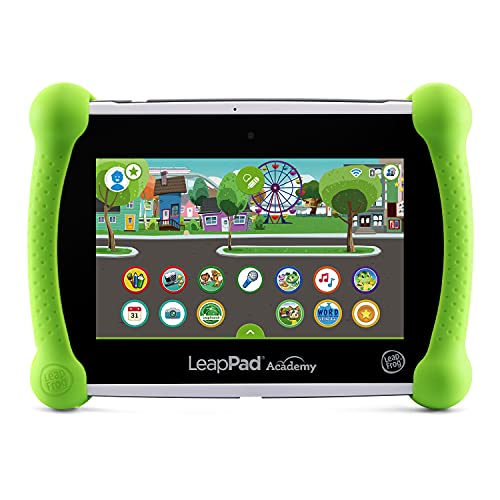
The LeapFrog LeapPad Academy offers a curated environment of 20 educational apps and creativity tools designed by learning experts. It includes LeapSearch, a kid-friendly browser that restricts access to age-appropriate content while enhancing digital literacy and navigational confidence. A free three-month trial of LeapFrog Academy fosters structured, progressive learning with guided adventures. This tablet is targeted at early readers and pre-K learners, helping children build foundational literacy, numeracy, and problem-solving skills in a safe, controlled setting. The device emphasizes parental oversight and a guided path toward independent exploration.
What to consider: The classroom-like progression helps parents who want a structured curriculum, but some families may value broader app ecosystems and offline play. Consider device durability and whether the included content aligns with your child’s current interests, such as animals, vehicles, or storytelling activities.
Amazon Fire 7 Kids Tablet
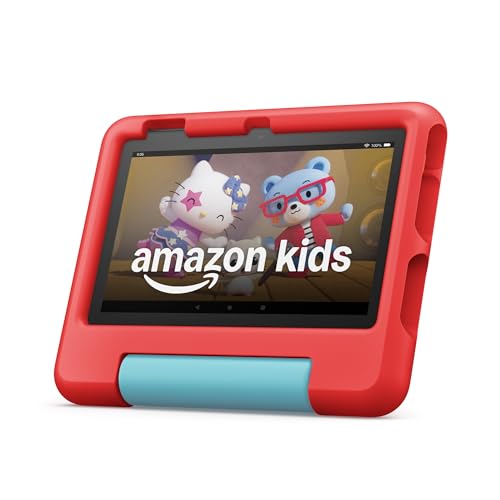
The Fire 7 Kids edition emphasizes a strong value proposition with a year-long Amazon Kids+ subscription, curated educational content, and parental controls. The 7-inch display, long battery life, and durable design are well-suited for young children who need a sturdy device for learning and entertainment on the go. The included subscription provides access to a wide library of age-appropriate books, videos, and games, fostering pre-reading and early numeracy skills. The device is designed to be simple to set up, with content that grows with a child’s advancing literacy and cognitive abilities, while offering parents a dashboard to manage screen time and content suitability.
What to consider: As a multitiered ecosystem, the Fire 7 Kids tablet can encourage regular engagement through a broad content catalog. However, families should review the Kid-friendly options and ensure the content is aligned with the child’s interests and development stage. Battery life and offline accessibility are practical factors for travel or quiet time alike.
hahaland 5-Language Learning Tablet

The hahaland tablet focuses on multilingual development with more than 90 modules covering animals, shapes, instruments, vehicles, letters, numbers, and colors. It supports five languages—English, French, Spanish, German, and Italian—providing a broad linguistic exposure for toddlers and early bilingual training. The device offers four play modes: Learning, Quiz, Music, and Pretend Play, similar to other educational tablets, plus a screen-free design that emphasizes tactile and auditory learning. It is presented as a practical option for families aiming to cultivate early language skills and cognitive flexibility across several languages.
What to consider: Multilingual devices can support selective language acquisition but may require consistent language use at home to maximize benefits. Consider whether your child’s exposure to each language is balanced, and pair tablet use with real-life language practice to reinforce learning.
Qiaojoy Kids Learning Tablet

The Qiaojoy tablet emphasizes bilingual learning with English and Spanish, plus a speaking-card interaction that encourages active participation. It features multiple learning modes aimed at word-building, language development, and basic quizzes that reinforce memory and comprehension. The interaction with a talking card character adds a narrative element to learning, potentially increasing engagement for toddlers who respond to storytelling. The device prioritizes safe volume controls and age-appropriate content suitable for toddlers beginning to explore reading and pronunciation.
What to consider: Bilingual functionality can be a major benefit for households seeking early exposure to another language. Ensure the content aligns with your child’s current level, and balance screen time with hands-on activities like picture books and verbal labeling of everyday objects.
BEST LEARNING Touch & Learn Tablet

The BEST LEARNING Touch & Learn Tablet combines hearing, visual cues, and interactive quizzes to support early literacy and number concepts. It covers the alphabet, words, shapes, and music-related activities, encouraging both recognition and recall. The two modes—Basic and Advanced—offer scalable challenges as a child grows, supporting a smooth transition from toddler to preschool-level skills. The device’s engaging lights and melodies help sustain attention while reinforcing memory pathways through repetitive practice. It’s a compact option for travel and daily routines, with straightforward operation suitable for 2-year-olds and beyond.
What to consider: This tablet is well-suited for parents seeking a compact, age-appropriate device with clear progression. However, evaluators should confirm the content aligns with their learning goals, such as foundational literacy, phonemic awareness, and early math concepts, and verify durability for active toddler use.
Buying Guide: Key Purchase Considerations And Comparisons
- Age suitability and development: Look for devices explicitly designed for toddlers 2 years and older, with simple interfaces and robust parental controls to manage screen time.
- Content and language options: Multilingual devices can support early language exposure, but ensure content aligns with your family’s goals and daily routines. A mix of reading, listening, and interactive modes is beneficial for well-rounded learning.
- Durability and safety: Choose tablets with kid-friendly shells or cases, rounded edges, and safe materials. A protective case helps withstand drops and rough handling common with toddlers.
- Parental controls and screen time management: Features such as time limits, content filters, and usage reports help caregivers guide healthy screen habits.
- Offline accessibility: Some devices preload content or provide offline resources, which is helpful during travel or periods without reliable internet.
- Content variety and progression: Devices offering multiple modes (learning, quizzes, music, pretend play) support varied cognitive and motor skills and can adapt as a child grows.
- Value and ecosystem: If a family prefers a broader app library or a subscription model, consider how the content ecosystem aligns with long-term learning goals and family budgets.
- Device adaptability: Some tablets switch from a dedicated kids mode to a standard tablet, enabling continued use as a child ages. This can extend the device’s useful life.
In sum, the best learning tablet for a two-year-old should balance engaging, age-appropriate content with clear safety controls and durable design. Multilingual options are a plus for families seeking early exposure to additional languages, while durable, easy-to-use interfaces appeal to both children and caregivers. Consider your child’s current interests—colors, animals, or music—and choose a device offering integrated activities in those areas to maximize engagement and educational value.