Best Learning Toys for 4 5 Year Olds: Fun, Safe, and Educational Picks
Choosing learning toys for 4- to 5-year-olds means balancing engaging play with foundational skills in math, literacy, science, and fine motor development. The following selections emphasize hands-on activities, bright visuals, and age-appropriate challenges that support early learning milestones. Each option is designed to capture curiosity, promote sustained focus, and foster independent or guided exploration. Read on for a curated set of toys that align with classroom-ready goals while keeping play at the center of growth.
Summary of chosen products:
| Product | Brand | Key Focus |
|---|---|---|
| Magnetic Wooden Fishing Game Toy | NASHRIO | Alphabet recognition, counting, fine motor skills |
| Let’s Go! Matching Letter Game | LIWIN LET’S GO! | Letter recognition, memory, word building |
| Montessori Educational Counting Blocks | Gagule | Numeracy, counting, early math concepts |
| Doctor Jupiter Little Genius Kit | Doctor Jupiter | Science, math, language activities |
| Preschool Learning Activities Workbook | Walenty | Writing, tracing, fine motor, handwriting |
Magnetic Wooden Fishing Game Toy For Toddlers
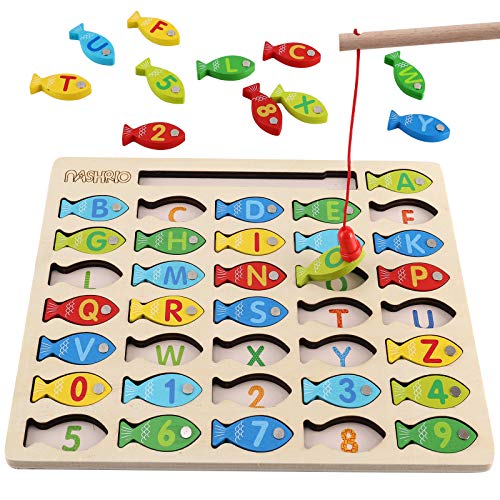
The Magnetic Wooden Fishing Game offers an engaging way to build early literacy and numeracy skills through playful fishing. Children use a magnetic pole to catch wooden fish pieces that feature letters and numbers, helping them distinguish colors while practicing alphabet and number recognition. Crafted from well-polished wood with smooth edges and non-toxic water-based dyes, this toy emphasizes safety alongside interactive learning for children ages 3 to 5. The setup invites repeated rounds of fishing, counting, and letter identification, supporting memory and small-motor control as kids aim for accurate catches.
Key features:
- Wooden construction with eco-friendly finishes.
- Fish pieces labeled with letters and numbers for quick literacy and numeracy practice.
- Simple fishing rod encourages hand-eye coordination and fine motor development.
LIWIN LET’S GO! Matching Letter Game
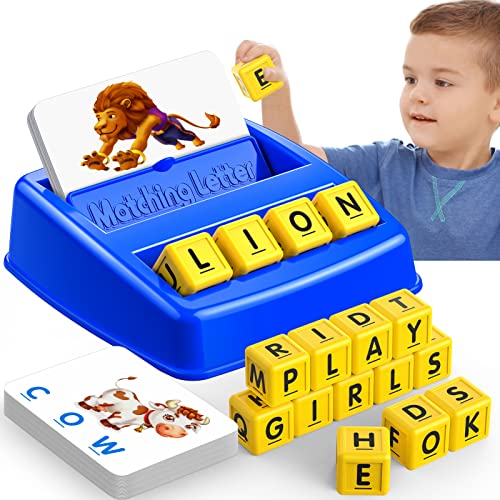
This matching letter game is designed to boost memory, spelling, and early vocabulary. Tailored for ages 3 to 8, it strengthens letter recognition and word-building skills through interactive card play and letter cubes. The inclusion of family participation supports language development and social interaction as children take turns and collaborate. The activity fosters strategic thinking and cognitive flexibility, making it a versatile option for home learning routines and guided classroom-style activities alike. It’s a practical tool for reinforcing literacy foundations in a fun, low-stress format.
Key features:
- Enhances memory, spelling, and early vocabulary.
- Encourages parent-child interaction and collaborative learning.
- Promotes letter recognition and word-building skills through play.
Montessori Counting Blocks And Math Toys

The Montessori Educational Counting Blocks provide a tactile approach to early math concepts. With a finger counting board, number blocks, flash cards, and a storage base, this set targets addition and subtraction within 10. The hands-on design helps children visualize math operations, supporting a smoother transition to abstract numeric thinking. Designed for 3- to 5-year-olds, it blends counting practice with fine motor engagement, fostering curiosity and independent exploration in a Montessori-inspired framework.
Key features:
- Finger counting board and number blocks for visual math.
- Math flash cards and storage for organized learning.
- Encourages hands-on manipulation to build numeracy confidence.
Doctor Jupiter Little Genius Kit

The Little Genius Kit from Doctor Jupiter presents a cross-disciplinary learning experience suitable for 4- to 6-year-olds. Included activities cover science experiments, math games, language challenges, and a kid-friendly animal encyclopedia with real-world imagery. The kit emphasizes safe, food-grade materials and structured exploration, making it a solid choice for curious learners who enjoy experimentation and discovery. It serves as an approachable gateway to STEM topics while reinforcing foundational literacy and numeracy.
Key features:
- Multi-subject activity set including science, math, and language tasks.
- Content with real-world imagery and engaging activities.
- Age-appropriate, safe materials designed for young learners.
Walenty Preschool Learning Activities Workbook

The Walenty workbook combines handwriting practice with tracing, color and shape recognition, and number and letter activities. It is designed to boost writing skills, fine motor development, and concentration through easy-to-erase, reusable pages, and durable hardcover construction. The eight included dry-erase markers and eraser facilitate repeated practice, making it suitable for homeschool settings and classroom centers. Parents can monitor progress while children build independence in daily learning tasks.
Key features:
- 52 activity pages covering tracing, letters, numbers, and more.
- Easy-erase, reusable pages with dry-erase markers.
- Supports handwriting, motor memory, and concentration development.
Buying Guide: Key Purchase Considerations and Comparisons
When selecting learning toys for 4- to 5-year-olds, consider the following factors to ensure value, safety, and educational impact:
- Learning goals: Identify whether you want to emphasize literacy, numeracy, science, or a holistic approach. Choose toys that balance different skills to support well-rounded development.
- Age appropriateness: Verify that the toy’s complexity matches a child’s current abilities while offering a manageable challenge to prevent frustration.
- Curriculum alignment: Look for toys that reinforce common early-learning milestones, such as letter and number recognition, basic math concepts, and scientific curiosity.
- Safety and materials: Favor non-toxic finishes, rounded edges, and durable components suitable for active play and potential mouthing by younger siblings or children who explore with hands and mouths.
- Durability and reuse: Reusable features (dry-erase pages, modular blocks) extend the toy’s lifespan and encourage repeated practice without excess waste.
- Social and independent play: Some toys support family interaction and cooperative learning, while others are designed for solo exploration, helping to tailor purchases to family routines.
- Portability and storage: Consider compact options or those with built-in storage to maintain an organized learning space.
- Cost-per-use: Assess how often a toy will be engaged with and its potential to grow with the child as skills advance.
Product comparison at a glance:
- Best for hands-on literacy and early numeracy: Magnetic Fishing Game and Matching Letter Game offer quick, repeatable activities centered on letters and numbers, with sturdy construction and simple setup.
- Best for Montessori-inspired math concepts: Counting blocks and finger boards deliver concrete representations of counting, addition, and subtraction, aligning with early math curricula.
- Best for science curiosity: Doctor Jupiter’s Little Genius Kit blends science experiments with language and math activities, supporting inquiry-based learning.
- Best for writing and fine motor development: Walenty’s workbook emphasizes handwriting practice and motor control through reusable pages and erasable markers.
Selecting a mix from these options can create a balanced at-home learning kit that supports early literacy, numeracy, and scientific thinking while keeping play engaging and age-appropriate for four- to five-year-olds.