Best Microscopes for 10-Year-Olds: Engaging Science Tools for Young Explorers
Discover kid-friendly microscopes that fit curious minds and growing science skills. This guide highlights reliable options designed for 10-year-olds, offering durable builds, clear viewing, and engaging features that support STEM learning at home or in the classroom. Each pick emphasizes safe operation, easy setup, and classroom-friendly learning outcomes to help young scientists observe cells, insects, fabrics, and everyday textures with confidence.
Below is a quick overview of the selected models to compare core capabilities at a glance.
| Product | Brand | Magnification | Display | |
|---|---|---|---|---|
| Nisumkey Digital Microscope | Nisumkey | Up to 1000X | 2.0″ IPS Screen | HD camera, LED illumination, anti-shake |
| HEWEIMEI 1600X Microscope | HEWEIMEI | 100x – 1600x | 4.0″ IPS Screen | HD camera, multi-mode desk/handheld/portable |
| WINWEND Pocket Microscope | WINWEND | 100x – 1000x | 2″ Display | Built-in storage, portable mini design |
| AUKCLAX 1000X Recordable | AUKCLAX | 200x – 1000x | 2.4″ IPS Screen | Photo & video capture, educational focus |
| HEWEIMEI 1600X (White) | HEWEIMEI | 100x – 1600x | 2.0″ Screen | 3-in-1 design, integrated LED lights |
Nisumkey 1000X Digital Microscope

The Nisumkey digital microscope offers up to 1000X magnification with a built-in 2MP camera and a 2.0-inch IPS display. It is designed for kids ages 8 and up to view specimens directly without a separate display device. Eight LED lights with adjustable brightness help maintain clear imagery in varying lighting conditions, and the anti-shake design supports steadier observation during experiments.
HEWEIMEI 1600X Digital Microscope
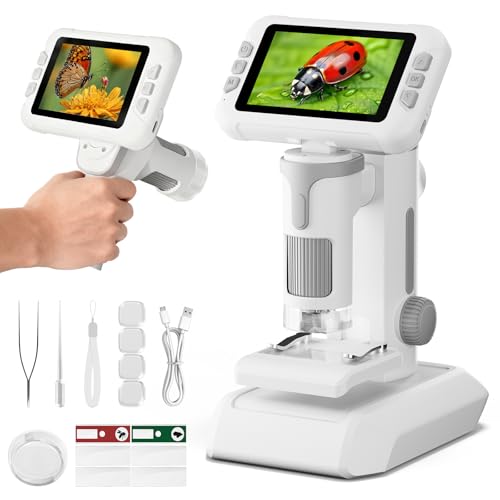
HEWEIMEI’s 1600X model provides a broad zoom range (100x to 1600x) and a large 4.0-inch IPS screen with a built-in 48MP 1080P camera. This setup enables live viewing and high-definition photo or video capture, making it suitable for deeper exploration of plant cells, insect anatomy, and textured materials. A detachable 3-in-1 design supports desktop, handheld, and portable use with six LED lights and three brightness modes for consistent visibility.
WINWEND Pocket Microscope

The WINWEND pocket microscope features a 100x–1000x magnification range with eight LED lights and six brightness levels to ensure clear imaging. It includes built-in storage capable of holding up to 400 photos and supports optional TF card recording for extended projects. Its compact, durable design makes it ideal for field observations, classroom activities, and travel science notes, encouraging ongoing curiosity in biology and materials science.
AUKCLAX 1000X Recordable Microscope
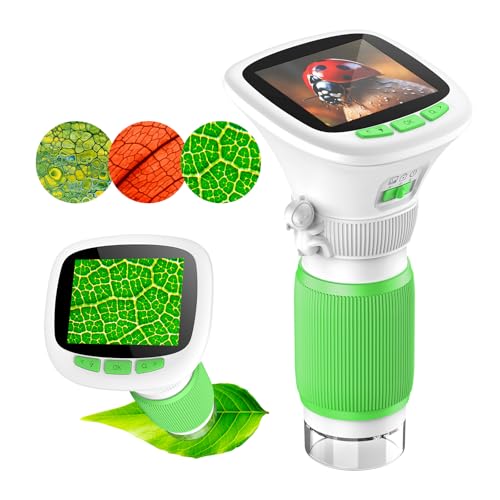
AUKCLAX combines a 2.4-inch IPS display with 200x–1000x magnification, enabling high-definition observation of leaves, coins, skin textures, and other specimens. It supports photo and video capture, making it easy for students to document findings for school projects or science portfolios. The model emphasizes user-friendly operation and compact design suitable for both desk use and on-the-go exploration.
HEWEIMEI 1600X White Digital Microscope

This HEWEIMEI 1600X model emphasizes a 100x–1600x zoom range paired with a 2.0-inch screen and 48MP camera for crisp, real-time visuals and easy capture of discoveries. Its 3-in-1 detachable design supports desktop, handheld, and portable usage, complemented by six LEDs and three brightness levels to maintain visibility during experiments at home or in the classroom. The compact build makes it suitable for travel-friendly science exploration.
Buying Guide: Key Purchase Considerations
- Magnification range: For beginners, 100x–1000x is typically sufficient to observe plant cells, insect parts, and textile fibers. If deeper exploration is desired, 1600x options provide extra detail without complicating use.
- Display type and quality: A built-in screen reduces dependency on external devices. Larger IPS displays deliver clearer, color-accurate viewing, helpful for long observation sessions and class reports.
- Image capture and storage: Look for models with photo and video recording, plus expandable storage or built-in memory. This supports creating projects and sharing findings with teachers or peers.
- Lighting and image stability: Adjustable LED lighting helps maintain brightness in diverse environments. Anti-shake or stable focusing features support crisp images during handheld use or on uneven surfaces.
- Durability and child suitability: Rubberized casings and simple controls minimize accidental damage and ease misoperation during classroom activities or travel.
- Portability vs. desktop use: Detachable designs that switch between desktop, handheld, and portable modes add flexibility for in-class demonstrations and outdoor science.
- Educational value: Consider models that align with STEM learning goals—observation of cells, textures, and microstructures fosters inquiry, data recording, and reporting skills.
- Safety: Ensure the instrument is age-appropriate with non-slip grips, and avoid overly small parts that could pose choking risks for younger children.
- Software vs. hardware: Hardware-based microscopes with built-in displays are generally easier for 10-year-olds than devices requiring smartphones or computers for viewing.
- Maintenance: Choose models with straightforward cleaning procedures and durable lenses to withstand regular classroom use.
In selecting a microscope, balance magnification needs with ease of use, viewing comfort, and the ability to document discoveries. The options listed here provide a range of beginner-friendly features designed to support consistent STEM engagement for 10-year-olds.