Best Mini Quad Frame Options for FPV Drones
Finding the right mini quad frame is essential for building compact, agile FPV racers. This guide reviews five popular mini frame kits, highlighting compatibility, materials, and mounting options to help you choose the best fit for 2S to 3S micro quads, indoor pilots, and outdoor flyers alike. Each entry includes a quick spec snapshot and practical notes to compare build readiness and crash resilience.
| Product | Brand | Weight Class | Frame Size (diagonal) | Notes |
|---|---|---|---|---|
| Happymodel Mobula8 85mm Frame | LIBOQIAO | Ultra-light | 85mm | 2 inch props, motor compatibility 702/703/802/1002/1102/1103 |
| Usmile Super Lightweight 100mm Frame | Usmile | Very light | 100mm | Supports 820 motors, 8mm motor mounts, strong carbon fiber |
| YoungRC 4inch FPV Drone Frame | YoungRC | Moderate | 185mm | 4 inch frame, carbon fiber, easy assembly |
| Eyas X2 FPV DIY 80mm | Midzooparts | Compact | 80mm | Carbon fiber, mini quad racing frame kit |
| FPV Micro Mini QX95 95mm Frame | Midzooparts | Micro | 95mm | Supports 8520 coreless motors |
Below you’ll find five detailed product sections, followed by a concise buying guide to help you weigh materials, compatibility, and build considerations.
Happymodel Mobula8 85mm Frame Kit

The Happymodel Mobula8 frame is designed for compact micro FPV builds, offering a low mounting profile to improve center-of-gravity and minimize interference. It supports brushless micro FPV setups and accommodates motors sized for 702/703/802/1002/1102/1103 with a dual-hole or four-hole mounting pattern. Its crash-resistant design helps protect flight controllers during indoor and outdoor flights, making it a practical option for pilots chasing agility in tight spaces.
Usmile Super Lightweight 100mm Frame
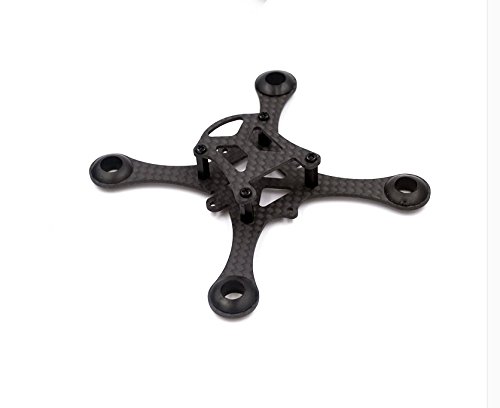
This Usmile frame emphasizes lightness and compact construction ideal for micro and nano FPV builds. It uses an 8mm motor mounting system and 1.5mm carbon plates to keep weight down while maintaining rigidity. The frame supports outdoor aerials and small FPV systems, providing enough durability to absorb minor crashes and vibrations from micro motors. Rubber motor mounts further reduce vibration and simplify assembly, contributing to quicker build times and more responsive flights.
YoungRC 4inch FPV Drone Frame Kit
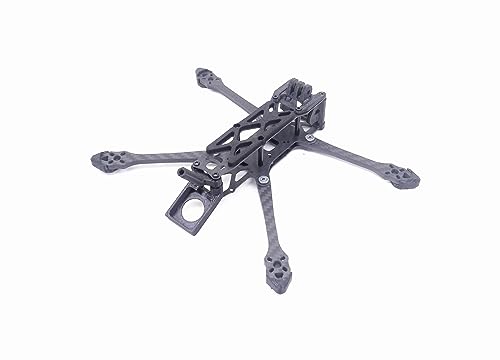
YoungRC’s 4inch frame offers a balanced option between performance and durability. Made from 3K carbon fiber, it remains lightweight yet capable of handling outdoors in spacious areas and indoors in larger rooms. The frame’s 185mm wheelbase provides room for efficient motor pairing and electronics placement, while its straightforward assembly process makes it suitable for both beginners and seasoned pilots seeking a reliable 4-inch option.
Eyas X2 FPV DIY 80mm Mini Frame

The Eyas X2 X-Frame is a compact, carbon fiber build designed for micro racing and freestyle. Its 80mm footprint suits 2S to 3S power setups, and its rigid frame helps maintain precision during aggressive maneuvers. The kit is compatible with a variety of micro FPV components, and the carbon construction provides a good balance between weight and stiffness, enabling snappy throttle control and predictable handling in tight courses.
FPV Micro Mini QX95 95mm Frame Kit

The QX95 95mm frame from Midzooparts targets micro racers seeking a compact, stable airframe for 8520 coreless motors. Its frame geometry is tuned for quick response and easy mounting of small components, making it a practical choice for pilots who want a nimble yet robust micro platform with simplified assembly and maintenance.
Buying Guide
Key considerations when selecting a mini quad frame:
- Size and footprint: Choose a wheelbase that matches your propulsion and propeller choices (2 inch, 3 inch, 4 inch, etc.). Smaller frames favor agility; larger ones provide more room for components and more stable flight.
- Material and rigidity: Carbon fiber frames offer lightweight strength and vibration damping, while some ultra-light frames trade durability for weight savings. Validate that the frame supports your intended load and motor mounting pattern.
- Motor mounting pattern: Confirm hole spacing and mounting compatibility for your motors (two-hole, four-hole, or universal adapters). Incorrect mounting can cause frame flex or motor misalignment.
- Weight vs. durability: Lighter frames improve efficiency but may crack under hard crashes. Heavier frames are tougher but reduce maneuverability and flight time.
- Ease of assembly: Some frames are beginner-friendly with clear cutouts, pre-drilled holes, and simple cable routing; others require more advanced soldering and wiring.
- Compatibility with cameras and FPV gear: Ensure the frame has mounting options for your camera, antenna, and flight controller; check available standoffs and bottom plate thickness for proper clearance.
- Maintenance and spares: Consider frame variants that have widely available spare arms and cross-members to minimize downtime after crashes.
- Purpose and environment: Indoor piloting benefits from compact frames with good crash resistance; outdoor racing favors frames that tolerate wind with solid rigidity.
In practice, the five frames reviewed balance compact size, build simplicity, and material quality for varied FPV interests—from indoor acrobatics to outdoor micro racing. When choosing, map your intended prop size, motor type, and desired flight characteristics against the frame’s mounting options and durability profile to optimize performance and maintenance needs.