Best Model Kits for 7 Year Olds: Fun STEM Projects for Kids
Finding engaging, safe, and educational kits for seven-year-olds can boost creativity, problem-solving, and basic engineering skills. The following selections emphasize hands-on learning, clear instructions, and age-appropriate challenges that align with curious minds. Each item below is chosen for age suitability, durability, and instructional value, helping young builders explore concepts from mechanics to anatomy through play.
Summary of chosen products
| Product | Key Focus | What It Teaches |
|---|---|---|
| Choopheme 10 in 1 STEM Toys | Multiple models; beginner to intermediate | Engineering, problem solving, spatial reasoning |
| NATIONAL GEOGRAPHIC Da Vinci Model Kit – Catapult Kit | Wooden build; functional devices | Physics, momentum, simple machines |
| Dan&Darci Human Anatomy Squishy Body Kit | Hands-on anatomy exploration | Human biology, body systems, observational skills |
| Paper Airplane Kit | Design and flight basics | Aerodynamics, measurement, experimentation |
| STEM Building Toy 7-in-1 by Zingywise | Multiple vehicles; 171 pieces | Engineering concepts, creativity, sequence building |
Choopheme 10 in 1 STEM Toys

The Choopheme set offers ten different models, including engineering vehicles such as a bulldozer, crane, and windmill. Its design targets kids ages 4-8 and expands to older children by presenting a variety of builds that encourage experimentation with mechanisms and motion. The included instructions guide assembly, helping children develop hands-on skills and problem-solving abilities. While the kit emphasizes non-metal components, its robust storage box supports quick cleanup and organized play sessions.
NATIONAL GEOGRAPHIC Da Vinci Catapult Kit

This kit invites children to assemble a trio of systems—a ballista crossbow, a bombarda cannon, and a catapult. Fully functional designs allow projectiles to be launched up to about 15 feet, fostering curiosity about motion, force, and trajectory. The kit uses laser-cut wood components with simple instructions, making it accessible to curious seven-year-olds with supervision. Expect to spend around one to three sessions per model as kids assemble and test their devices, gaining insight into engineering workflows and trial-and-error learning.
Dan&Darci Human Anatomy Squishy Body Kit

This kit dives into a tactile anatomy exploration with 30 removable body parts, including bones and major organs. The accompanying guide provides explanations, activities, and challenges about how the body works, making it a strong educational tool for science curiosity. Kids can measure breathing, observe heart rate, and learn how systems connect, while the squishy parts offer a memorable, hands-on experience that reinforces anatomical concepts in a kid-friendly way.
Paper Airplane Kit
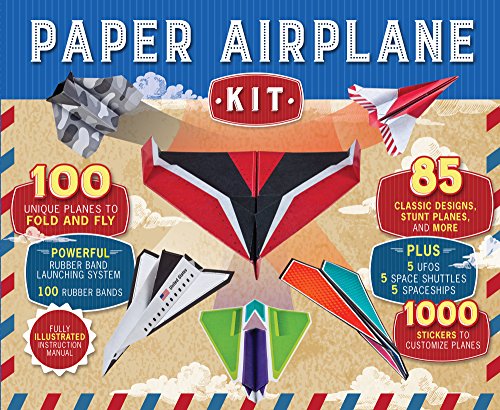
Perfect for quick, repeated experimentation, this Paper Airplane Kit blends creativity with basic aerodynamics. Children can design, fold, and test different airplane configurations to observe how wing shapes, weight distribution, and launch angles impact flight. This kit is ideal for a classroom or family activity, providing immediate feedback and opportunities to record improvements across trials.
STEM Building Toy 7-in-1 (Zingywise)
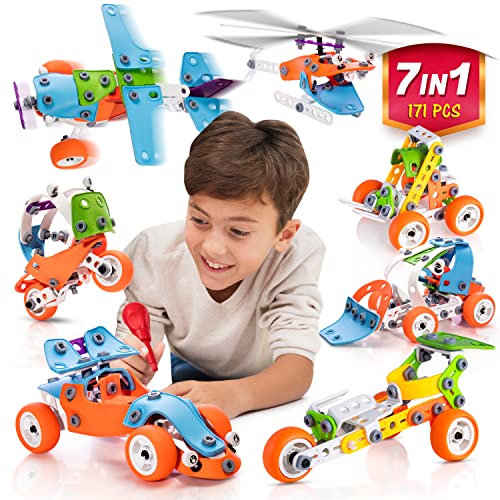
The Zingywise kit presents seven modeled builds within a single set, including cars, airplanes, motorcycles, helicopters, tractors, forklifts, and a buggy. It emphasizes modular engineering with 171 pieces stored in a sturdy box. The parts and steps help young builders explore sequencing, spacial reasoning, and mechanical connections while maintaining an approachable complexity that suits seven-year-olds and early beginners.
Buying Guide: Key Purchase Considerations
Selecting the right model kit for a seven-year-old requires balancing safety, instructional value, and engagement. Consider the following perspectives to guide a smart choice:
- Safety and age-appropriateness: Look for non-toxic materials, rounded edges, and clear age recommendations. Kits with small parts may require supervision for younger children.
- Learning objectives: Decide whether you want a kit focused on basic engineering, anatomy, or aerodynamics. A mix of building challenges and guided exploration helps broad skill development.
- Number of models and versatility: Multi-model kits provide variety and longer playtime, reducing repetition and encouraging sustained interest.
- Assembly difficulty and instructions: Step-by-step guides with visual cues support independent work or collaborative family projects, especially for seven-year-olds still developing fine motor skills.
- Durability and storage: Durable components and a sturdy storage solution promote responsible use and easy cleanup after playtime.
- Expansion potential: Kits that can be augmented with additional components or future upgrades offer continued value as a child grows.
- Educational balance: Favor kits that pair engaging play with real-world learning concepts (motion, energy, biology, and measurement) to reinforce classroom concepts.
- Parent or caregiver involvement: Some projects benefit from guided exploration, while others encourage independent exploration—choose accordingly to fit your family routine.
Comparative considerations
For parents seeking a broad STEM experience, multi-model kits like Choopheme or Zingywise provide varied challenges that adapt to a child’s growing proficiency. If the interest leans toward hands-on science and anatomy, Dan&Darci offers a memorable, tactile approach to exploring body systems. For budding designers and aspiring engineers, National Geographic’s wooden catapult and the Paper Airplane Kit introduce foundational principles of physics and flight. Lastly, the V8 engine kit from Playz offers a more advanced mechanical project suited for kids showing steady interest in engines and mechanics, though it may be better with older children or adult supervision.
All selections emphasize hands-on learning, safety, and clear instructions, aiming to deliver a structured yet exciting path into STEM learning for seven-year-olds. When possible, pair each build with a simple observation journal to document challenges, successes, and questions, reinforcing critical thinking and curiosity.