Best Motorcycles for an 8-Year-Old: Safe, Fun Electric Dirt Bikes for Young Riders
Finding a kid-friendly motorcycle that balances safety, excitement, and durability can be challenging. This guide highlights five top-rated electric dirt bikes and mini-motorcycles suited for eight-year-olds. Each option offers age-appropriate speeds, solid build quality, and features designed to help young riders learn proper control. Explore a mix of branded favorites and value choices to fit different riding styles and terrains.
| Product | Brand | Age Range | Top Speed (Approx.) | Approximate Run Time (If Noted) |
|---|---|---|---|---|
| Razor MX350 Dirt Rocket Electric Bike | Razor | 8+ | Up to 14 mph | Up to 30 minutes on high speed |
| Hiboy DK1 36V Electric Dirt Bike | Hiboy | 3-10 | Up to 15.5 mph | Up to 90 minutes |
| K1 Kids Electric Dirt Bike | ECOLEAP | 3-10 | Up to 16 mph | Up to 60-120 minutes depending on mode |
| Razor MX125 Dirt Rocket Electric Bike | Razor | 5+ | Up to 8 mph (high speed) | Not specified |
| HEYTENT Kids Electric Motorcycle | HEYTENT | 3-8 | Up to 8-10 mph | About 2 hours |
The products below are chosen for a mix of beginner-friendly controls, reliability, and rider comfort. Each entry includes a brief overview of key features to help parents assess suitability for an eight-year-old rider.
Razor MX350 Dirt Rocket Electric Bike

The Razor MX350 is sized for younger riders who want a motocross-style ride. It features a steel frame with authentic dirt bike geometry, a 24V battery system, and a chain-driven motor capable of up to 14 mph. The design includes a double-crown fork, shatter-resistant plastics, soft rubber grips, and adjustable handlebars, which together help maintain stability on gentle hills and backyard paths. With a twist-grip throttle and a rear brake, riders gain intuitive control suitable for beginners transitioning to more advanced maneuvers.
Hiboy DK1 36V Electric Dirt Bike
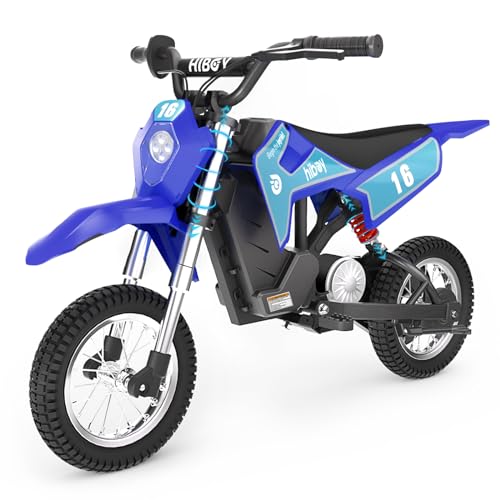
The Hiboy DK1 targets young riders with a focus on ride comfort and safety. It includes a high-strength spring and hydraulic front fork to absorb shocks and reduce noise. The 36V battery system supports a long run-time, with a stated range of up to 90 minutes under typical conditions. Three speed modes—5.0 mph, 7.5 mph, and 15.5 mph—allow parents to tailor the ride to a child’s skill level, letting beginners start slowly and progress as confidence grows.
K1 Kids Electric Dirt Bike (ECOLEAP)

The ECOLEAP K1 offers a UL-2272 certified build with an inverted spring hydraulic front fork and a robust braking system. It can reach up to 16 mph and features three safe speed modes (low, medium, high) to adapt to a child’s growing riding capability. A large 36V battery with a BMS provides a long operating life, and the bike is designed for durability and water resistance with an IP54 rating. The bike is designed to give kids a more mature motocross experience while maintaining safety-focused design choices.
Razor MX125 Dirt Rocket Electric Bike

The Razor MX125 is a smaller, entry-level option from Razor, designed for younger riders who still crave authentic motocross styling. It features 12-inch spoked wheels with pneumatic tires, a crossbar-reinforced handlebar, and a rear brake for reliable stopping power. Its top speed sits around 8 mph in high gear, with a simple high/low switch to help parents manage the ride level. A retractable kickstand adds convenience for parking after outdoor sessions.
HEYTENT Kids Electric Motorcycle

The HEYTENT motorcycle targets early riders with a brushless motor and a 25.2V battery setup delivering roughly 8-10 mph. It includes three speed modes via LCD display, LED headlights, and a choice of body colors. The 12-inch tires with a suspension system help manage rougher surfaces, while a two-hour runtime offers longer play sessions. This bike emphasizes visual appeal and ease of use, making it a good pick for weekend adventures and casual riding around the yard or park paths.
Buying Guide: Key Considerations For Choosing A Kids Motorbike
- Age and weight capacity: Match the bike’s recommended age range and weight limit to the child’s size to ensure safe handling and proper balance.
- Speed controls and safety features: Look for adjustable speed modes, a reliable braking system, and parental control options to tailor pacing as skills develop.
- Battery life and charging: Consider battery voltage, runtime, and charging time. Lithium-based cells often offer longer life and faster charging than older AGM types.
- Build quality and suspension: A sturdy chassis and a front/rear suspension system help absorb bumps on grassy or uneven terrain, reducing jarring rides.
- Wheel type and traction: Pneumatic or air-filled tires provide better grip on dirt and grass; solid tires last longer but may offer less traction on rough surfaces.
- Safety gear compatibility: Ensure the bike accommodates protective gear (helmet, knee/elbow pads) and that the design supports easy mounting and dismounting for young riders.
- Maintenance and warranties: Check availability of replacement parts (tires, brakes, batteries) and any manufacturer warranty terms for long-term use.
- Terrain suitability: For backyard use, look for bikes designed for smooth lawns or dirt paths; for more rugged play, choose models with stronger frames and better suspension.
- Learning curve: Some models include training wheels or lower top speeds to help children build confidence before advancing to higher speeds.