Best New Toys for 1 Year Olds That Promote Growth and Fun
Finding engaging, development-boosting toys for 12–24 month-olds can be challenging. The following selections emphasize safety, fine and gross motor skills, sensory exploration, and imaginative play. Each item below is designed to suit little hands and curious minds, while offering durable, age-appropriate entertainment. Use the quick summary table to compare core features at a glance.
| Product | Key Benefit | Age Range | Why It Stands Out |
|---|---|---|---|
| Radio Flyer Busy Buggy | Three modes: push walker, ride-on, sensory play | 12–36 months | Built-in storage and anti-tip design |
| iPlay, iLearn Press to Go Car | Battery-free, push-to-go friction car | 6–24 months | Safe, simple mechanism with bright visuals |
| SEREED Baby Balance Bike | Balance, steering, and coordination practice | 12–24 months | No pedals, durable aluminum frame |
| MuMua Montessori Wooden Sensory Toy | Wooden, non-toxic, multi-sensory play | 12–36 months | Wood construction with smooth finish |
| Move2Play Fish Toy | Musical and language-rich play with songs | 6–24 months | Interactive phrases and engaging visuals |
Radio Flyer Busy Buggy Ride On Toy Car

The Radio Flyer Busy Buggy functions as a push walker, ride-on toy, and sensory activity center. It includes 17 activities designed to engage a toddler’s senses, such as interlocking gears and sliding beads. The toy supports early walking confidence and motor development with multiple play modes. An anti-tip feature on the back adds a safety layer for beginner walkers, while built-in storage accommodates small items during outdoor adventures. The design emphasizes durability and interactive exploration, which can support both gross motor skills and imaginative play as a child grows.
iPlay, iLearn Press to Go Car Toys for Toddlers

The Press to Go Car offers a safe, beginner-friendly option for early walkers. Its rounded edges and smooth surfaces are designed with safety in mind, using high-quality ABS without small parts. Children simply press the car’s head to set it in motion, encouraging cause-and-effect understanding without the need for batteries. The vivid coloring and friendly cartoon design support sensory stimulation and early cognitive development, making this toy a simple, engaging choice for toddlers learning to push and roll objects.
SEREED Baby Balance Bike
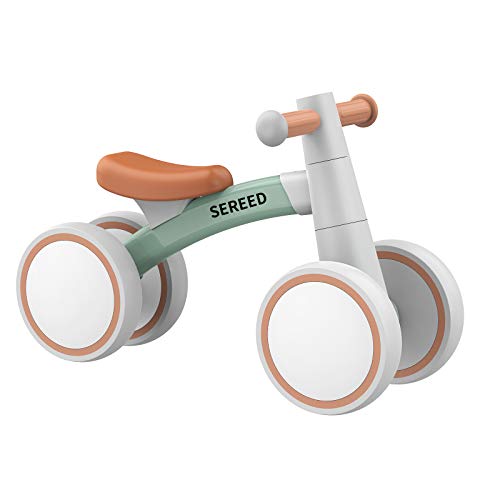
The SEREED balance bike is designed for the 12–24 month window, helping babies begin balance, steering, and coordination without pedals. It features a sturdy aluminum frame, a softly supportive seat, and a 135° turning limit to minimize oversteering. The fully enclosed wheels protect little feet, while non-slip tires reduce slipping on various surfaces. This bike supports indoor and outdoor use, offering independent cruising opportunities that foster confidence as motor skills advance.
MuMua Montessori Wooden Sensory Toy

MuMua’s wooden sensory set offers a Montessori-inspired approach with 1st birthday gift appeal. The handmade-like wood frame features a farm theme with smooth surfaces and child-safe, water-based paint. The 6 colorful, multi-sensory shapes and stacking cups foster color and shape recognition, hand-eye coordination, and early mathematical concepts. The design emphasizes safe play, with rounded edges and durable construction suitable for toddlers exploring through touch, sight, and manipulation.
Move2Play Fish Musical Toy

Move2Play’s fish-themed toy is a vibrant, music-rich option that introduces colors, counting, and letters through 40+ phrases and songs. The toy features three hungry fish that contribute distinct voices and personalities, creating an interactive play experience. It helps children develop auditory discrimination, early language skills, and fine motor coordination as they engage with buttons and drop mechanisms. The engaging sea-theme promotes imaginative play while providing structured learning cues in a playful package.
Buying Guide: Key Purchase Considerations
When selecting toys for 1-year-olds, consider safety, age appropriateness, material quality, and developmental impact. Look for toys with rounded edges, non-toxic finishes, and simple cleaning routines. Favor items that promote a mix of gross motor activity (pull, push, balance) and fine motor skills (grasp, pinch, manipulate). Movement-friendly toys should support confidence as kids practice walking or cruising, while sensory-rich toys should engage sight, sound, and touch to foster cognitive development. Durability matters for toys that will be dropped, chewed, or tumbled. Finally, choose options with clear age guidance and potential to grow with the child through early stages of play and learning.
Comparative Perspectives
- Active movement vs. stationary play: Balance bikes and push ride-ons emphasize gross motor skills, while wooden sensory toys provide tactile learning opportunities.
- Safety features: Anti-tip designs, enclosed wheels, and rounded edges reduce risk for new walkers.
- Material and maintenance: Wood-based toys can offer durability and a premium feel but may require simple cleaning compared to plastic items.
- Learning through play: Musical and language-rich toys support early literacy and auditory development, while color/shape sorting strengthens cognitive skills.