Best Beginner Piano Toys for Babies and Toddlers: A Complete Guide
Choosing a baby-friendly piano toy supports early musical exploration, fine motor skills, and cognitive development. The following hand-picked options combine color, safety, and engaging features to help little ones discover notes, rhythm, and cause-and-effect. This guide highlights five top picks with distinct approaches—color-coded keys, touch-responsive melodies, and multi-mode play—so parents can find the right fit for their child’s age and curiosity.
Summary of Selected Products
| Product | Brand | Key Features |
|---|---|---|
| B. Toys – Wooden Toy Piano for Toddlers | B. Toys | Color-coded keys, 2 octaves, songbook, 3+ years |
| Baby Einstein and Hape Magic Touch Piano | Baby Einstein | Touch-activated music, 3 sheets, color-coded notes, volume options |
| Oprala 2 in 1 Baby Piano Xylophone | Oprala | 2-in-1 keyboard and xylophone, non-toxic ABS, color-coded bars |
| Baby Piano Toy 6 to 12 Months Light Up | WITALENT | Light-up piano with two modes, color recognition, volume control |
| Baby DJ Table for Toddlers | Basytodio | Music, lights, 24 keys, 8 instrument sounds, 3 play modes |
Colorful Wooden Piano For Toddlers

The B. Toys wooden toy piano offers a cheerful introduction to melody with 25 keys spanning two octaves. The color-coded notes help children associate letters with keys, reinforcing early literacy and musical literacy. A built-in Music button plays classical compositions, providing instant feedback that encourages repetition and practice. An illustrated songbook with six songs can be laid on the frame for guided play, making independent exploration easier for caregivers and kids alike.
Touch-Driven Magic Piano For Tiny Musicians
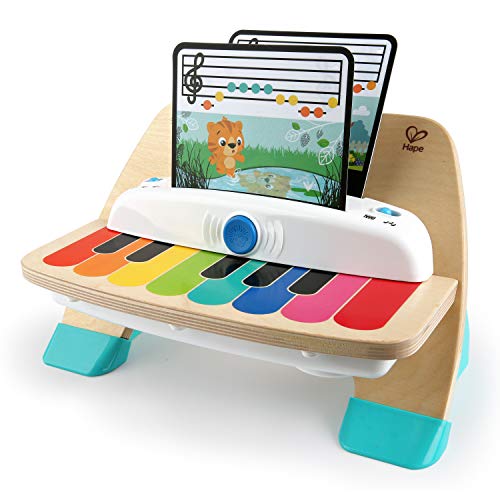
Baby Einstein The Magic Touch Piano is designed for infants and up, featuring touch-responsive melodies without the need for batteries. This Montessori-inspired toy lets little ones create sounds by simply tapping the surface, with three sheets of music and six songs to explore. Color-coded notes guide children to match keys and notes, and two play modes allow either music discovery or familiar tune playback. High-quality speakers ensure clear sound, and a volume control is suitable for different environments.
Vibrant 2-in-1 Piano Xylophone

Oprala’s 2-in-1 design blends a colorful piano with a xylophone, introducing children to multiple musical textures. The set includes a fresh green xylophone and two small hammers, encouraging both tapping and key-press interactions. All components are crafted from non-toxic ABS plastic with smooth edges for safety. The color-coded bars and keys aid early music theory recognition, supporting hand-eye coordination and rhythm understanding as kids press keys or strike bars to produce melodies.
Light-Up Baby Piano With Gentle Sounds

The Baby Piano Toy from WITALENT focuses on early sensory engagement with a light-up feature and a two-mode setup. Children can explore color recognition and sound by watching lights respond to action. The toy supports learning concepts such as numbers and simple instrument sounds, plus animal sounds in a separate mode. A volume control ensures parents can tailor the sound level, making it suitable for apartments or quiet rooms while maintaining engaging feedback for babies and toddlers.
Interactive Baby DJ Table With Music And Lights
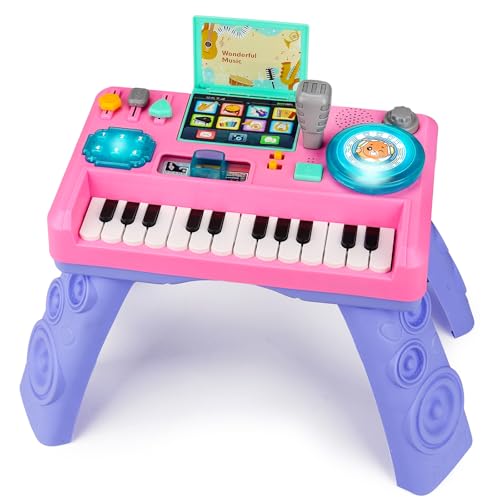
The Basytodio Baby DJ Table is a multi-sensory activity center combining a mini DJ turntable with a keyboard and multiple instrument sounds. With 24 piano keys across three play modes, 8 instrument sounds, and additional effects like mobile phone sounds, this table supports diverse musical exploration. A recording function and adjustable volume enable both solo play and shared experiences, making it a robust option for toddlers who want to experiment with rhythm, melody, and sound layering.
Farm Animals Keyboard With Silly Sounds

Acorn Avenue’s Farm Animals Keyboard introduces pretend play into early music learning. The toy features five music modes—piano, marimba, voice, do-re-me, and bird songs—allowing children to explore different soundscapes. Interactive play includes visual cues: eight chicken characters pop up with the beat as keys are pressed. This design fosters fine motor skills and auditory development while keeping playtime entertaining and educational.
Buying Guide: Key Purchase Considerations For Baby Piano Toys
- Age appropriateness: Choose products labeled for infants, 1 year, or 2+ years depending on your child’s development stage to ensure safety and effective stimulation.
- Educational value: Look for color-coded keys, note names, and multiple modes (learning vs. music playback) to support early literacy and music theory concepts.
- Safety and materials: Prioritize non-toxic plastics or finished wood with smooth edges. Check for BPA-free certification and absence of small detachable parts for younger babies.
- Durability: Consider sturdy construction that can withstand grabbing, banging, and drooping play. Hand grips or reinforced corners are a plus.
- Sound features: Volume controls and clear, pleasant tones help protect hearing while ensuring engaging feedback. Some models offer recording or tempo options for extended use.
- Play value and versatility: A multi-instrument setup or 2-in-1 designs expand play options, supporting creativity beyond simple keyboard play as children grow.
- Portability and storage: Lightweight designs with built-in handles or compact footprints are ideal for travel or small playspaces.
- Maintenance: Easy-to-clean surfaces and dishwasher-safe parts (where appropriate) simplify cleanup after messy play sessions.
- Brand assurance and warranty: Reputable brands with child-safety certifications and reasonable warranties provide added confidence for long-term use.
How To Choose For Your Child
To maximize engagement, match the toy to your child’s current interests. If they are drawn to lights and colors, a mat or light-up piano may invite more interaction. For babies who respond to touch, touch-activated sound toys or metal-resonant keys can be highly appealing. If you want a transition to more formal music basics, select a product with color-coded notes and a simple songbook to introduce early music notation.
In summary, the listed options provide a range of textures, sounds, and play styles suitable for babies and toddlers exploring piano-style toys. Each product emphasizes safe materials, developmental benefits, and engaging features that align with early childhood music learning.