Best Play Food for 1 Year Olds: Safe, Fun, and Educational Options
Finding age-appropriate play food for 1-year-olds supports early pretend play, fine motor skills, and healthy curiosity. The right sets introduce color sorting, basic nutrition concepts, and simple kitchen role-play in safe, durable materials. The selections below are designed for toddlers and preschoolers, with soft textures, rounded edges, and easy handling. This guide highlights five high-quality options, linking to Amazon pages for quick access.
Summary Of Selected Products
| Product | Brand | Key Benefit |
|---|---|---|
| Learning Resources Farmer’s Market Color Sorting Set | Learning Resources | Color recognition, sorting, counting, and food ID |
| hahaland Baby Sensory Toys – 16 PCS | hahaland | Sensory exploration with crinkle, rattle, varied textures |
| Learning Resources New Sprouts Bushel of Veggies | Learning Resources | Vocabulary building and healthy eating themes |
| Melissa & Doug Food Groups | Melissa & Doug | Healthy pretend play with color and sorting |
| JOYIN Learning Toys Play Food Set | JOYIN | Color sorting, multiple food types, organized storage |
Learning Resources Farmer’s Market Color Sorting Set

This versatile set helps toddlers develop color recognition, sorting abilities, counting, and food identification through hands-on play. The soft, durable rubber-like plastic pieces are sized for little hands and maintain their shape during repeated use. Suitable for ages 18 months and up, the collection evolves from basic color matching to imaginative market play and counting activities as children grow.
hahaland Baby Sensory Toys – 16 PCS

This 16-piece plush set is designed for infants and toddlers to explore with crinkle textures, rattles, and varied surfaces. Inspired by Montessori principles, these toys encourage independent, hands-on exploration. Activities such as peeling, squeezing, and pouring enhance fine motor skills, coordination, and problem-solving, while colorful fruits and vegetables support color recognition and sensory discovery.
Learning Resources New Sprouts Bushel Of Veggies

Ten soft, non-toxic vegetables designed for toddlers encourage imaginative play and social interaction. The items stay sized for little hands and resemble real produce, supporting vocabulary building and healthy eating themes during pretend grocery or kitchen activities.
Melissa & Doug Food Groups
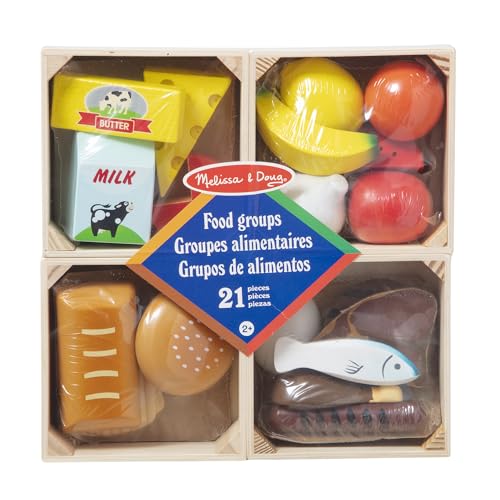
This wooden play food set includes items from the five food groups for healthy pretend meals. It supports nutrition education, basic math skills through sorting and counting, and storage in four wooden crates for organized play. The durable design promotes long-lasting use in home kitchens and classrooms alike.
JOYIN Learning Toys Play Food Set

This comprehensive set includes fruits, vegetables, and meats organized in five baskets. It emphasizes color-coded sorting, with dedicated name tags for food types. The set supports early literacy, vocabulary development, and multiple play scenarios, including pretend grocery shopping and kitchen play. It is designed to benefit various learning needs and is a versatile choice for toddlers.
Buying Guide: Key Purchase Considerations And Comparisons
Age appropriateness, safety, and durability are the top priorities for play food sets intended for 1-year-olds. Look for pieces with smooth edges, non-toxic paints, and rounded corners. Sets with varied textures can boost sensory development, while lightweight materials help early manipulatory skills. Consider whether the toy supports pretend play (kitchen, market, or grocery store) and if it includes storage solutions to reduce clutter.
Material options range from soft plastics to wooden designs. Soft plastics are often easier for small hands and can introduce basic texture differences, whereas wood offers a sturdy, durable build that withstands rough handling. If you’re aiming to reinforce color recognition, prioritize sets with bright, clearly labeled colors and color-sorting features. For early vocabulary and social play, choose products that encourage naming fruits, vegetables, and food groups.
Safety notes: ensure pieces are large enough to avoid choking hazards for 12- to 24-month-olds and that plastics meet safety standards. Look for BPA-free and non-toxic finishes. Some sets include accessories like baskets or knives; confirm that any pretend cutting tools are safe and designed for toddlers. Consider washability and cleanup ease, especially for play food with crinkly textures or plush materials.
Versatility is another criterion. A good set should adapt as your child grows—from basic color matching to more complex pretend-play scenarios like market shopping, meal preparation, or sorting games. For families with multiple children, select kits that offer multiple play ideas, encouraging cooperative play and social interaction. Finally, assess storage options; a compact, lidded container or basket helps keep toys organized and ready for the next session.