Best Small-Space Play Kitchens for Tiny Rooms
Growing imagination in a compact living area is possible with well-designed play kitchens crafted for small spaces. This guide reviews five top-rated options that fit tight spaces without sacrificing realism or play value. Each picks prioritizes compact footprints, sturdy construction, and engaging features to support role-play, fine motor skills, and social interaction among toddlers and preschoolers.
| Product | Brand | Key Highlights |
|---|---|---|
| Tiny Land Play Kitchen, Kids Kitchen Playset | Tiny Land | Wooden, compact dimensions, cutting food set, ready-to-play |
| Lehoo Castle Kids Play Kitchen | Lehoo Castle | Small footprint, two stovetops, easy assembly |
| Best Choice Products Pretend Play Wooden Farmhouse Kitchen | Best Choice Products | Classic farmhouse design, built-in storage, multiple accessories |
| ROBOTIME Play Kitchen for Kids Toddlers | ROBOTIME | Wooden, realistic features, cutting food set, stylish finish |
| Learning Resources New Sprouts Prep ‘n’ Store Kitchen Island | Learning Resources | Three-level island, easy mobility, storage baskets |
These selections balance space efficiency with engaging play elements, ensuring parents can fit a functional play kitchen into apartments, dorms, or shared rooms while preserving a realistic kitchen experience for kids.
Tiny Land Play Kitchen: Compact Wooden Kitchen

Tiny Land’s play kitchen is designed with small spaces in mind. The wooden construction offers a sturdy, child-friendly build that can stand up to daily pretend cooking. At a compact size, it fits neatly in apartments or cozy corners without crowding the room. The set includes realistic features like an oven, sink, and stove, plus cutting food playsets that encourage hands-on pretend play. A chef hat and apron are part of the package, making it easy to start playtime right out of the box. The toy is BPA-free and constructed to withstand rough handling by curious young chefs.
Play value centers on interactive elements like the faux stove with knobs and a functioning sink, which help develop fine motor control as kids rotate dials and manipulate tiny accessories. Storage is straightforward thanks to open shelves and a compact footprint, allowing parents to keep the play area tidy between sessions. Assembly is typically quick, with clear instructions aimed at adults and older siblings who can assist younger children. Overall, this Tiny Land model provides a balanced mix of realism, safety, and space efficiency.
Lehoo Castle Wood Kitchen: Small Yet Complete

Lehoo Castle offers a compact wooden kitchen designed for toddlers and small living spaces. Its dimensions maximize usability while keeping a neat silhouette in the room. The set includes two stovetops, a working oven, and a sink with a faucet—knobs that rotate for tactile feedback. The build emphasizes durability with eco-friendly, BPA-free wood, ensuring safety for young hands. Easy assembly helps families get playtime underway quickly. Ample storage space inside and around the unit encourages tidy behavior and organization as kids stock pots, pans, and play food after sessions. The design also supports imaginative play with realistic sounds or visual cues during cooking pretend play.
Pros for small spaces include a low profile and a layout that fits into corners or against walls. The included accessories provide enough variety to sustain prolonged engagement without overwhelming the room. Potential cons may be the limited color options and the need for regular dusting or wipe-downs due to wood surfaces. Overall, this kitchen supports rich role-play while respecting space constraints and safety considerations in busy family homes.
Best Choice Farms: Farmhouse Play Kitchen
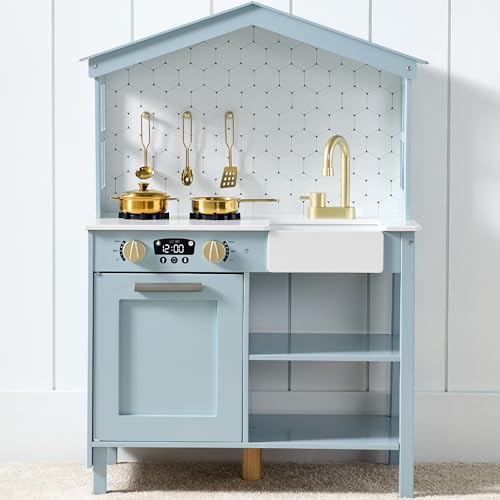
This best-selling wooden pantry-style kitchen emphasizes a farmhouse aesthetic with practical storage and an inviting open design. The four-paned windows and spacious oven with clicking knobs create a realistic cooking environment that scales well for small rooms by providing clear lines of sight and a compact footprint. The unit includes five accessories that expand pretend play, from basic utensils to cookware, helping children practice sequencing and imaginative meal prep. The built-in storage keeps clutter contained, which is especially valuable in compact living spaces where organization matters. Assembly is straightforward, and the durable finish resists daily play wear.
In terms of space optimization, the design prioritizes vertical storage and a compact width that respects room boundaries. For families seeking a sturdy, stylish option with a touch of country decor, this kitchen offers reliable performance. Potential drawbacks include the need for additional storage solutions if more accessories are desired and the possibility that the large surface area may dominate particularly tiny playrooms. Nevertheless, this is a solid choice for steady, long-term use in small homes.
ROBOTIME Play Kitchen: Modern Wooden Set

ROBOTIME’s wooden play kitchen combines a contemporary beige and gold faucet motif with classic kitchen features for a stylish yet compact unit. The set includes interactive elements such as a cutting food set, a sink, and cabinets, aiming to teach basic food preparation concepts while providing a life-like cooking feel. The neutral color palette blends well with modern nurseries or shared playrooms, helping the kitchen blend into home decor when not in use. The construction emphasizes durability, and the attention to realistic details supports immersive role-play that can improve social interaction skills as kids practice sharing and cooperative play during pretend cooking sessions.
Pros include a modern aesthetic that complements various interior styles, and a realistic kitchen vibe that keeps children engaged. A potential consideration is the need for supervision during play with small accessories to prevent misplacement. This model stands out for families seeking a space-efficient, design-forward option that still prioritizes play value and educational aspects of cooking experiences.
Learning Resources Prep ‘n’ Store Kitchen Island

Learning Resources introduces a mobile, island-style kitchen that is particularly well-suited to small rooms or classroom settings. The three-level design offers an imaginative kitchen island with a butcher block counter, shelves, baskets, and rolling wheels for easy relocation. The storage-focused design helps keep play food, utensils, and accessories organized, reducing clutter in tight spaces. This option emphasizes social interaction, as the island layout naturally supports cooperative play and shared tasks in group settings. The included features stimulate role-play scenarios that mimic real grocery and cooking activities, expanding opportunities for language development and collaborative play among children.
Advantages include versatile mobility, ample storage, and a structure that scales well from toddlers to preschoolers. A potential limitation might be the overall footprint when fully assembled, so measuring available play space beforehand is advised. Nonetheless, this island is a strong, space-conscious choice for educators and families who value portability and organization in a compact environment.
Buying Guide: Key Considerations for Small-Space Play Kitchens
- Footprint and height: Measure the intended play area and check product dimensions to ensure a proper fit without crowding doors or furniture.
- Materials and safety: Prefer wooden or BPA-free plastics with rounded edges and sturdy joins for durability and child safety.
- Storage and organization: Look for built-in shelves, hooks, and bins that help keep play food and accessories organized in tight spaces.
- Play value: Choose features that encourage role-play, such as doors that open, knobs that turn, sounds or lights, and included accessories.
- Assembly and maintenance: Consider product assembly time and ease of cleaning, especially for wood finishes and small parts.
- Mobility: For very small spaces, a lightweight, easily movable unit or a model with wheels can help reconfigure the room as needed.
- Age appropriateness: Ensure the kitchen set matches the child’s age and dexterity—smaller parts for younger kids can be a hazard.
- Style alignment: Match the kitchen’s look with room decor—wood tones, modern neutrals, or playful colors—to blend with interiors.
- Longevity: Choose durable construction and timeless design to withstand frequent use and evolving play interests.
- Expansion potential: Some kits offer accessories or add-ons that extend the play experience as kids grow.
When selecting a small-space play kitchen, prioritize a well-balanced mix of realism, safety, storage efficiency, and the ability to fit into the room’s layout. The reviewed options provide varied design aesthetics—from classic farmhouse to modern wood tones—while maintaining compact footprints and robust play value. Consider your space constraints, the child’s interests, and how the kitchen will be used—solo play, shared play, or educational settings—to determine the best fit for your home.