Best Play Tables for Babies: Top Activity Centers to Grow With Your Child
Parents seeking engaging, developmentally suitable play tables for babies and toddlers will find this guide helpful. The following 5 products are selected for their durable designs, multi-sensory play zones, and adjustable use as children grow. Each option emphasizes fine motor skills, early learning concepts, and safe, age-appropriate activities to support early development.
Summary of chosen products:
| Product | Brand | Key Features | Age Range |
|---|---|---|---|
| VTech Magic Star Learning Table (Yellow) | VTech | Six bilingual activities; steering wheel; interactive book; gears; light-up buttons | From infant to toddler |
| Skip Hop Baby Activity Center | Skip Hop | 3-stage grow-with-me; 25+ activities; musical piano; positionable toys | 4 months and up |
| VTech Magic Star Learning Table (Pink) | VTech | Six bilingual activities; steering wheel; electronic book pages; color learning | From infant to toddler |
| LeapFrog Little Office Learning Center | LeapFrog | Laptop, phone, globe; 27 touch points; Explore/Learn/Music modes | Young children |
| Move2Play 4-in-1 Baby Activity Center | Move2Play | 8 Montessori toys; interactive learning piano; machine-washable components | 6-24 months |
VTech Magic Star Learning Table (Yellow)
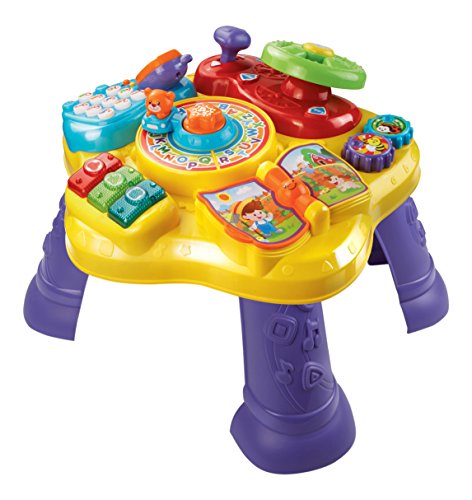
The VTech Magic Star Learning Table in Yellow offers six bilingual activities in English and Spanish to foster early language exposure. A steering wheel prompts the bear to move around the table, while an electronic book page flip triggers nursery rhymes. Turning gears strengthens fine motor skills, and light-up music buttons teach colors and sounds. This setup supports sit-and-play and table-top exploration, making it suitable for babies and toddlers as their curiosity grows.
Skip Hop Activity Center: Explore & More
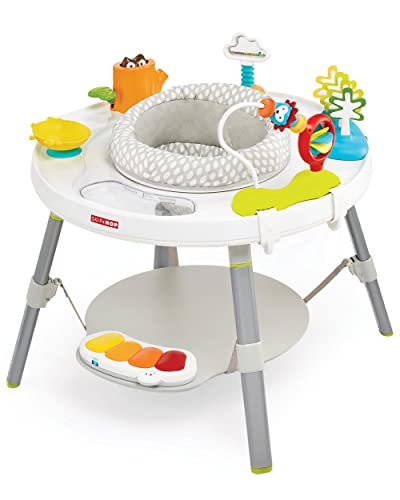
The Skip Hop activity center grows with your child through three stages: Sit, Swivel, Bounce & Play; Cruise & Interact; extending from infancy to toddler years. It includes a musical, light-up piano with multiple modes, a peek-a-boo owl, and clip-on toys that can be positioned for development. The design accommodates babies from about four months and up to 25 pounds, encouraging long-term use as gross motor skills advance.
VTech Magic Star Learning Table (Pink)
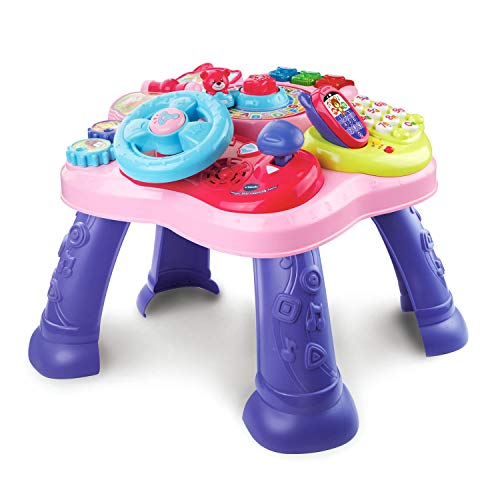
The Pink variant mirrors the Yellow model with six bilingual activities and a steering wheel that moves a bear around the table. It includes an electronic learning book with pages to flip for nursery rhymes and light-up color-responsive buttons. The combination of sounds, movement, and colors fosters sensory integration and early language exposure, making it a solid choice for early learners who enjoy vibrant, interactive play.
LeapFrog Little Office Learning Center
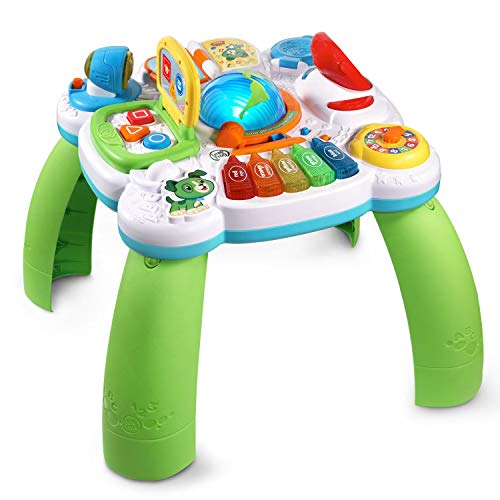
This desk-style learning center introduces early roles and practical pretend play with a laptop, phone, globe, and more. It features 27 electronic touchpoints and multiple modes—Explore, Learn, and Music—to deliver first words, greetings, and global music. The interactive screen reveals animals and shapes, supporting cognitive development and familiarization with everyday tools in a compact, child-friendly setup.
Move2Play 4-in-1 Activity Center
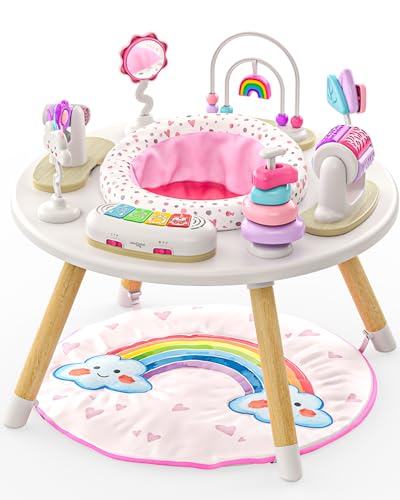
Move2Play offers an 8-toy Montessori-inspired setup that transitions from tummy time to standing play. The interactive learning piano features over 30 phrases, sounds, and songs, covering ABCs and colors. The fabric seat and tummy time mat are machine washable, and plastic toys wipe clean easily. The product emphasizes multi-sensory exploration and practical, child-centered learning, suitable for babies from around six months as they reach new developmental milestones.
Buying Guide
- Age and growth trajectory: Look for a product that supports multiple stages of development, from tummy time to standing play. Choose growth-friendly designs like 3-stage or 4-in-1 layouts that can adapt as your child develops.
- Learning modalities: Prioritize play tables with diverse activities—cause-and-effect features (buttons, gears), language exposure (bilingual or multiple languages), music, and fine motor tasks (steering wheels, turning pages, clip-on toys).
- Material and safety: Ensure smooth edges, non-toxic paints, and sturdy construction. Machine-washable fabrics and easy-to-clean plastic components can be essential for younger babies who explore with saliva or spills.
- Size and space: Consider the play space available. Some tables are compact for early years, while others offer larger footprints suitable for bigger play areas or rooms with more space.
- Portability and storage: Removable components and foldable or modular designs help with storage between play sessions and make setup simpler for caregivers.
- Multilingual and cognitive features: If bilingual exposure is important, select options with bilingual content. For cognitive growth, opt for activities that promote animal recognition, shapes, colors, and early math concepts.
- Durability and value: While premium options offer more features, evaluate the number of learning modes, toy variety, and the long-term usefulness as your child grows to determine value for money.
- Maintenance: Favor items with easy-clean surfaces and removable, washable fabrics to maintain hygiene in a baby play environment.
The collection above provides a range of play tables that balance language development, fine motor skills, and imaginative play. When choosing, consider your child’s current interests, space, and whether you want a stationary table or a more dynamic, grow-with-me center. Each option offers a different blend of features designed to engage babies and support early learning milestones.