Best Pop Up Toy Picks for Early Learning and Fine Motor Skills
Pop up toys offer a playful way to boost cause-and-effect understanding, hand-eye coordination, and color recognition for toddlers and babies. This guide highlights five top pop-up toy options, each with bright animals, engaging buttons, and interactive features. Explore how these toys support early development and which details to consider when choosing one for a curious little learner.
| Product | Brand | Age Range | Key Benefit |
|---|---|---|---|
| Battat Cause-and-Effect Pop-Up Pals | Battat | 18+ months | Cause-and-effect learning with color sorting |
| Fisher-Price Hide & Peek Pop-Up | Fisher-Price | 9+ months | Fine motor skills with wood accents and sounds |
| MIDOCCHIO Cause-and-Effect Toy | MIDOCCHIO | 18+ months | Color and animal awareness through button interactions |
| Hieoby Interactive Pop Up with Music | Hieoby | 9-12+ months | Music, light, and multiple play modes for learning |
| YEEBAY Pop Up Animals Toy | YEEBAY | 12-18+ months | Two play modes with lights and animal sounds |
When selecting a pop up toy, consider durability, battery needs, multi-mode play, ease of use for little fingers, and the age-appropriateness of animals and sounds. The right toy should encourage exploration without overstimulation, while providing tangible feedback when a button or lever is activated.
Battat Cause-and-Effect Pop-Up Pals
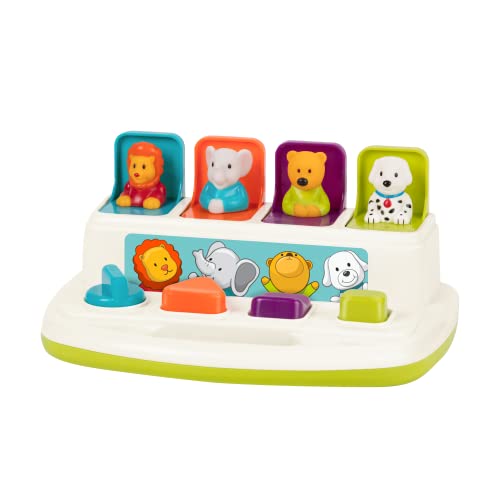
The Battat Pop-Up Pals encourage cause-and-effect learning through a simple mechanism: press a button to reveal a friendly animal. Features include varied buttons that require turning, pressing, flipping, and sliding to trigger animal pops, supporting fine motor development and color recognition. This toy is designed for children 18 months and older, helping toddlers discover how actions lead to observable results.
Fisher-Price Hide & Peek Pop-Up

This Baby Pop-Up activity toy blends wooden accents with lively sounds to strengthen fine motor skills. The log-like structure houses four activities that respond to pressing, sliding, turning, and toggling. When interacted with, animal pals pop up, accompanied by charming sounds like clicks, squeaks, and chimes—an engaging multisensory experience for infants and toddlers.
MIDOCCHIO Cause-and-Effect Toy

MIDOCCHIO’s interactive design presents cute animals that pop up when a button is pressed, with a variety of buttons including left-right and flip actions. The toy emphasizes cause-and-effect, animal recognition, and color exploration. It’s suitable for toddlers and babies over 18 months, offering engaging sensory feedback through multiple input methods and bright visuals.
Hieoby Pop Up Animal Toy With Music

Hieoby’s Interactive Pop Up Toy features five animals and five colorful buttons. It supports multiple play modes, including quiet, learning, and game modes with music and lights. It promotes fine motor skills, problem-solving, and animal recognition while sparking curiosity through cause-and-effect exploration. Batteries are required for some modes, with a battery-free quiet mode available as well.
YEEBAY Pop Up Animals Toy

YEEBAY’s interactive design introduces two play modes. The animal pops up when a lever, switch, dial, or button is activated, delivering immediate cause-and-effect feedback. This toy emphasizes fine motor skills, color recognition, and animal identification. It’s portable, durable, and includes an easy-carry handle, making it a practical option for travel and on-the-go learning.
Buying Guide: Key Considerations For Pop Up Toys
Durability: Look for sturdy construction with bright finishes and rounded edges designed for tiny hands. Non-toxic materials and washable surfaces help with daily use and cleaning.
Age-appropriateness: Check recommended ages and ensure controls are sized for small fingers. Start with simple push-and-pop actions and progress to more complex buttons as motor skills develop.
Modes and sensory feedback: Toys with multiple modes (quiet, learning, music, light) provide varied stimuli and extended engagement. Consider how sounds and lights complement learning goals without becoming overwhelming.
Motor skill development: Choose toys that promote gripping, twisting, turning, pressing, and sliding. This strengthens hand and finger muscles while reinforcing cause-and-effect understanding.
Battery use and longevity: Some toys require batteries for music and lights. If battery-free options exist (quiet modes), they can be ideal for calm play sessions and travel.
Portability and storage: A compact, durable design with a handle helps with travel or in-car learning. Consider whether storage space is available for ages as they grow.
Educational scope: Look for toys that expand learning across colors, animals, shapes, and sequence to maximize developmental benefits beyond simple play.