Best Push Bikes for Babies and Toddlers: Safe 5-in-1 Trikes for Early Riding
Parents seeking the best push bikes for babies often want versatility, safety, and growth potential. This article highlights five convertible push trikes designed to grow with children from infancy to early school years. Each option blends sturdy construction, adjustable components, and multiple riding modes to help little riders master balance and steering with confidence.
The following summary table lists the selected products and key features for quick reference:
| Product | Brand | Mode Range | Age Range | Highlights |
|---|---|---|---|---|
| newyoo Toddler Bike, TR007 | newyoo | 5 modes: Tricycle, Balance, Bike | 12-36 months | One-click mode changes; EN188/ASTM compliant wheels |
| newyoo Toddler Tricycle with Push Handle, Khaki | newyoo | 5 modes: Push, Tricycle, Balance, Bike | 12-36 months | Adjustable push handle; parent-friendly steering |
| SEREED Baby Balance Bike for 1-2 Years | SEREED | Balance bike only (4 wheels) | 12-24 months | 135° turning; safe outdoor/indoor ride |
| newyoo TR008 5-in-1 Toddler Tricycle | newyoo | 4 modes: Push, Tricycle, Balance, Bike | 12-36 months | Adjustable handlebar/seat; easy conversion |
| JMMD 7-in-1 Tricycle Stroller | JMMD | 6 modes via 7-in-1 design | 18 months-5 years | 3-point harness; detachable bar; all-terrain wheels |
newyoo Toddler Bike, 5-In-1 Convertible Trike

The TR007 model by newyoo is a 5-mode toddler bike designed to grow with a child from infancy through early toddler years. Modes include traditional tricycle, balance bike, and standard bike, with a simple one-click conversion system that supports quick transitions as the child’s abilities develop. The frame combines carbon steel and aluminum alloy, with EVA wheels for a smoother ride. The product emphasizes long life and safety approvals such as EN188 and ASTM. It is suitable for ages roughly 12 to 36 months, depending on the riding mode chosen.
newyoo Toddler Tricycle with Push Handle, Khaki
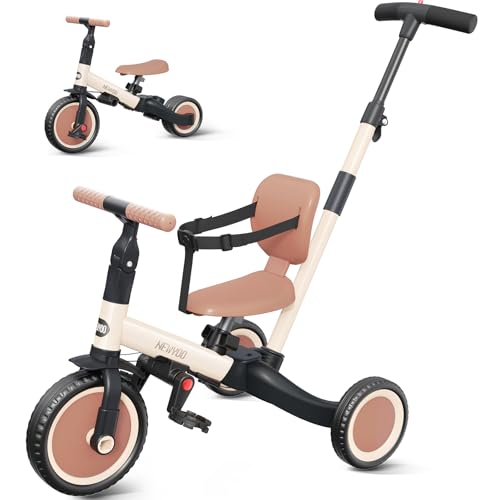
This 5-in-1 tricycle provides a push mode for parents and a guided transition to balanced riding. The push handle rotates up to 135 degrees to help with steering and speed control and can be adjusted to suit the caregiver’s height. The handlebar, seat, and pedals are adjustable in multiple positions, enabling a comfortable setup as the child grows. Its design emphasizes portability and ease of transformation between modes to support developing motor skills and confidence in early riders.
SEREED Baby Balance Bike for 1-2 Years
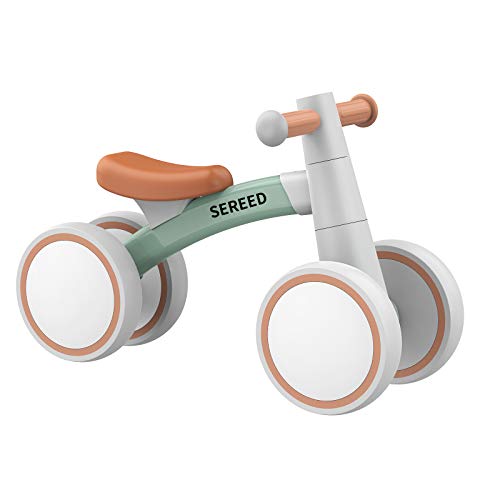
The SEREED balance bike is designed for the earliest stages of riding, featuring a 4-wheel setup with no pedals to reduce the risk of foot clamping. It emphasizes balance development, steering coordination, and confidence, with a widened wheelbase for stability. The bike uses an aluminum alloy frame and non-slip TPU handles, paired with a soft, supportive seat and non-marking floor tires for indoor use or outdoor play on even surfaces. It is best suited for toddlers in the 12–24 month range or when supervised by a caregiver.
newyoo TR008 5-In-1 Toddler Tricycle

The TR008 model shares a four-mode design with a strong emphasis on adjustable components. Parents can steer the tricycle in push mode, cycle through to tricycle, balance, and bike modes with minimal effort. The red button allows quick adjustment of the handlebar and seat, and three pedal positions facilitate easy mode changes. The frame uses durable materials with a focus on safety, and the design supports growth from roughly one to three years old, making it a versatile addition to a child’s early riding journey.
JMMD 7-In-1 Tricycle Stroller

The JMMD tricycle combines six usable modes within a seven-in-one framework, allowing growth from 18 months up to 5 years. Features include a 3-point safety harness, detachable safety bar, double brakes, and UV canopy, which contribute to a secure and comfortable ride in various environments. The steel frame supports up to heavier weights, while the 600D fabric ventilation enhances seating comfort. All-terrain wheels ensure stability on multiple surfaces, making it a practical choice for diverse outdoor activities.
Buying Guide: Key Purchase Considerations And Comparisons
When choosing a push bike or tricycle for a toddler, consider these factors to match the child’s development and family needs:
- Growth potential: Look for models offering multiple modes (push, balance, tricycle, bike) and adjustable components (handlebar, seat, pedals) to extend usability.
- Safety features: Check for a sturdy frame, secure harness or safety bars, limited steering angles, and quality wheels that provide traction without snagging clothing.
- Weight and size: Ensure the bike suits the child’s height and weight, with a reasonable maximum user weight and a low center of gravity for stability.
- Ease of transition: Models with simple, tool-free conversions save time for caregivers and reduce frustration for kids learning new riding modes.
- Portability and storage: Consider foldability or compact design if frequent travel or limited storage space is a concern.
- Materials and durability: Look for metal frames (steel or aluminum), puncture-resistant wheels, and kid-safe plastics with durable finishes.
- Age guidance and supervision: Adhere to the manufacturer’s age recommendations and supervise children during use, particularly during mode transitions and when learning new techniques.
- Maintenance: Check for replaceable parts (pedals, tires) and ease of cleaning, as well as the availability of compatible accessories or replacement parts.
In evaluating the five options, families should weigh the combination of versatility, safety features, and ease of use. Newyoo models emphasize multi-mode flexibility and adjustable components, which are valuable for a growing child. SEREED focuses on a pedal-free balance approach suitable for early balance training, while JMMD provides broader age coverage with a robust safety framework for outdoor use. Individual priorities—such as how soon a caregiver wants to push versus supervise, or the need for all-terrain capability—will guide the final choice.