Best Radio Controllers for Drones: Top Picks for Precision Flying
Choosing the right radio controller is essential for reliable control, long-range capability, and responsive handling in FPV flight and RC tooling. This guide highlights five leading options that balance protocol support, gimbal quality, and firmware flexibility for American pilots. Each product below includes core features and real-world use considerations to help you compare performance, compatibility, and setup ease.
| Product | Brand | Key Strength |
|---|---|---|
| Radiomaster Pocket ELRS Remote Controller | STARDRONE | Ultra-low latency with EdgeTX, portable design |
| TX15 Radio Controller | STARDRONE | Long-range ELRS support, large touchscreen |
| C8 ELRS V3 | STARDRONE | ExpressLRS 2.4G, wide compatibility |
| Alaohu FS-i6X | Alaohu | Budget-friendly, multi-mode compatibility |
| BETAFPV LiteRadio 3 | BETAFPV | Configurable, simulator-ready |
Radiomaster Pocket ELRS: Compact, Low-Latency Control
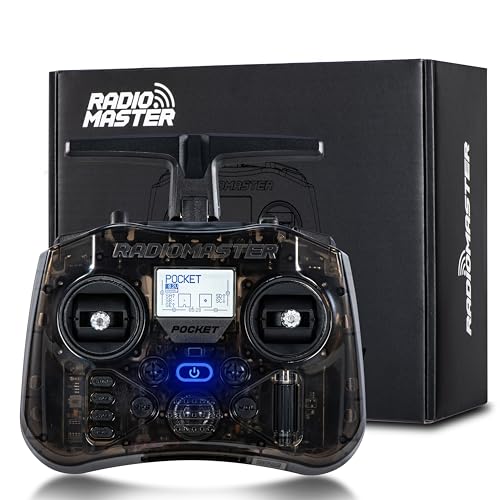
The Radiomaster Pocket ELRS Remote Controller offers ExpressLRS compatibility for extended range and reduced latency, delivering responsive control for FPV drones, RC multirotors, RC boats, and more. It ships preloaded with EdgeTX firmware for plug-and-play setup and customization. Note that batteries are not included; two Radiomaster 18650 cells are required for operation. The device features 16-channel output, Hall-effect gimbals, and TRIM buttons, aiming to reduce drift during high-precision maneuvers.
With EdgeTX integration, pilots can tailor screens, Lua scripts, and cross-compatibility options. Its compact form factor suits field use and travel, while its broad compatibility makes it a strong all-around choice for both beginners and seasoned pilots seeking a versatile transmitter. The Pocket’s design emphasizes portability without sacrificing functional controls critical to FPV performance.
Radiomaster TX15: 3.5-Inch Screen, ELRS Ready
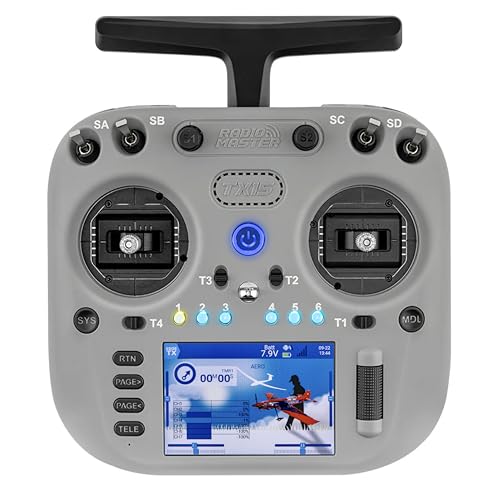
TX15 combines long-range ELRS support with a powerful STM32 H7 processor and a 3.5-inch IPS touchscreen, delivering fast model switching and vivid on-device controls. The internal Semtech LR1121 transceiver supports low-latency links across 2.4 GHz and optional 900 MHz bands, enhancing stability for distant or interference-prone environments. The large display simplifies menu navigation under daylight conditions, enabling quick adjustments to flight modes, gimbal settings, and Lua-script driven customization.
Designed for both newcomers and advanced pilots, the TX15 balances performance and usability, ensuring smooth responses for FPV freestyle, racing, or precision flying. Its EdgeTX compatibility and scripting capabilities offer depth for users who want tailored flight experiences or enhanced automation in their control schemes.
C8 ELRS V3: ExpressLRS For True Range and Precision
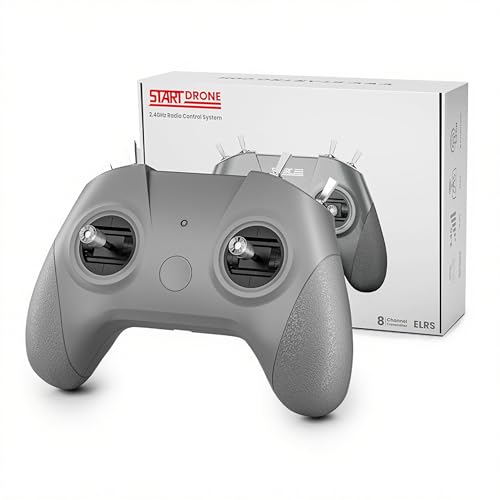
The C8 ELRS V3 radio transmitter is built around ExpressLRS 2.4G with a maximum 1000-meter range and a claimed end-to-end latency around 7ms. It supports FPV drones, RC helicopters, boats, multirotors, and simulators via USB-C plug-and-play. The device emphasizes high-precision control with eight-channel output and a robust mechanical joystick assembly. This transmitter is suitable for pilots who require a strong link in complex or open environments and want reliable simulator compatibility for practice and training.
With ELRS integration and a low-latency wireless module, the C8 ELRS V3 suits competitive pilots and hobbyists seeking competitive response times. It offers a balance of power, portability, and expandability for those who want a single transmitter across multiple RC platforms and training tools.
Alaohu FS-i6X: Budget-Friendly, Flexible Modes

Alaohu’s FS-i6X is a budget-conscious option offering Mode-2 operation and compatibility with multiple receivers, including the FS-iA6B. It can support FM and PWM outputs and can be extended to 10 channels by pairing with an appropriate receiver. The transmitter supports S.Bus and iBus, providing flexible control options for FPV drones, RC cars, boats, and fixed-wing aircraft. While not the most feature-rich on the list, its affordability makes it a practical entry point for new hobbyists or those building a diversified RC setup.
For pilots prioritizing low cost and broad compatibility, the Alaohu FS-i6X delivers dependable performance with room to grow, especially when paired with supported interfaces and additional modules. It represents a value-forward choice in multi-system lineups.
BETAFPV LiteRadio 3: Configurable And Simulator Ready

LiteRadio 3 by BETAFPV emphasizes firmware configurability and compatibility with a variety of systems, including Frsky and BETAFPV’s own ecosystems. It supports FPV simulators via USB for a practical training path and offers Joystick calibration, firmware updates, and external TX module options. This transmitter is designed to appeal to pilots who want flexible protocol options and the ability to adjust flight characteristics through configuration tools, making it a solid choice for evolving FPV needs.
Its focus on configurability and simulator integration makes the LiteRadio 3 suitable for pilots who value on-device customization and an accessible upgrade path as their flight skills grow. The USB-C charging and cross-compatibility options are additional perks for a versatile setup in both real-world and simulated environments.
Buying Guide: Key Purchase Considerations
When evaluating radio controllers for drones, consider these factors to match your flying style and hardware ecosystem:
- Protocol compatibility: ELRS, FrSky, Flysky, and other ecosystems affect range, latency, and receiver compatibility. Choose a transmitter that supports your preferred receivers and modules.
- Latency and range: Ultra-low latency improves responsiveness in FPV racing and freestyle, while longer range helps with large open-area flying and simulators that demand realistic control dynamics.
- Gimbal quality and ergonomics: Hall-effect or high-precision joysticks reduce drift and improve control accuracy. Ergonomics matter for long sessions; consider grip shape and weight.
- Firmware and customization: EdgeTX, OpenTX, and Betafpv Configurator offer scripting, model management, and feature-rich settings. Ensure the platform fits your comfort level and training goals.
- Display and interface: A built-in or large touchscreen can speed up model switching and parameter tuning, especially in field conditions.
- Power and batteries: Verify battery requirements and availability. Some controllers require separate battery packs, which affects portability and cost.
- Simulator compatibility: If you practice in software like Liftoff, VelociDrone, or DRL, confirm USB compatibility and driver support for a seamless transfer between sim and real flight.
- Expandability: Look for modules and cross-compatibility with other radios, receivers, and external peripherals to future-proof your setup.
Depth of evaluation varies by pilot: beginners may prioritize ease of use and clear manuals, while experienced pilots might seek advanced firmware options, long-range capabilities, and cross-protocol versatility. Noise tolerance, heat management, and field setup convenience are practical considerations for extended sessions and competitive environments.