Best Radio Kits for Kids: Fun Projects That Teach Electronics and Sound
Discover engaging radio kits that teach kids how radios work while delivering hands-on building fun. The following selections cover beginner to intermediate projects, combining 88-108 MHz FM reception with easy assembly, so young learners can explore electronics, circuits, and sound engineering. This guide highlights five top kits, with options for different ages and interests, from snap-together circuits to wooden DIY builds. Use the table below to compare essential details at a glance.
| Product | Brand | Key Focus | Age Range |
|---|---|---|---|
| Snap Circuits FM Radio Kit | Snap Circuits | Hands-on FM radio construction | 8+ |
| DIY Wood Radio & Speaker Kit | ANNISOKA | Wooden radio with speaker build | 8-14 |
| Poraxy Build-Your-Own FM Radio | Poraxy | Programmable FM radio with durable parts | 8-12 |
| 3-in-1 Radio, Recorder & Bluetooth Speaker | LUCKY GUESS | Three-in-one DIY electronics project | 10+ |
| VOGURTIME AM/FM Soldering Kit | VOGURTIME | Beginner soldering project with AM/FM models | 8+ |
Snap Circuits FM Radio Kit

The Snap Circuits FM Radio Kit offers an entry-level pathway into electronics by letting kids assemble a working FM radio using a modular, snap-together system. The design emphasizes hands-on learning with clearly labeled components, enabling young builders to identify resistors, capacitors, and inductors while hearing how different parts affect radio reception. Ideal for ages 8 and up, it supports early STEM skills, pattern recognition, and constructive problem-solving as users connect circuits to produce sound and tune to different stations.
ANNISOKA DIY Wood Radio & Speaker Kit
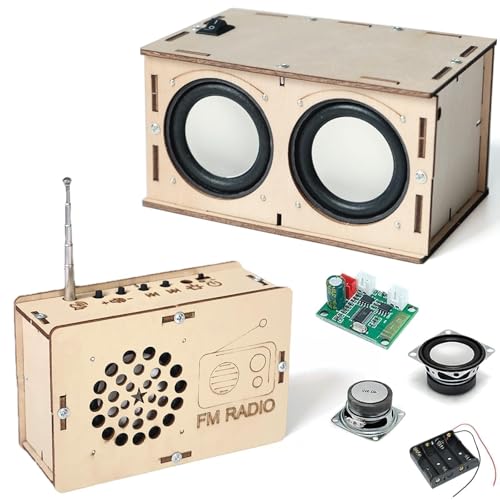
This dual kit blends creativity with practical electronics by combining a wooden radio and a speaker in one build. No soldering is required, making it accessible for beginners while still offering a satisfying hands-on experience. The kit encourages exploration of sound, radio concepts, and circuit basics, with a focus on craftsmanship through laser-cut pieces that fit precisely. It serves as a thoughtful gift for curious kids ages 8 through early teens and beyond, promoting patience, planning, and mechanical assembly skills.
Poraxy Build-Your-Own FM Radio Kit

Poraxy’s radio kit emphasizes curiosity and learning by guiding kids through the science of electronics and radio. The design includes a flexible frequency range (87-108 MHz) with a retractable antenna for practical reception, and the parts are laser-cut for clean edges and easy assembly. Batteries power the project, and the kit is suitable as a gift for young makers who enjoy building, testing, and tweaking circuits. It supports STEM exploration while fostering fine motor skills and sequential thinking during construction.
3-in-1 Radio, Recorder & Bluetooth Speaker

This 3-in-1 kit merges radio building with a recorder and a Bluetooth speaker, offering a broader scope of electronics comprehension. The project encourages experimentation with different modes, including how signal transmission and sound reproduction work. It’s well-suited for tweens and teens who enjoy adaptable projects and hands-on problem-solving, providing a platform to compare how a radio circuit differs from a digital audio device and a wireless speaker.
VOGURTIME AM/FM Soldering Kit
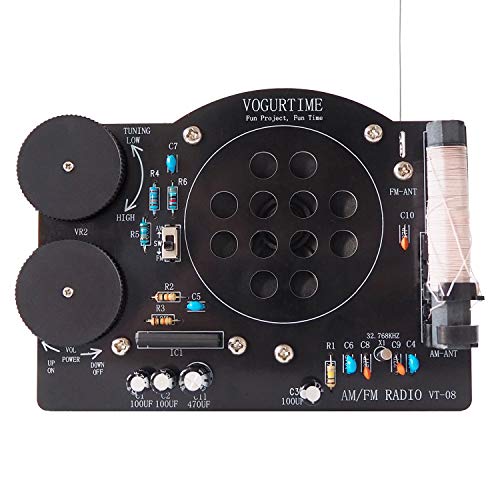
The VOGURTIME soldering-based AM/FM radio kit introduces older builders to essential soldering skills while constructing a functional radio. This project emphasizes precision and attention to detail, with a straightforward design that helps learners grasp circuit concepts, tuning, and maintenance. It’s a robust option for students who want a more hands-on, tool-use-focused experience, including the basics of soldering technique and circuit debugging.
Buying Guide: Key Purchase Considerations
- Age and skill level: Choose kits aligned with the child’s current understanding of electronics. Beginner kits emphasize snap-together components, while soldering-focused options suit older or more experienced builders.
- Learning goals: Decide whether the priority is basic circuit awareness, radio reception, or expanded projects like adding Bluetooth or recording features. Some kits blend multiple concepts for a broader STEM experience.
- Parts quality and safety: Look for durable parts, clearly labeled components, and non-toxic materials. Wooden or plastic frames with simple assembly reduce risk for younger children.
- Expansion potential: Consider kits that allow future upgrades or add-ons, so the project can evolve as skills grow, increasing long-term engagement.
- Reception and tuning: Frequency range coverage (such as 87-108 MHz) and the presence of a retractable antenna impact how well a kid can receive stations and experiment with alignment.
- Gift suitability: If presenting as a gift, pick designs with appealing packaging, easy setup, and inclusive themes that suit both girls and boys to maximize the gift’s appeal.
- Assembly time and tool needs: Some kits require no tools; others need basic equipment like a screwdriver or a soldering iron. Plan accordingly for supervision and safety.
- Educational value: Look for kits that explain underlying concepts and come with instruction manuals or guided experiments to promote independent learning.
Perspectives On Choosing The Right Kit
For beginners, Snap Circuits and ANNISOKA’s wooden builds emphasize intuitive assembly, minimizing frustrations while still demonstrating core radio concepts. As kids gain confidence, Poraxy and VOGURTIME can introduce more advanced techniques, such as tuning, soldering, or multi-function projects, expanding understanding of signal processing and audio electronics. If a child prefers music and recording, the 3-in-1 kit offers a practical bridge to digital audio technology while reinforcing mechanical construction skills. Across all options, the emphasis remains on safe, structured exploration that links play with foundational STEM knowledge.
Budget considerations often favor multi-function or expandable kits, which provide ongoing value for a growing interest in science and engineering. Parents can also pair a kit with complementary activities, such as guided experiments or simple measurement tools, to reinforce concepts like frequency, resonance, and signal quality. By selecting a kit that matches a child’s curiosity and learning pace, families can foster sustained engagement with radio technology and electronics.