Best RC Transmitter for Helicopters: Top Controllers for Stable Flight
The right RC transmitter can dramatically improve control, stability, and enjoyment when piloting helicopters. The following selection focuses on transmitters and systems that deliver reliable 2.4GHz communication, strong anti-interference performance, and versatile channel options. Each entry includes features tailored to helicopter use, from beginner-friendly stability to advanced telemetry and bidirectional data for precision flying.
| Product | Brand | Channels | Radio Tech | Key Benefit |
|---|---|---|---|---|
| FLYSKY FS-i6 | FLYSKY | 6 | 2.4GHz AFHDS 2A | Low power, long-range stability for basic heli setups |
| FLYSKY FS-i6X | FLYSKY | Up to 10 | 2.4GHz | Bidirectional data and telemetry options, modular expansion |
| Radiolink AT10II | Radiolink | 12 | 2.4GHz DSSS/FHSS | High channel count with voltage and telemetry |
| DTXMX FS-i6X | DTXMX | 10 | 2.4GHz | Wide channel hopping reduces interference |
| Radiomaster Pocket ELRS | STARDRONE | 16+ | ExpressLRS | Ultra-low latency with long-range flexibility |
Flysky FS-i6 6CH 2.4GHz Transmitter (Mode 2)

The FS-i6 is a compact, budget-friendly option suitable for entry-level helicopter pilots. It uses 2.4GHz AFHDS 2A for reliable signal transmission and a high-sensitivity receiver to help minimize interference in typical flying environments. The system is designed with a dedicated pairing process; each transmitter and receiver maintains a unique ID to prevent cross-talk with other radios. This helps ensure that your helicopter only responds to your transmitter, which is critical during precise hover and low-altitude flights.
At its core, the FS-i6 provides essential channels and straightforward configuration, making it a practical choice for beginners learning basic collective pitch and heading maneuvers. While it lacks some advanced telemetry options found on higher-end models, its simplicity and reliable link quality suit most hobby helicopters in their initial phases. For pilots ready to upgrade later, its family compatibility makes it easy to expand with additional receivers or modules.
Flysky FS-i6X 10CH Transmitter (Mode 2)
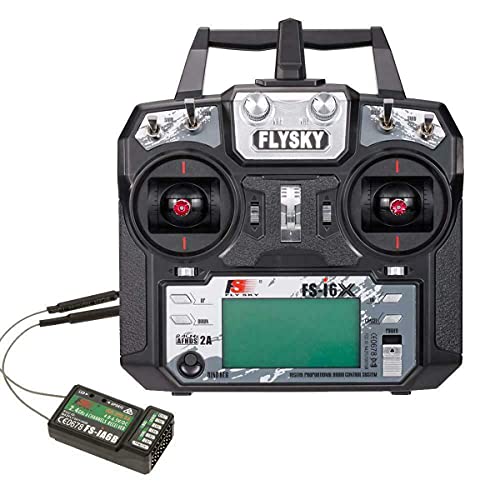
The FS-i6X expands on the standard i6 by offering up to 10 channels and compatibility with different receiver models, including multi-rotor and fixed-wing configurations. It features bidirectional communication, enabling data exchange from sensors such as temperature or altitude, as well as i-BUS support for precise servo calibration. The radio uses a wide hopping range (2.408–2.475GHz) across 135 channels, reducing interference from neighboring transmitters and improving stability during intense heli maneuvers or in busy flying fields. This model is ideal for pilots who plan to advance into more complex control schemes, including advanced collective management and telemetry displays.
Flysky FS-i6 6Channel 2.4GHz AFHDS2A Transmitter (Mode 2)

This FS-i6 variant emphasizes low power consumption and a high-gain, multi-directional antenna to extend range and reduce fatigue during long sessions. Coupled with a high-sensitivity receiver, the system provides a jamming-free long-range link that helps maintain reliable control while hovering or performing slow, precise movements typical of helicopter flight. It is compatible with racing drones and multi-rotor setups, which can be advantageous if you’re transitioning between different aircraft types without changing your core transmitter.
Radiolink AT10II 12 Channels Transmitter

The Radiolink AT10II offers 12 channels and robust anti-interference features, making it a strong choice for helicopter pilots who want more control surfaces and additional function options. It supports voltage telemetry through paired modules and a real-time display that shows battery status, RSSI, and more when used with compatible receivers and flight controllers. The 7dBi antenna enhances link stability, and the remote supports advanced features such as dual/triple rates, fail-safe settings, and EPA adjustments. This transmitter suits pilots aiming for more nuanced flight profiles and telemetry awareness during both indoor and outdoor flights.
DTXMX FS-i6X 10CH Transmitter (Mode 2)

The DTXMX FS-i6X combines a 10-channel configuration with a robust hopping frequency range and a unique ID recognition system. Like other high-end models, it uses bidirectional communication to display data from the receiver, and it emphasizes interference reduction through channel hopping. It’s well-suited for pilots who fly a mix of helicopters, fixed-wing aircraft, and multi-rotor drones, wanting a single radio that can handle diverse configurations while maintaining a reliable link between transmitter and receiver. The setup enables easy pairing and consistent operation across different aircraft types.
Radiomaster Pocket ELRS Remote Controller
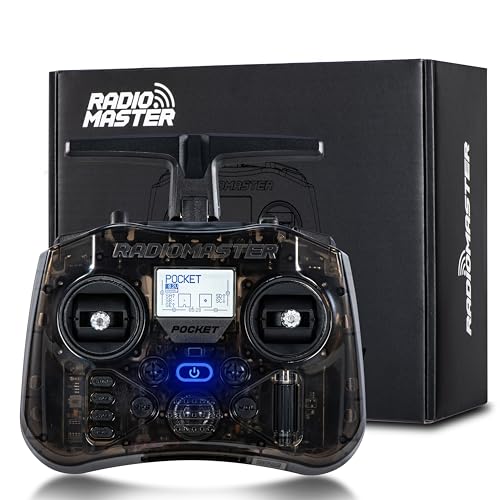
The Radiomaster Pocket ELRS brings ExpressLRS into a compact form factor with hall-effect gimbals, low latency, and EdgeTX compatibility. It is designed for versatility across RC helicopters, FPV drones, and even RC cars or boats. The toolkit includes extensive customization options, such as screen layouts and Lua scripting, to tailor features like crossfire integration and telemetry displays. While battery not included, pilots who value ultra-responsive control and programmable telemetry will find this transmitter appealing for precise hover and rapid response maneuvers.
RC ERA A60 Bell-206 110-Size RC Helicopter with Optical Flow

The RC ERA A60 Bell-206 is a beginner-friendly, auto-stabilized helicopter that emphasizes stability via an optical flow sensor and a 6-axis gyro. The included upgraded transmitter reinforces reliable signal transmission and precise control, while the system’s compact 110-size airframe supports indoor and outdoor use. With features like barometric altitude hold and one-key takeoff/landing, this helicopter is designed to ease new pilots into flight control with confident hover accuracy and manageable flight envelopes. It can be a strong entry point for learners seeking predictable response and forgiving handling.
HAWK’S WORK FS-i6X 10Ch Transmitter
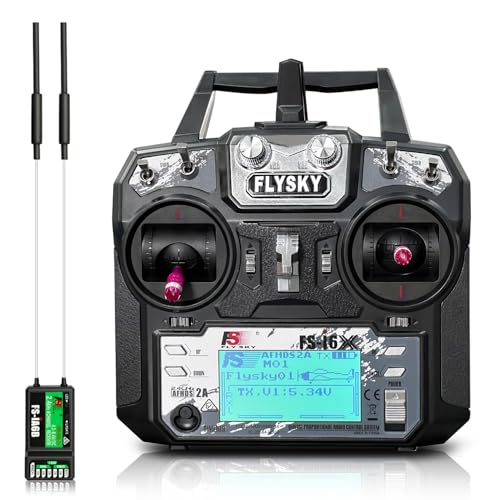
The HAWK’S WORK FS-i6X offers 10 channels and dual receiver options (iA6B or iA10B), providing flexibility for a variety of helicopter models and other RC crafts. The transmitter supports multiple model setups and a selection of 6 to 10 channels, enabling users to tailor controls for different helicopter configurations, additional flight modes, or auxiliary functions. This option is suitable for pilots seeking a balance between expanded channel capability and a familiar, user-friendly interface that supports learning and setup adjustments across different aircraft types.
Buying Guide: Key Purchase Considerations
When choosing an RC transmitter for helicopters, consider the following factors to match your flying style and future goals:
- Channel count: More channels enable more advanced control surfaces, telemetry, and mixing options. Beginners may start with 6–6 channels, while seasoned pilots may prefer 12 or more for complex setups.
- Radio technology and interference management: Look for robust frequency hopping and anti-interference features (AFHDS, FHSS, DSSS, or ExpressLRS) to maintain stable links in busy fields or complex environments.
- Telemetry and bidirectional data: Transmitters with telemetry can display battery voltage, RSSI, altitude, and other data. Bidirectional communication allows receiving sensor data back from the helicopter, improving situational awareness.
- Unique ID binding: A unique transmitter-receiver pairing reduces the risk of cross-talk with other RC systems, which is valuable in shared flying spaces.
- Expandability and compatibility: Check if the transmitter can pair with multiple receivers and if it supports different aircraft types (helicopters, planes, drones). Some models also support edge firmware like EdgeTX for customization.
- Portability and ergonomics: For frequent flyers, a compact, comfortable grip and well-placed switches contribute to better control during long sessions.
- Power and batteries: Be aware that some units require separate battery purchases. Consider battery type, capacity, and availability when planning usage.
- Price vs. features: Budget-friendly models are great for beginners, but advanced pilots may value telemetry, higher channel counts, and longer range. Balance your current needs with future goals.
Overall, the selection above emphasizes stability, long-range reliability, and telemetry options without overwhelming new pilots. Depending on your experience level and how deeply you want to customize flight characteristics, any of these transmitters can serve as a robust foundation for helicopter control.