Best Real Robots for Kids: Top Interactive Robots for Learning and Fun
Discover the best real robots that engage kids with hands-on learning, creativity, and STEM fun. This guide highlights five highly interactive bots that blend entertainment with introductory programming, motion sensing, and voice or gesture controls. Each pick is suitable for a range of ages, from early learners to tweens, and emphasizes safe, durable design for home play and classroom demos alike.
| Product | Brand | Key Skill Focus |
|---|---|---|
| Ruko 1088 Smart Robots for Kids | Ruko | Voice/App control, basic programming, storytelling |
| KingsDragon RC Robot Toys | KingsDragon | Gesture control, remote control, action programming |
| BAZOLOTA Robot Toys | BAZOLOTA | Gesture sensing, 50 actions, music and movement |
| HOLIBIBE Drawing Robot | HOLIBIBE | Drawing cards, voice guidance, themed drawing challenges |
| Sillbird 12-in-1 Solar Robot Kit | Sillbird | Solar-powered builds, multiple models, dual control |
Ruko 1088 Smart Robots for Kids

The Ruko 1088 stands out with its large stature and multiple play modes that encourage active learning. Standing up to 15.8 inches tall, it offers voice control and app-based commands, making it a strong fit for kids who enjoy storytelling, music, and expressive movement. Ten expressions and nine flexible joints help bring characters and scenes to life, supporting early programming concepts, logic building, and spatial awareness through engaging play. This bot blends imaginative play with basic computational thinking, making it a versatile addition to any learning-friendly home.
Key features include impressive physical presence, dynamic motion with lifelike articulation, and bundled songs to reinforce rhythm and sequencing. The device invites kids to experiment with cause-and-effect scenarios and simple scripting through natural interactions, rather than abstract tutorials, which can help sustain interest and curiosity over time.
KingsDragon RC Robot Toys

The KingsDragon robot emphasizes gesture and infrared control, giving kids the satisfaction of commanding a robot with natural movements. In addition to a traditional remote, it supports gesture-driven actions such as turning, sliding, and avoidance routines. With a library of around 50 programmable actions, children can sequence movements to create patrols, dances, and custom routines. Built with durable ABS plastic and articulated joints, it supports a range of kid-friendly experiments in motor skills, sequencing, and basic logic through interactive play.
BAZOLOTA Robot Toys
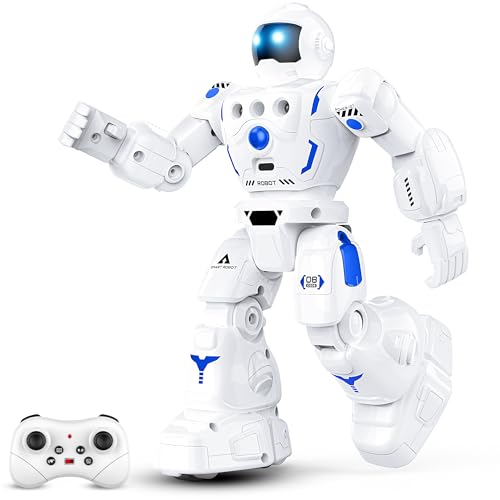
BAZOLOTA offers a robust mix of gesture sensing, 50-action programming, and expressive performances. Kids can control movement through simple gestures or a programmed sequence, then watch the robot execute a chain of actions such as left/right turns, walking, dancing, and music playback. The toy emphasizes cognitive development through planning and repetition, while the long-distance gesture and remote control capabilities foster independent exploration. The material is designed to endure active play, making it suitable for repeated classroom or family sessions.
Of note is the adjustable volume for safer listening during storytelling or music-rich activities, and the ability to switch quickly between manual and programmed modes, supporting progressive learning as children gain confidence with more complex sequences.
HOLIBIBE Drawing Robot
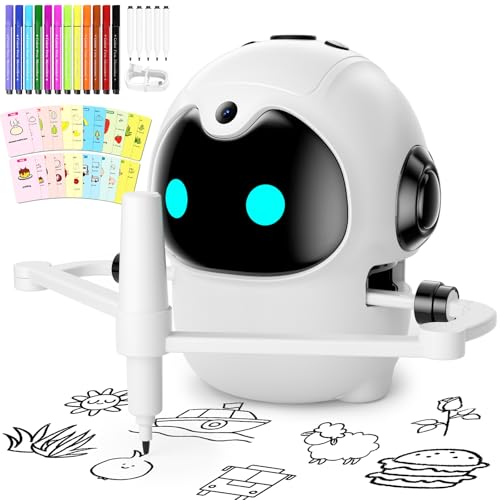
The HOLIBIBE Drawing Robot introduces a Montessori-inspired approach to creative learning. It uses 150 drawing cards across seven themes to guide kids through self-directed drawing, supporting concentration, visual-spatial reasoning, and fine motor skills. A guiding voice and gentle music accompany the drawing process, sustaining focus and encouraging persistence. The device acts as a patient learning companion, helping children interpret shapes, patterns, and sequences while building confidence in their own creative decisions.
With seven themed drawing worlds, children develop recognition of shapes and patterns, while the hands-on card system promotes independent exploration and iterative sketching. This makes it a compelling option for early-grade classrooms and home learning alike.
Sillbird 12-in-1 Solar Robot Kit
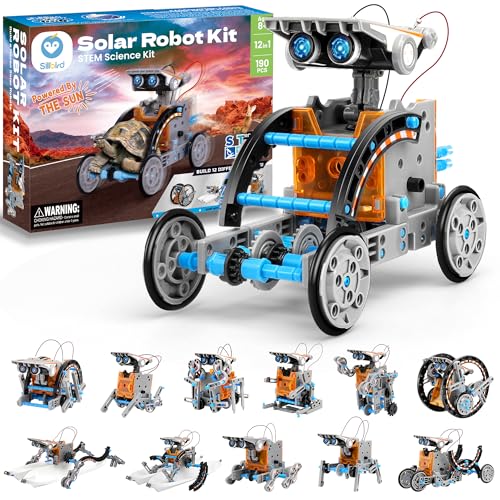
The Sillbird solar robot kit combines hands-on construction with environmental science. It includes 190 pieces to build up to 12 different models powered by solar energy or a substitute light source indoors. The kit fosters engineering thinking, problem-solving, and incremental programming skills as children assemble and test moving robots. Dual control modes—app via Bluetooth and traditional remote—offer flexibility for independent tinkering or guided group activities. This build plates a strong foundation for understanding renewable energy concepts while delivering tangible, screen-free play.
Buying Guide
- Age and safety: Check recommended age ranges and ensure materials are non-toxic and durable for rough handling and indoor/outdoor use.
- Control method: Consider whether kids prefer gesture, voice, remote, or app-based control. Some models blend several methods for longer engagement.
- Programming depth: Look for kits with scalable complexity—start with simple commands and progress to multi-step sequences to match growing skills.
- Learning emphasis: Decide whether you want a robot focused on storytelling, math logic, art, or STEM concepts like engineering and renewable energy.
- Social and collaborative play: Some sets support shared activities, which can encourage teamwork in families or classrooms.
- Durability and maintenance: Verify construction quality and availability of replacement parts or spares in case of wear or mishaps during play.
- Power source considerations: Battery-powered options require charging routines; solar-powered kits introduce renewable energy concepts but depend on lighting conditions.
- Expansion potential: Some platforms offer expansion packs or additional models to extend the learning journey beyond a single purchase.
When selecting a robot for a child, consider the child’s interests and learning pace. A mix of tangible building experiences, interactive storytelling, and simple programming can provide a balanced, engaging introduction to technology and problem-solving. Each of these options offers varying levels of support, from guided storytelling to open-ended programming, ensuring a suitable fit for different homes and classrooms.