Best Reward Chart Ideas for 4 Year Olds That Encourage Positive Habits
Choosing a reward chart for a 4-year-old helps build routine, responsibility, and motivation in a playful way. The right chart combines visual cues, durable magnets, and age-appropriate tasks. Below you’ll find five top-rated options that balance simplicity with engaging design, so kids stay interested and parents can track progress easily.
| Product | Brand | Key Feature |
|---|---|---|
| QUOKKA Magnetic Behavior Chore Chart (Blue) | QUOKKA | 48 magnets, 49 stars, durable dry-erase surface |
| QUOKKA Magnetic Behavior Chore Chart (Red/Blue Variant) | QUOKKA | 99 magnets, markers, versatile for growing kids |
| Melissa & Doug Magnetic Wooden Responsibility Chart | Melissa & Doug | 89 magnets, dual dry-erase boards, hanging cord |
| Kenson Kids “I Can Do It” Reward Chart | Kenson Kids | 3D stars, 20 reusable tasks, engaging design |
| Battat Education – Magnetic Chore Chart | Battat | 92 magnets, space-themed design, goal tracking |
QUOKKA Magnetic Behavior Chore Chart (Blue)

This QUOKKA chart offers a visual routine system designed to support kids as young as toddlers and up to teens. It includes a hanging rope for wall mounting, a storage bag, a dry-erase marker, 48 magnets for chores, and 49 stars for rewards. A gift-ready box adds appeal for gifting. The magnets are thick and durable, ensuring repeated use without wear. The design accommodates a wide age range, allowing parents to adapt tasks as children grow, making it a flexible choice for a 4-year-old.
QUOKKA Magnetic Behavior Chore Chart (99 Magnets)
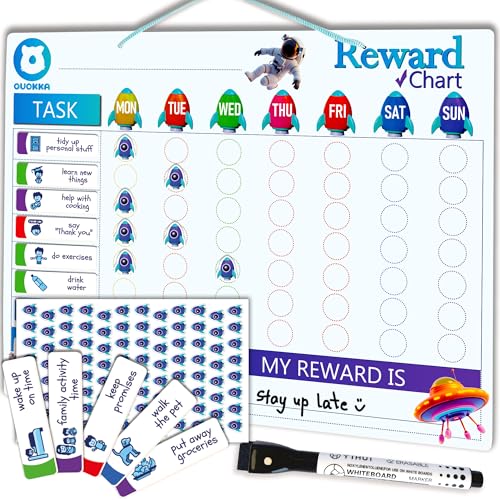
This second QUOKKA option expands with 99 magnets and markers, strengthening the reward system for ongoing use. It keeps the same visual schedule benefits and sturdy magnetic backing, ideal for frequent changes in tasks and rewards. The larger magnet set supports varied routines—such as daily chores, personal hygiene, and basic chores—while the hanging rope enables easy display in a kitchen or playroom. It remains a durable, child-friendly way to reinforce positive behavior in a growing child.
Melissa & Doug Magnetic Wooden Responsibility Chart

This wooden chart from Melissa & Doug blends classic design with practical features. It includes dual fabric-hinged dry-erase boards—one with spaces for seven goals and another blank board for magnet storage—and a hanging cord. With 89 magnets representing behaviors and rewards, this chart supports a structured approach to routines. The wooden build offers a sturdy alternative to plastic charts and can become a staple in a child’s daily life, helping a 4-year-old link actions to visible outcomes.
Kenson Kids “I Can Do It” Reward Chart

Designed to engage a child’s senses, Kenson Kids’ chart uses 3D stars and 20 reusable tasks to create a motivating system. It’s ideal for a 4-year-old who enjoys colorful visuals and interactive rewards. The chart is easily mounted on a fridge or wall, and stars provide immediate feedback for completed tasks. Its focus on routine formation and independence can help a child develop consistency in daily activities, from tidying up to basic self-care tasks.
Battat Education – Magnetic Chore Chart

Battat’s magnetic chart focuses on a space-themed design to make goal-tracking appealing to young children. It includes 92 magnets and is designed to promote self-confidence, time management, and motivation through consistent use. The chart’s engaging visuals and structured layout help a 4-year-old notice progress, celebrate milestones, and build a routine that supports early independence and positive behavior.
Buying Guide
Key factors when choosing a reward chart for a 4-year-old include durability, age-appropriate task design, visual appeal, and ease of use. Magnetic charts with large, colorful magnets and clear reward icons are typically the most engaging for preschoolers. Look for dry-erase surfaces so the chart can be reused daily, and consider whether the chart offers a good range of tasks that cover daily routines (cleaning up, brushing teeth, getting dressed).
Durability matters: thicker magnets, sturdy boards, and a reliable magnet backing reduce wear over time. A hanging rope or wall-mount option helps keep the chart visible, which is important for regular use. Some charts include a gift-ready box, which is useful for gifting or introducing a new routine as a special moment.
Flexibility is also valuable. Models that adapt as a child grows—offering more tasks, more complex goals, or different reward scales—can extend usefulness beyond the preschool years. Visual progress tracking (stars, stickers, or stars-and-tiles) tends to work well for younger children who respond to immediate, tangible feedback.
Space and placement should be considered. In small homes, a compact chart on a fridge or a mounted board in the kitchen or playroom can be most effective. For households with multiple children, consider charts that support multiple task lists or easily switchable tasks, so each child stays motivated without confusion.
Final considerations include the availability of replacement magnets and accessories, ease of cleaning, and whether the chart’s design aligns with your family’s routine and values. The best option balances simplicity with enough structure to support a 4-year-old’s developing sense of responsibility.