Best Robot Kits for 8 Year Olds: Engaging STEM Toys for Creative Learning
Exploring robotics with an 8-year-old can spark curiosity, problem-solving, and hands-on skills. This guide highlights top robot kits that balance build-time learning, creative play, and safe, screen-free or minimal-screen experiences. Each option below supports early engineering concepts, motorized movement, and simple programming or remote control to grow with a child’s curiosity.
The following table provides a quick snapshot of the selected products, including the brand and a short highlight of what makes each kit appealing for kids aged around 8 years old.
| Product | Brand | Highlight |
|---|---|---|
| Smartivity DIY Robotic Mechanical Hand | Smartivity | 100% screen-free, lifetime spare parts, engaging mechanical build |
| Henoda Robot Toys with App or Remote | Henoda | Remote or app control, 468+ pieces, multiple modes |
| Sillbird 12-in-1 Solar Robot Kit | Sillbird | Solar power, multiple models, outdoor-ready |
| COBFDHA STEM Projects 6 Robots Kit | COBFDHA | Sun or battery power, varied robot designs |
| okk Robot Building Toys | okk | Remote and app control, 5 control modes |
Smartivity DIY Robotic Mechanical Hand

Smartivity’s mechanical hand kit is designed to engage kids with a hands-on, step-by-step build. The kit emphasizes a fully DIY experience that develops fine motor skills, spatial reasoning, and curiosity about how machines work. It is pitched toward ages 8–14, making it suitable for younger builders and older siblings who want a challenge. The instruction manual guides kids through assembly, turning a simple concept into a functioning robotic hand. The product also emphasizes screen-free play, encouraging kids to learn through tactile construction.
Features include a comprehensive parts set with clear guidance, a design that fosters creative experimentation, and a promise of long-term play thanks to a parts replacement policy. This kit is well-suited for family STEM activities, classrooms, or solo exploration. Parents may appreciate its low-tech approach that still delivers a satisfying mechanical payoff.
Overall, the Smartivity hand kit concentrates on the joy of assembling, understanding mechanical linkages, and watching a tangible result come to life, which aligns well with the goal of sparking early interest in engineering for 8-year-olds.
BeAndge STEM Kits (6 Sets)

BeAndge offers a multi-set STEM kit that introduces kids to several robot configurations, including a solar-powered car and an obstacle-avoidance bot. The kit is designed for kids aged 8–12, emphasizing collaborative family activities and classroom-style projects. Batteries are not included, which is a common note for kits of this type, and the gift-ready packaging makes it an attractive option for birthdays or holidays.
Key features include multiple build options, a focus on practical electricity and energy concepts, and a hands-on approach to exploring robotics. This kit supports teamwork, problem solving, and a sense of accomplishment as children complete different builds and observe cause-and-effect in action.
Henoda Robot Toys With App Or Remote
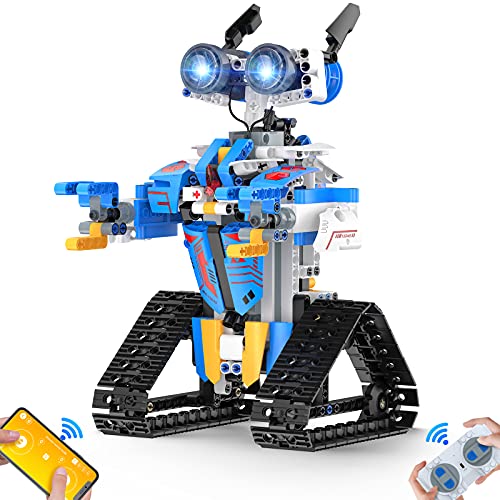
Henoda’s programmable robot kit blends traditional building with digital control. The set contains 468+ pieces and supports multiple modes, including a remote-control option and a smartphone app. It’s designed to promote hand-eye coordination, motor skills, and imaginative play, with the ability to rotate joints, light up features, and perform basic motions. The remote and app control provide flexibility for different learning styles and environments.
Educational value centers on STEM concepts, sequencing, and simple programming logic. The app-based control enables more advanced experimentation for older children while still remaining accessible to younger users through guided activities. The kit is positioned as both a family project and a classroom-friendly option for introducing robotics.
Sillbird 12-in-1 Solar Robot Kit
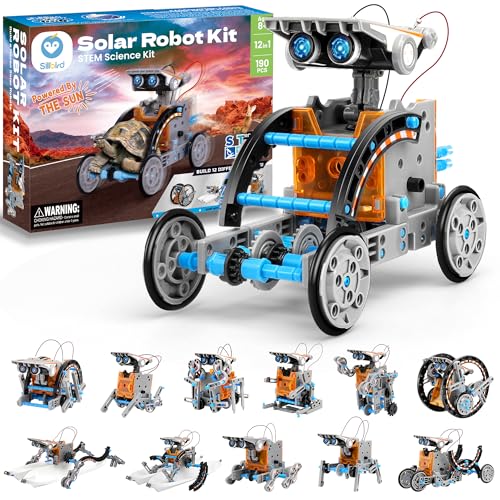
Solar-powered robotics is the focus of this Sillbird kit, which includes 12 different build models to explore. The solar power feature encourages outdoor play and environmental awareness while providing practical lessons in energy conversion and renewable energy. It’s well-suited for kids who enjoy hands-on exploration without relying on batteries, though the kit also notes the option to use artificial light indoors for consistent play.
With a sizable component count and clear assembly steps, this kit supports iterative building and multiple project ideas. It’s a strong choice for kids who want to experiment with different rovers, walkers, and wheeled robots, all driven by solar energy and simple mechanical systems.
COBFDHA STEM Solar Robot Kit
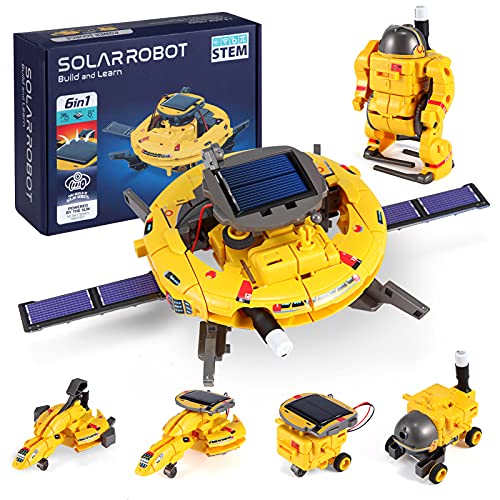
COBFDHA’s solar-powered robot projects provide a versatile learning experience across six distinct designs. Designed for 8–12 year olds, the kit highlights energy science, mechanical design, and problem-solving as kids assemble robots capable of moving on land. The solar panel and battery-powered options help children understand how different power sources can drive machines. This kit is a practical choice for families exploring renewable energy concepts and the basics of robotics.
Educational outcomes include improved manual dexterity, spatial reasoning, and confidence from completing multiple robot configurations. The variety ensures ongoing engagement as children grow more proficient in planning and executing build sequences.
Sillbird Robot Building Kit With Remote
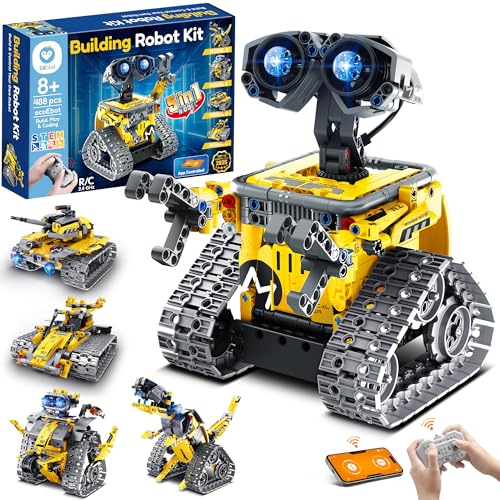
This Sillbird kit provides a 5-in-1 programmable robot experience, combining building, programming, and remote control. It supports Bluetooth app control and includes a remote for versatile operation. The dual control modes—app and remote—allow kids to switch between guided programming and free-form exploration, which can help develop planning, sequencing, and basic coding concepts in a hands-on context.
As a 8+ age group product, it’s designed to grow with a child’s increasing confidence in engineering and coding fundamentals. The set emphasizes screen-free options alongside digital control, supporting a balanced approach to early STEM education.
Buying Guide: Key Purchase Considerations For Robot Kits
- Age appropriateness: Look for kits clearly labeled for ages 7–12, with a progression path to more advanced features as kids grow.
- Power source: Solar-powered options teach renewable energy, while battery or USB-powered kits can offer more consistent performance indoors.
- Control method: Evaluate whether a kit uses remote control, an app, or a combination. App-based kits typically introduce basic coding concepts, while remotes emphasize physical manipulation and sequencing.
- Number of build models: Kits offering multiple models provide extended play value and broader exposure to different mechanics and designs.
- Educational goals: Some kits emphasize engineering concepts, others focus on programming or problem-solving. Align with the child’s interests (build, code, or both).
- Safety and materials: Check for durable plastics, non-toxic paints, and stable, easy-to-handle components suitable for younger builders.
- Instruction quality: Clear, illustrated instructions or teacher-friendly guides help reduce frustration and encourage independent learning.
- Expandability: Consider whether replacement parts or additional sets are available, enabling longer-term use and upgrades as skills grow.
- Storage and organization: Kits with labeled bags and compartments help keep parts organized for repeat building sessions.
- Gift suitability: If buying as a gift, packaging, color variety, and the prospect of continued learning through future kits can matter.
In selecting a robot kit for an 8-year-old, balance the excitement of hands-on construction with opportunities to explore science concepts in a structured, age-appropriate way. If a child enjoys the tactile building experience, start with a straightforward mechanical build; if they gravitate toward digital interactions, prefer kits offering app or remote programming to introduce basic coding ideas early on. For households exploring environmental topics, solar-powered or energy-focused kits can provide meaningful, real-world context to robotics learning.