Best Rocket Kit for Kids That Sparks STEM Fun
Choosing a kid-friendly rocket kit blends creativity, science, and outdoor play. The following selections emphasize safe materials, clear instructions, and engaging experiment potential. Each option helps young explorers learn about aerodynamics, gravity, and propulsion while enjoying hands-on building and launching experiences. The list includes beginner-friendly sets and slightly advanced builds to fit different ages and interest levels.
The table below summarizes five curated rocket kits that align with the “Best rocket kit for kids” goal. Details cover brand, key features, and what to expect during use.
| Product | Brand | Main Focus |
|---|---|---|
| Estes 1441 Journey Launch Set | Estes | Beginner to intermediate, outdoor launches |
| Estes 1469 Tandem X Rocket Launch Set | Estes | Two rockets, build options, launch pad |
| National Geographic Rocket Launcher | Blue Marble | Motorized, safe landings, educational |
| National Geographic Air Rocket Toy | Blue Marble | LED glow, quick play, up to 100 ft |
| Rceico Rocket Launcher | Rceico | High altitude, night-ready, safe foam shell |
Estes Journey Launch Set: Beginner Kit

The Estes 1441 Journey Launch Set offers a complete entry point for young space enthusiasts. It includes rocket parts, decals, a launch pad, a launch controller, and a parachute. The kit is designed for ages 10 and up and is compatible with widely available engines sold separately. With the Porta-Pad II launch pad and an electron beam controller, it’s possible to reach respectable altitudes, especially for beginners. Assembly takes about an hour, and the included self-stick decals help create a classic look. This set is well-suited for homeroom science activities or weekend outdoor projects.
Key features emphasize accessibility and safety. A single kit can be expanded with additional engines and accessories, allowing ongoing experimentation. The Journey Launch Set is a reliable first step into model rocketry, helping kids practice measurement, patience, and following safety guidelines while enjoying an outdoor adventure.
Estes Tandem X Rocket Launch Set

The Estes 1469 Tandem X kit combines two build options and two distinct rocket bodies in one package. The larger 30-inch Amazon model reaches higher altitudes, while the slimmer Crossfire ISX model offers a different flight profile. Both options share the same Porta Pad II Launch Pad and Electron Beam Launch Controller, creating a cohesive launch experience. The set includes ready-to-build components with either plastic fins and decals or laser-cut wood fins, depending on the chosen variant. This versatility makes it suitable for a family project or a curious student who wants to compare rocket designs.
Engagement comes from choosing build paths, rehearsing safety procedures, and timing engine selections. As with other Estes kits, engines, starters, recovery wadding, and batteries are sold separately, encouraging responsible, ongoing experimentation. The Tandem X kit supports critical thinking: students can hypothesize how changes in weight, fins, or engine choice alter flight behavior and altitude.
National Geographic Rocket Launcher

This motorized rocket launcher by National Geographic offers elevated outdoor play without requiring model rockets in every session. It launches up to 200 feet on a single charge and provides three flight settings for adjustable altitude. The design includes helicopter-style rotor blades that help guide safe landings, reducing the chance of damage during unpredictable launches. It’s a strong pick for families who want a science-centered toy that can be used repeatedly during warm seasons, school breaks, or science club activities.
Educational value is reinforced with a learning guide that explores the physics of motion and aerodynamics. While it is motorized, supervision and adherence to safety guidelines remain essential. The setup emphasizes straightforward operation, which is ideal for younger children beginning their exploration of rocket dynamics and outdoor experimentation.
National Geographic Air Rocket Toy LED Starter Kit
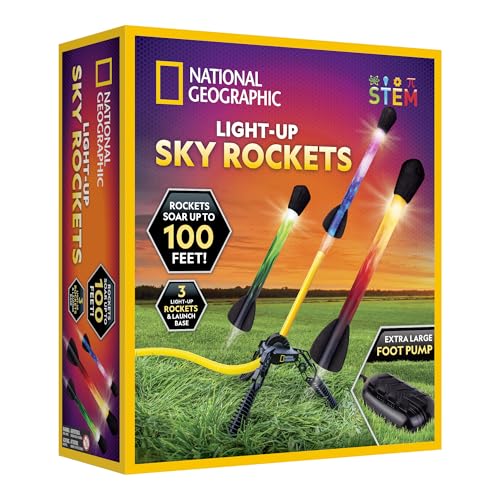
The LED-lit air rocket launcher from National Geographic adds a bright twist to outdoor play. Jumping on the foot pump launches foam-tipped rockets up to 100 feet, with LED lights that can illuminate the night sky. The glow-in-the-dark feature enhances visibility and excitement, making it a social and group-friendly toy. A included learning guide helps young scientists connect play with basic principles of motion, timing, and trajectory. This kit is particularly appealing for late-afternoon or dusk sessions when the lighting effects become most impressive.
As a simple, low-entry alternative to more complex kits, this option balances active physical play with educational insights, great for younger kids or those who want quick-start, repeatable launches without extensive setup.
Rceico Rocket Launcher: High Altitude Fun

The Rceico rocket launcher emphasizes altitude, offering up to 200 feet per launch with a simple two-push system. The foam shell reduces the risk of damage on impact, and a parachute ensures a slower, safer descent. Night visibility is enhanced by built-in lights, allowing progress tracking even after sunset. This kit emphasizes robust outdoor play and safe handling, making it a good option for parks or large backyards. It also supports multiple launches in a single session, which can be engaging for group play or science demonstrations.
Buying Guide
- Age and skill level: Start with beginner kits that require minimal assembly and gradually move to multi-rocket packages as interest and confidence grow.
- Safety and supervision: Always follow launcher and motor safety guidelines. Materials like foam and plastic are kid-friendly, but supervision ensures proper handling of engines and launch pads.
- Educational value: Look for kits with learning guides or included experiments that explain aerodynamics, propulsion, and physics concepts.
- Engine compatibility and upgrades: Some sets use proprietary engines; others accept a range of common models. Consider future expansion if the child shows sustained interest.
- Launch environment: Outdoor space with clear, open areas is essential. Ensure a safe distance from people, pets, and structures.
- Durability and replacement parts: Foam or lightweight plastic options often include replacement parts; verify that parts are available for repairs or upgrades.
- Time investment: Some builds take about an hour; others offer two build options. Decide whether a quick-start experience or a longer project better suits the child’s schedule.
- Budget and maintenance: Starter sets are more affordable and offer immediate fun, while more advanced sets may require additional purchases like engines and batteries.
Overall, the best rocket kit for kids balances ease of use, safety, and educational engagement. Estes sets deliver classic building experiences with clear upgrade paths, while National Geographic options emphasize interactive learning and outdoor play. For groups or family activities, multi-rocket or motorized kits add a layer of social fun and competition. Regardless of choice, these kits encourage curiosity, planning, and hands-on science outside the classroom.