Best Science Kits for 13-Year-Olds: Hands-on STEM Experiments
Discover top science kits that engage teens with hands-on learning, spark curiosity, and build solid foundations in chemistry, earth science, electronics, and engineering. The selected kits emphasize safe experimentation, clear guides, and age-appropriate challenges to keep 13-year-olds excited about science while encouraging problem-solving and critical thinking.
style=”display:none;”>Summary Table of Chosen Products
| Product | Brand | Key Focus |
|---|---|---|
| National Geographic Amazing Chemistry Set | Blue Marble | Chemistry experiments, crystal growing |
| National Geographic Earth Science Kit | Blue Marble | Earth science, volcanoes, crystal growing |
| Playz Mega Kaboom! 150+ Explosive Science Kit | Playz | Chemistry experiments, color explosions |
| Lucky Doug Solar Power Kits | Lucky Doug | Solar-powered robotics, engineering |
| Playz Edible Candy Making Science Kit | Playz | Candy making, food science |
National Geographic Amazing Chemistry Set

The National Geographic Amazing Chemistry Set provides more than 100 experiments, including crystal growing and colorful chemical reactions. This Amazon Exclusive includes all materials needed to run 15 chemistry investigations and a bonus guide with 85 extra experiments using common household items. The kit supports inquiry-based learning, enabling teens to observe, hypothesize, and test ideas in a safe, guided environment.
Key features include a wide range of hands-on activities, a structured approach to experimentation, and the potential for extended exploration beyond the core activities. The comprehensive set helps 13-year-olds build a foundation in chemistry concepts while developing precision in measurement and observation.
National Geographic Earth Science Kit

This Earth Science Kit blends 100+ activities, including crystal growing, volcanic models, and rock collecting, with a full-color Learning Guide that explains the science behind each activity. The kit is designed for curious teens who enjoy environment and geology topics, making it suitable for family projects or classroom demonstrations. The emphasis on collaborative exploration encourages sharing discoveries with siblings, friends, or classmates.
Expect durable components and clear instructions, with room to expand through additional experiments. The Learning Guide helps transform curiosity into a deeper understanding of Earth sciences, geology, and mineral properties, which is especially engaging for 13-year-olds who want to connect hands-on experiments to real-world processes.
Playz Mega Kaboom! 150+ Explosive Science Kit

The Mega Kaboom kit offers more than 150 experiments, including balloon rockets, color explosions, and fizzy reactions. It provides high value with numerous activities designed to maintain engagement for extended play sessions. The collection is targeted at older children and teens who enjoy dynamic, high-energy experiments while maintaining safety through guided instructions and age-appropriate challenges.
As a robust option for 13-year-olds, Kaboom emphasizes experimentation breadth and accessible explanations of chemical reactions, enabling learners to compare methods and outcomes. The kit supports independent exploration as well as collaborative projects for science fair preparation or group study.
Lucky Doug Solar Power Kits
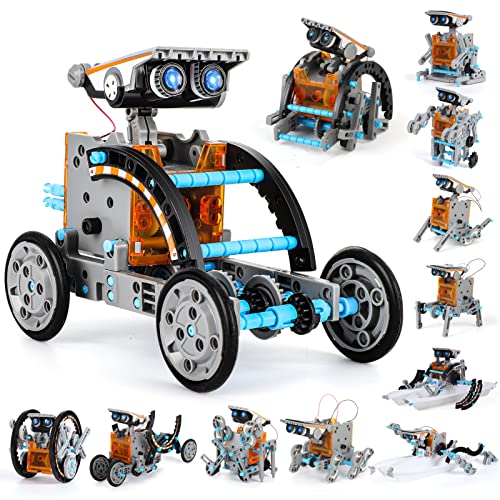
Lucky Doug’s Solar Power Kits introduce solar-powered robotics and engineering concepts without batteries. Teens can build 12 different robots, using a straightforward, illustrated guide that supports independent or guided assembly. The emphasis on renewable energy concepts makes this kit relevant for contemporary STEM education and sustainability discussions.
With clear instructions and reusable components, the solar kit encourages experimentation with design changes, as teens refine robot performance under varying sunlight. This hands-on approach fosters problem-solving, planning, and critical thinking as learners optimize their creations for mobility and efficiency.
Playz Edible Candy Making Science Kit

This candy-making science kit blends food science with practical chemistry concepts. Teens can create chocolates, rock candy, jelly treats, and lollipops while exploring solutions, crystallization, melting points, and the chemistry of flavor. The included lab guide presents information in a student-friendly format, linking culinary creativity with foundational science principles.
Ideal for curious teens who enjoy hands-on experiences and tasting laboratories, this kit supports experimentation with measurements, temperature control, and material interactions. It can complement more traditional science kits by appealing to interests in food science, chemistry, and experimentation with edible outcomes.
Buying Guide: Key Purchase Considerations
- Age-appropriateness: Look for kits designed for pre-teens to teens, with clear instructions and safety guidelines suitable for a 13-year-old.
- Learning objectives: Identify kits that align with science topics of interest, such as chemistry, earth science, robotics, or renewable energy.
- Number of activities: Consider whether the kit offers a broad range of experiments to keep engagement high or a few deeper investigations for focused study.
- Instruction quality: Prefer kits with full-color guides, step-by-step directions, and diagrams that support independent learning or guided exploration with a parent or mentor.
- Safety and materials: Ensure all materials are non-toxic, age-appropriate, and come with safety recommendations suitable for at-home use.
- Expandability: Some kits include bonus experiments or can be augmented with additional activities, which is valuable for ongoing curiosity.
- App and video resources: Kits with guided videos or online content can enhance understanding, especially for complex experiments.
- Social and collaborative value: If sharing experiences with siblings, friends, or a classroom, consider kits that support group activities and demonstrations.
- Storage and durability: Durable containers and organized components help keep a science station tidy and ready for frequent use.
- Budget and value: Compare total experiment count, learning progression, and long-term use to determine value for money.
Comparative Perspectives
For chemistry-focused exploration, National Geographic sets provide structured experiments with clear learning guides, balancing practical activities with foundational theory. Earth science kits emphasize natural processes, geology, and planetary concepts, helping teens connect experiments to real-world phenomena. For high-volume experimentation and excitement, the Playz Mega Kaboom and other high-activity kits deliver breadth, but may require closer supervision due to the more “explosive” demonstrations. Solar-powered robotics from Lucky Doug introduces engineering and renewable energy concepts, pairing hardware with environmental awareness. Candy-making kits blend food science with chemistry, offering a tasty bridge to practical applications of measurements and reactions.
When choosing, consider the teen’s interests, the desired balance between independence and guided instruction, and how the kit can complement school curricula or science fairs. A mix of kits across domains often provides the broadest STEM development and sustained enthusiasm.