Best Science Toys for an 8-Year-Old Boy: Top Picked STEM Kits for Curious Minds
Choosing engaging science toys for 8-year-olds can spark a lifelong love of learning. The right kits blend hands-on experiments with real-world science, helping kids explore chemistry, robotics, geology, and biology in a safe, fun way. Below are five carefully selected kits that align with common curiosity drivers—magic-like experiments, solar and water power, crystal growing, and earth science. Each is designed to teach core STEM concepts through interactive play.
| Product | Brand | Focus | Ideal For |
|---|---|---|---|
| Blue Marble National Geographic Magic Chemistry Set | Blue Marble | Chemistry Tricks & Experiments | 8-12 year olds |
| STEM Kits For Kids Crafts 6-8 8-12 | BeAndge | Robotics & Mechanical Kits | 8-12 year olds |
| National Geographic Amazing Chemistry Set | Blue Marble | 100+ Chemistry Experiments | 8-12 year olds |
| COBFDHA STEM Projects For Kids | COBFDHA | Solar & Battery-Powered Robots | 8-12 year olds |
| National Geographic Earth Science Kit | Blue Marble | Earth Science & Crystal Growing | 8-12 year olds |
Blue Marble National Geographic Magic Chemistry Set
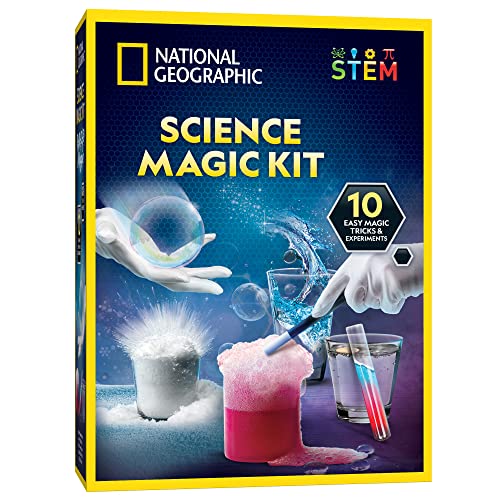
The Blue Marble Magic Chemistry Set invites young scientists to perform 10 standout experiments that feel like magic tricks. Aimed at kids who enjoy a show-and-tell experience, this kit blends entertaining visual effects with solid chemistry concepts. Activities include making a coin float, color-changing liquids, and snow that appears out of nowhere. A kid-friendly experiment guide adds context, explaining the science behind each illusion and offering a peek into real scientific methods. The included wand and gloves help children perform the tricks safely and confidently.
What makes this set effective for 8-year-olds is the combination of visual wow-factor and accessible explanations. It can build curiosity about chemical reactions, states of matter, and observation skills, while encouraging responsible, hands-on exploration. The magic framing tends to sustain attention and makes learning feel like play rather than a chore. Parents should supervise handling of materials and support kids in recording observations and results.
STEM Kits For Kids Crafts 6-8 8-12

This BeAndge kit delivers a batch of build-and-play STEM projects, including a solar-powered car, a wind-powered car, an obstacle-avoidance robot, a transmission tank, and a glider. It emphasizes hands-on construction and problem solving, with the caveat that batteries (AA) are not included. It’s well-suited for family STEM activities or classroom style learning, offering multiple projects in one package. The kit supports creativity, spatial reasoning, and basic engineering principles as children assemble the robots and observe how energy sources affect performance.
While it offers enough variety to keep interest high, caregivers should note the requirement for additional batteries and the need for adult assistance during some assembly steps. It’s an ideal gift for budding engineers who enjoy visible, tangible results and collaborative activities with peers or family members.
National Geographic Amazing Chemistry Set

National Geographic’s Amazing Chemistry Set offers over 100 experiments, expanding the scope from beginner to more advanced chemistry concepts. Kids can explore bubbling reactions, color changes, glow effects, crystal growth, and more. The kit includes all essential materials to execute 15 standout chemistry activities, plus a bonus guide with 85 additional experiments that leverage common household items. This breadth supports sustained engagement and helps children develop a deeper understanding of chemical principles, measurement, and experimental design.
For parents seeking a comprehensive, classroom-friendly experience, this kit provides a strong foundation in experimentation, safety awareness, and documentation. It’s particularly effective for kids who enjoy science fairs or independent exploration with clear, step-by-step instructions and vivid visual cues.
COBFDHA STEM Projects For Kids
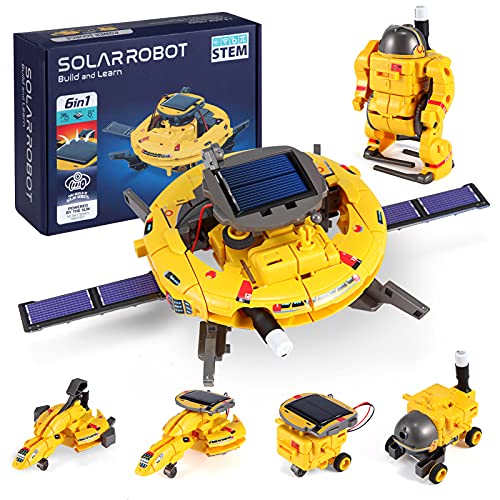
COBFDHA presents a diverse solar-and-battery powered robot project set, featuring six buildable robots designed to move on land or in water. The kit emphasizes energy sources, including solar power as a sustainable option, while also providing a battery-powered mode for indoor play. It encourages experimentation with engineering concepts, sequencing, and motorized movement. The included parts promote creativity and problem-solving as kids design, test, and iterate their own robots.
Parents should anticipate some small parts and the potential need for adult guidance during assembly. The kit targets creativity and resilience, helping kids learn how to troubleshoot mechanical connections and optimize performance across different weather and environments.
National Geographic Earth Science Kit

The National Geographic Earth Science Kit centers on earth science activities, including crystal growing, volcano experiments, and geologic digs. The kit emphasizes hands-on discovery—dueling water tornadoes, building an erupting volcano, and collecting mineral specimens—designed to engage kids in planetary and geological thinking. It also includes a learning guide that explains the scientific concepts behind each experiment, helping children connect activities to real-world Earth science topics.
This kit is well-suited for kids who enjoy outdoor exploration, natural history, and demonstrations that illustrate Earth’s processes. It supports collaborative learning as families or classrooms share discoveries, discuss observations, and compare different experiments’ outcomes.
Buying Guide: Key Considerations For Choosing The Right Science Toy
- Learning goals: Look for kits that align with the child’s interests—chemistry, robotics, geology, or biology—to maintain motivation and curiosity over time.
- Age appropriateness and safety: Check recommended ages, risk level, and included safety gear or guidance. Ensure parental supervision as needed for small parts or chemical activities.
- Hands-on depth: Some kits are quick, flashy demos; others offer a broader exploration with multiple experiments. Choose based on how deeply you want the child to engage with concepts.
- Scalability and future learning: Consider whether the kit introduces skills that can build toward more complex topics or longer-term projects, supporting progression.
- Materials and consumables: Note whether items are reusable or require ongoing purchases (batteries, extra chemicals, replacement components).
- Safety and display value: Some sets include durable components, clear labeling, and safe solvents. Others emphasize collectible crystals or mechanical builds for display.
- Support and learning resources: A good kit includes clear, kid-friendly instructions, visuals, and a learning guide or online resources that explain the science behind the activities.
- Social and family learning: If possible, select kits that support shared activities—team builds, science fairs, or homework-style investigations—to maximize engagement.
- Budget and variety: A mix of single-experiment sets and multi-activity kits can provide both immediate gratification and long-term exploration without overspending.
These five kits present a spectrum of approaches to science play: from magical chemistry demonstrations to solar robotics and earth science explorations. Each is designed to foster inquiry, experimentation, and critical thinking in children around eight years old, with safe handling and clear explanations to support independent or guided learning.