Best Sensory Development Toys for Toddlers and Babies: Engaging Tools for Growing Minds
Discover top sensory development toys that help babies and toddlers explore textures, sounds, and visuals while building essential motor and cognitive skills. The following selections emphasize safe materials, engaging textures, and age-appropriate design to support early learning and calm, focused play.
| Product | Key Benefit | Age Range |
|---|---|---|
| MINGKIDS Montessori Toys | Multi-sensory shape exploration with elastic-band action | 12 months+ |
| Infinno Inflatable Tummy Time Mat | Water play for muscle development and hand-eye coordination | 3–24 months |
| TOHIBEE Baby Montessori Sensory Toys | 12-color textures and teething-friendly silicone | 0–18 months |
| Chuckle & Roar Sensory Seek & Find Bear | 40 challenges for self-guided sensory exploration | 3+ years |
| YOGINGO Baby Toys 6–12 Months | Crinkle textures with colorful, pull-along play | 6–12 months |
MINGKIDS Montessori Toys For 12 Months

This six-piece set invites babies to push shapes through elastic bands, creating engaging sensory experiences. The blocks feature tactile textures designed to promote color and shape recognition while encouraging exploration, experimentation, and discovery. Crafted from ABS plastic with rounded edges, the frame emphasizes safety and skin-friendly handling for little hands.
Key features include a safe, firm frame, six colorful shapes with varied textures, and an activity that fosters curiosity. The design supports early problem solving and fine motor control as children manipulate shapes and feel different textures across fingers and toes. The product aims to balance cognitive stimulation with tactile comfort.
Infinno Inflatable Tummy Time Mat

The water-filled tummy time mat supports sensory development by encouraging babies to lift their heads, strengthen neck and shoulder muscles, and refine hand-eye coordination. The colorful sea creatures and illustrated scenes provide visual stimulation, while the soft PVC construction ensures safety and durability. The mat is BPA-free and designed to be leak-proof, making cleanup simple.
Setup is straightforward: fill the center with water and inflate the edge, then place baby on the mat for interactive play. The water movements offer a mesmerizing, slow-motion focus that can aid patience and concentration, making it a versatile tool for early motor practice and sensory awareness.
TOHIBEE Montessori Sensory Toys For 0–18 Months

This Montessori-inspired set uses 12 bright colors and a variety of textures to stimulate senses through tactile play. The rattle ring, twisting ball, and rotating ball introduce dynamic sensory experiences, while the silicone teether supports gum relief for teething babies. Designed for early grasping and reaching, the set promotes fine motor skills and exploratory play without overwhelming young learners.
The silicone teether and ABS components offer safe, skin-friendly surfaces. The to-be-handled size sits comfortably in small hands, encouraging repetition and exploration. The combination of color, texture, and sound fosters holistic sensory development and early problem-solving abilities.
Chuckle & Roar Sensory Seek & Find Bear
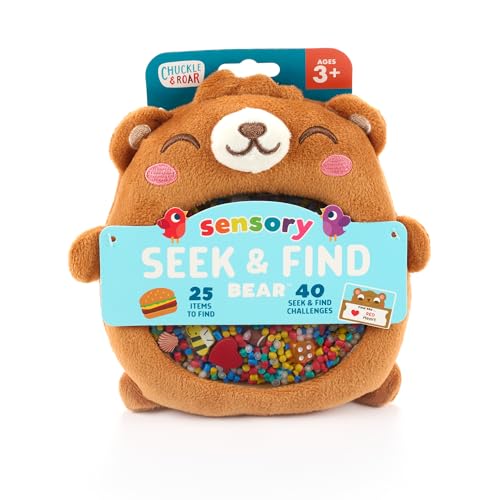
This plush travel companion features a see-through belly loaded with 25 mini items to seek and find, creating a mini scavenger hunt for curious minds. The 40 no-reading challenges encourage independent exploration and sensory focus, with a back-pocket pouch keeping cards organized for travel. A soft, snuggly exterior makes it comforting for early learners as they engage in tactile and visual play while developing attention and focus.
Designed for portability and continuous discovery, the bear fosters calm, immersive play. Its portability supports on-the-go learning experiences, whether at home or while traveling, while still challenging a child’s observation and memory skills through interactive tasks.
YOGINGO Tissue Box Toy Montessori 6–12 Months

This fabric tissue box-style toy mimics familiar baby behavior—pulling tissues from a box—while offering crinkle papers and silk scarves for multi-sensory exploration. It targets color recognition, fine motor skills, and auditory discrimination, with safe, skin-friendly materials suitable for infants and toddlers. The design emphasizes gentle, repetitive play that supports early brain development and tactile engagement.
With three themed crinkle papers and eight colorful scarves, the set fosters grasping, reaching, and sequential actions. It combines lightweight construction with soothing sounds, helping children build focus and early problem-solving habits during exploration and playtime.
Buying Guide: Key Factors And Comparisons
- Age-appropriate design: Choose toys aligned with the child’s developmental stage, from newborn teething sets to 12–18 month learning toys. Look for safety features like round edges, non-toxic materials, and easy cleaning.
- Texture and sensory variety: Effective sensory toys combine multiple textures, colors, and sounds to stimulate tactile, visual, and auditory senses. Multisensory experiences support broader cognitive development and focus.
- Motor skill support: Toys that promote grasping, pulling, pushing, and twisting help strengthen fine and gross motor skills. Consider objects that encourage reaching and targeting as well as hand-eye coordination.
- Safety and durability: Ensure materials are BPA-free and durable enough to withstand teething and rough handling. ABS plastic, soft fabrics, and high-quality PVC are common choices for durability and safety.
- Portability and storage: Travel-ready options with compact designs are valuable for on-the-go learning. Look for toys with built-in storage or simple organization to minimize clutter.
- Developmental goals: Some toys emphasize cognitive skills (color/shape recognition), others emphasize motor skills (grasping, crawling), and some support social and emotional development through shared play or guided activities.
- Allergen considerations: If there are sensitivities, select toys made from hypoallergenic materials and avoid small detachable parts for younger children.
- Maintenance: Easy cleaning is essential for baby toys. Check whether materials are machine washable or wipe-clean and whether parts are securely attached.
- Budget and value: Compare the number of activities, texture options, and durability. A higher upfront cost may offer longer usability through growing child needs.
These selections prioritize sensory engagement, early motor development, and safe play across a spectrum of ages. Parents and caregivers can mix and match to create a progressive sensory play routine that adapts as a child grows.