Best Sequencing Cards for Adults: Therapy Tools for Cognitive Skills
Sequencing cards are versatile tools used in adult cognitive rehabilitation, language therapy, and social-emotional learning. This guide highlights five standout options that practitioners and learners can leverage to reinforce ordering, storytelling, and daily routine fluency. Each card set presents vivid imagery, durable construction, and practical activity ideas suitable for clinical settings or home practice. The selections below prioritize clarity, usability, and evidence-based practice suitable for adults seeking to improve sequencing skills.
| Product | Brand | Key Focus |
|---|---|---|
| Stages Language Builder Sequencing Cards | Lang-O-Learn | Daily routines, self-help skills |
| Asana Moon Premium Yoga Cards | Asana Moon | Yoga poses and sequencing cues |
| SkillEase Story Cues Sequencing Cards | SkillEase | Storytelling, vocabulary, inferencing |
| Thought-Spot Sequencing Daily Routine Cards | Thought-Spot | Everyday routines, social communication |
| 4-Scene Sequencing Cards | Hebayy | Preschool- to early elementary-style sequencing |
Stages Language Builder Sequencing Cards

These 116 photo sequencing cards feature current, realistic imagery across 21 story sequences. They cover daily activities, healthy habits, and self-help skills with a writable back surface. Cards measure approximately 3.5″ x 5″ and are printed on sturdy stock with gloss varnish on the photo side for easy wipe-off maintenance. The set is ideal for adults working on daily living skills, self-care routines, and practical sequencing tasks in therapy or self-guided practice.
Asana Moon Premium Yoga Cards

This comprehensive yoga deck includes over 120 poses across 108 sequence cards and 12 sequences. It’s beginner-friendly and provides Sanskrit and English pose names, color-coded indicators for skill and strength, and cues for sequencing practice. The deck’s durable construction and linen-like finish make it suitable for steady daily practice, group classes, or self-guided routines aimed at improving body awareness, flexibility, and cognitive sequencing within movement sequences.
SkillEase Story Cues Sequencing Cards

These therapy-focused cards help build vocabulary, sentence structure, and social-emotional learning. Created with input from a speech therapist, the set features 10 bright stories across 50 cards, plus sample wh-question prompts. Color-coded backs simplify sorting and targeting specific language targets. Suitable for adults in speech-language pathology or cognitive-social coaching, the cards support inferencing, problem solving, and narrative skills in a engaging, durable format.
Thought-Spot Sequencing Daily Routine Cards

This set focuses on speech and language development through sequencing of daily routines. It supports receptive and expressive language, social pragmatics, and narrative sequencing. The visual-first approach helps adults organize morning rituals, routines, and transitions, promoting independence and confidence in real-life tasks. The cards also facilitate interactive storytelling and functional communication practice in clinical or home environments.
4-Scene Sequencing Cards by Hebayy
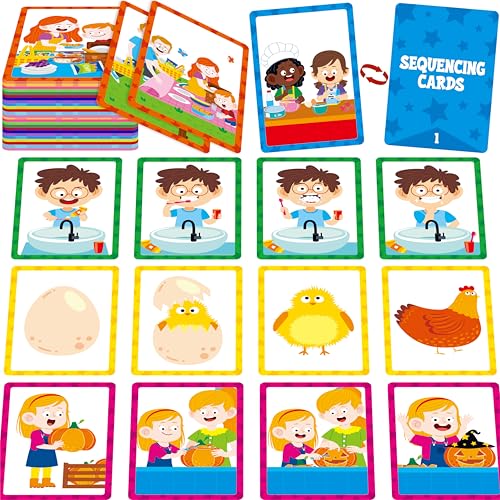
This 72-card set covers 18 story sequences, each with four illustrated cards guiding users through everyday events and tasks. The durable thick cardstock, double-sided lamination, and bright cartoon-style artwork support engagement and recognition of actions and emotions. The sequencing activities promote storytelling, cause-and-effect reasoning, and social communication skills, making it suitable for adults seeking structured, repeatable exercises in therapy or home practice.
Buying Guide: Key Purchase Considerations
- Therapy goals: Match the card sets to targeted skills—daily living sequencing, language and vocabulary, or social-emotional learning. Choose a deck that aligns with cognitive rehabilitation or language-therapy objectives for adults.
- Image quality and realism: Realistic, high-contrast photos or clear illustrated scenes support easier comprehension and faster skill transfer to real life tasks.
- Durability and format: Look for thick cardstock, lamination, or gloss finishes for repeated use in clinical settings or at home. Ensure backs are writable or color-coded if you need prompts or progress-tracking options.
- Sequence complexity: Begin with simple four-step sequences and gradually increase to longer narratives or more abstract tasks to accommodate varying levels of cognitive function.
- Portability and storage: Compact card sizes with organized storage options help maintain order during sessions and home practice outside clinical settings.
- Supplementary materials: Some sets include manuals, prompts, or 36-page guides. These can support clinicians in structuring sessions and customizing activities for adults.
- Multi-sensory potential: If available, consider cards that blend visuals with cues for movement, such as yoga sequencing, to address both cognitive and motor planning aspects.
- Pricing and accessibility: Compare sets by price per card, durability, and ease of use. For ongoing therapy, investing in durable, repeatable sets can reduce long-term costs.
- Adaptability: Look for decks that can be repurposed across contexts (individual therapy, group sessions, caregiver training) to maximize value.
Practical Usage Tips
- Start with baseline sequencing tasks that match the user’s current abilities and gradually increase difficulty as performance improves.
- Pair cards with verbal prompts or cue words to reinforce language targets and narrative structure.
- Use a timer or structured session plan to track progress and maintain engagement during repetitive sequencing activities.
- Incorporate discussion questions after sequencing tasks to foster reasoning, prediction, and reflective thinking.
- Combine visual cards with real-life routines (e.g., preparing a snack or packing a bag) to enhance functional transfer.