Best Shape Blocks for Math: Hands-on Tools for Geometry and Fractions
Shape blocks are versatile math manipulatives that help learners visualize geometry, fractions, symmetry, and spatial reasoning. The following five products are selected for American classrooms and homes to support hands-on math exploration. Each option offers a unique mix of shapes, durability, and storage to fit different learning environments.
| Product | Type | Key Benefit |
|---|---|---|
| edxeducation Plastic Pattern Blocks (Set of 250) | Plastic pattern blocks | Bulk set for large group lessons and varied patterning |
| LovesTown Shapes (209 pcs, Wood) | Wooden pattern blocks | Durable, smooth textures with progressive activity cards |
| edxeducation Math Cubes (100 count) | Counting cubes with shapes | Colorful counting and patterning with geometric shapes |
| FreshCut Crafts Pattern Block Shapes (882 pcs) | Cardstock pattern blocks | High piece count with organized sheets for easy use |
| hand2mind Foam Pattern Blocks (Set of 100) | Foam pattern blocks | Lightweight, classroom-friendly manipulatives |
edxeducation Plastic Pattern Blocks — 250 Pieces
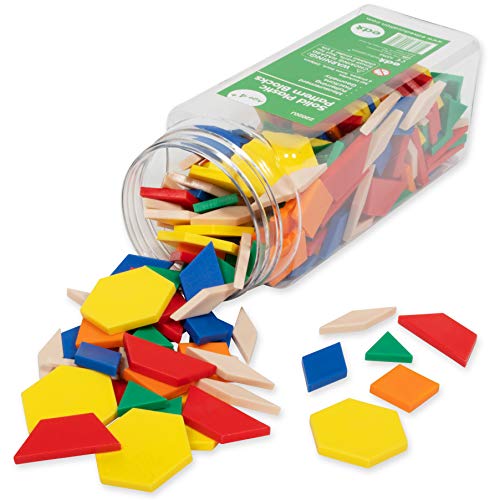
The edxeducation Plastic Pattern Blocks come as a bulk 250-piece set designed for classroom use and larger group activities. The collection includes yellow hexagons, orange squares, green triangles, red trapezoids, blue parallelograms, and tan rhombuses. The shapes are precisely cut to fit together without gaps, enabling learners to build complex patterns and solve geometry-based tasks with confidence. This set is ideal for demonstrating fractions, symmetry, area, and shape attributes through guided exploration or student-led discovery. Teachers can facilitate multi-station activities that encourage collaboration and verbal reasoning as students compare shapes and discuss patterns.
Key considerations for this kit include durability and compatibility. Plastic construction ensures longevity under frequent handling and repeated assembly. The consistent edge tolerances help minimize misfit, reducing frustration for younger students. Because the set is large, it supports differentiated instruction — easier tasks for beginners and more challenging patterns for advanced learners. Storage options are not included in the description, so organizers may want to pair this set with labeled containers or drawers to keep shapes sorted by type for quick retrieval in class demonstrations.
Educational value centers on visual-spatial skills and mathematical concepts. Students can explore symmetry by splitting patterns along axis lines, measure attributes like side counts, and categorize shapes by attributes (sides, corners, and parallelism). The blocks also support story-based activities, where children design patterns to reflect real-world objects or sequences. For teachers, the bulk size reduces the need for replacements and supports longer learning blocks across a term.
LovesTown Shapes — 209 Pieces, Wooden Pattern Blocks

This wooden pattern block set from LovesTown provides 209 pieces in six geometric shapes, accompanied by 24 double-sided design cards. The kit emphasizes durability and tactile engagement, with a sturdy storage bag included for easy organization. The design cards offer graduated difficulty across 4 levels, guiding learners from simple patterns to more complex constructions like rockets and castles. This progression helps children build confidence while reinforcing core concepts in spatial reasoning, color recognition, and basic geometry. The wooden blocks are well-suited for quiet, screen-free math sessions and collaborative activities alike.
From a pedagogy standpoint, the cards encourage structured exploration. Beginners can focus on matching shapes and assembling basic patterns, while more advanced learners attempt combinations that require symmetry and proportional reasoning. The set also supports independent work or small-group challenges, making it adaptable for both home schooling and classroom centers. Parents and teachers may appreciate the durable nature of wood, which can withstand frequent handling and provide a satisfying tactile experience that plastic blocks sometimes lack.
Storage and organization are straightforward thanks to the included bag. The design encourages kids to return pieces to their storage after activities, supporting classroom management and minimize loss. Although substantial in pieces, the kit remains portable enough for learning stations or travel between home and school. Overall, LovesTown’s wooden blocks foster hands-on math exploration with a durable, engaging touch.
edxeducation Math Cubes — 100 Counting Blocks

edxeducation’s Math Cubes bring color and shape variety to counting activities. The set includes five shapes embedded in each cube and comes in ten colors, allowing learners to sort, stack, and align colors to represent sums, patterns, and sequences. The design supports a wide range of activities—from basic counting and color matching to more advanced tasks like pattern creation and early geometry exploration. The soft snapping action helps preserve fine motor skills during hands-on play and learning sessions.
Practical classroom uses include small-group patterning challenges, color-based math games, and early sorting activities. Teachers can pair cubes with simple recording sheets to document student progress in counting, color recognition, and spatial awareness. The set’s versatility makes it suitable for preschool through early elementary levels, providing a scalable option as students gain proficiency in counting, addition, and basic geometric reasoning. Durable plastic ensures continued use over time despite frequent handling.
In a learning sequence, these cubes can be integrated with larger pattern blocks to demonstrate composite shapes or to illustrate equivalence between different representations of the same quantity. This cross-concept integration helps students connect abstract math ideas with tangible objects, supporting accessible, inquiry-based learning.
FreshCut Crafts Pattern Block Shapes — 882 Pieces

The FreshCut Crafts set delivers a very high quantity of pattern blocks printed on durable card stock. The 882-piece collection includes seven color-coded shapes in a cardstock format that is designed for easy punching and organization. Each shape is pre-cut on sheets, allowing quick access and minimal prep for teachers or parents. The cardstock material makes these shapes light and portable, suitable for take-home activities or quick classroom stations.
Storage is organized by shape, color, and size on the sheets, which helps students learn independent organization and tidy work habits. The punch-out design supports hands-on construction tasks that reinforce geometry concepts such as polygon properties, symmetry, and area estimates. While cardstock is less durable than plastic or wood, the abundance of pieces makes it a practical option for quick, classroom-wide lessons and art-integrated math projects where students physically manipulate and assemble patterns.
Because these shapes are pre-cut and clearly labeled on the sheets, instructors can design rapid warm-ups, small-group tasks, or independent practice that scales with a class size. The high color contrast also aids visual learners in recognizing shape families and pattern sequences, making this set a strong choice for differentiated instruction and creative math activities.
hand2mind Foam Pattern Blocks — Set of 100
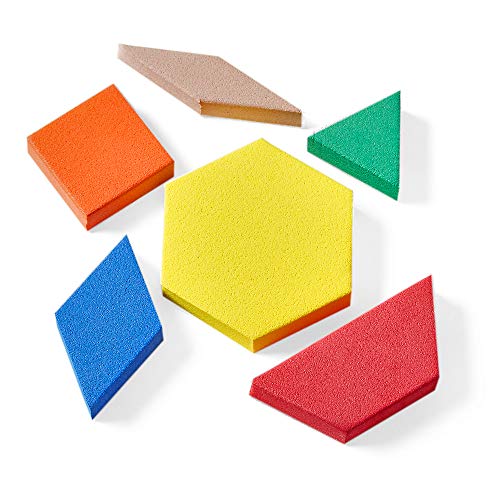
The hand2mind Foam Pattern Blocks offer a lightweight option ideal for early learners and busy classrooms. The set includes six geometric shapes made from soft foam that is gentle to touch and easy to manipulate. Foam blocks are particularly suitable for hands-on patterning activities, color sorting, and basic geometry practice with reduced noise and risk of damage to classroom surfaces during active use.
Foam blocks support a range of math objectives, from shape recognition to simple area and pattern exercises. They are well-suited for preschool and kindergarten activities, as well as quiet learning centers in elementary classrooms. The set’s portability enables easy setup at learning stations or take-home practice, and the soft material helps maintain a calm learning environment while students explore spatial relationships and sorting tasks.
In terms of classroom management, foam blocks are easy to clean and store in bins or baskets. Students can work collaboratively on pattern-building challenges, develop fine motor skills, and verbalize reasoning as they compare shapes and discuss patterns. The playful design can also engage learners who benefit from tactile, hands-on experiences when approaching foundational math concepts.
Deekin 18 Pcs Large 3D Shapes

Deekin’s 18-piece set focuses on three-dimensional geometric solids that support early geometry instruction and model-building activities. The shapes include cubes, cuboids, cylinders, pyramids, cones, spheres, and more, enabling students to recognize 3D forms and discuss color attributes. The blocks are crafted from wood with water-based paint, ensuring a smooth finish and low odor, making them suitable for sensitive environments and younger learners. The set encourages building, disassembly, and imaginative play that align with math readiness for preschool through elementary ages.
Educational use cases include 3D shape identification, comparing solid properties (faces, edges, vertices), and constructing simple models that demonstrate spatial reasoning. The wooden construction provides durability for repeated handling, while the variety of shapes supports multi-step tasks such as composing composite figures or exploring symmetry in three dimensions. In classroom settings, these blocks can pair with picture cards or guided questions to prompt descriptions and reasoning about shape relationships.
Considerations for selection include handling weight and storage space, as the larger wooden blocks may require sturdier storage options. The absence of small parts makes this set relatively safe for younger students, though supervision is advised during active construction activities. Overall, the Deekin kit offers a tangible way to introduce 3D geometry and spatial thinking in a structured yet creative context.
hand2mind Attribute Blocks — Set of 60

The hand2mind Attribute Blocks kit provides a focused set for sorting and early geometry. With 60 blocks, students can compare shape attributes such as color groups, sizes, and features, supporting fundamental math vocabulary and classification skills. The kit is well-suited for preschool and kindergarten activities where learners practice matching, sorting, and identifying distinct attributes as a foundation for later geometry work.
Educators can leverage attribute blocks to scaffold math lessons around early measurement, pattern recognition, and shape families. The blocks are quiet and easy to manage, making them appropriate for small-group centers or individual practice. This set emphasizes independent exploration while guiding students to articulate attributes and relationships, which is essential for building mathematical language and cognition early on.
Learning Resources Giant Magnetic Pattern Blocks

The Learning Resources Giant Magnetic Pattern Blocks bring a magnetic dimension to pattern block exploration, enabling quick setup and reconfiguration on steel whiteboards or magnetic boards. This format supports dynamic demonstrations of geometry concepts like symmetry, congruence, and area. The magnetics enable whole-class participation during warm-ups, with students physically rearranging blocks to illustrate fractions or pattern sequences. The visual clarity helps reinforce shape attributes and relationships in an engaging, interactive way.
While designed for magnetic use, teachers can also employ these blocks on traditional tables or boards. The larger format makes them accessible for younger learners and prompts collaboration as students negotiate pattern designs or critique peers’ constructions. Because they are magnetic, maintenance and cleanup are often straightforward, reducing classroom downtime between activities. Overall, this set offers a big, visible way to explore geometric reasoning in a group setting.
Buying Guide: Key Purchase Considerations
- Material and durability: Choose between wood, plastic, cardstock, or foam based on classroom needs, durability, and cleaning requirements. Wood offers longevity; plastic is sturdy and easy to sanitize; foam is light and safe for younger children; cardstock is inexpensive and bulk-friendly but less durable.
- Shape variety and color coding: A broader set with multiple shapes supports more complex patterning, while color coding helps with quick sorting and visual differentiation for younger learners.
- Size and weight: Lighter sets are easier for small hands and portable learning stations; heavier wooden blocks are robust but require more storage.
- Organization and storage: Consider sets that come with bags, boxes, or labeled sheets to keep shapes sorted and reduce loss during activities.
- Age and learning level: Match the complexity to the learner’s age. Preschoolers benefit from basic shapes and patterns, while elementary students can handle more advanced symmetry and fractions tasks.
- Compatibility with activities: Look for sets that integrate with guided lesson plans, design cards, or magnetic boards to support different teaching styles, including independent practice, small-group work, and whole-class demonstrations.
- Safety and cleanability: Ensure materials are non-toxic and easy to clean, particularly for foam or cardstock shapes used in active classrooms and home environments.
These considerations help educators select a responsive pattern-block system that aligns with curriculum goals such as geometry, fractions, measurement, and spatial reasoning. When choosing, think about how the blocks will be used—station-based, whole-class demonstrations, or take-home practice—and select a set that can scale with student progress while staying organized and durable over time.