Best Solar System Toys for 10-Year-Olds: Space-Themed STEM Toys That Inspire
Exploring the solar system is a gateway to hands-on learning for kids aged 10 and up. The following selection blends creativity, engineering, and astronomy, helping young explorers build models, project lights, and understand planetary motion. Each toy below encourages independent play, classroom-style learning, and room décor that sparks curiosity about space.
| Product | Brand | Key Feature |
|---|---|---|
| LEGO Technic Planet Earth and Moon in Orbit | LEGO | Crank-and-orbit model of Earth, Moon, and Sun; adds months and moon phases |
| National Geographic Glow-in-The-Dark Solar System | Blue Marble | Movable arms; glow-in-the-dark 3D solar system |
| Science Can Solar System Projector | Science Can | Interactive planetarium projector with 8 disks and bilingual options |
| MOCBURIKU Solar System Set | MOCBURIKU | Rotatable, motor-driven model with real planetary color coding |
| Nine Planets DIY Solar System | Little Jupiter | Wood model and puzzle with educational fact cards |
The following sections spotlight five top picks. Each entry includes a brief overview, notable features, and practical ideas for use at home or in the classroom. All links direct to Amazon product pages for easy shopping.
LEGO Technic Planet Earth and Moon In Orbit
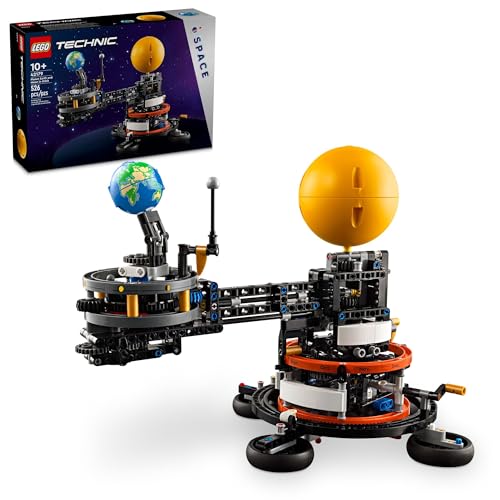
LEGO’s Technic set invites kids to build a dynamic solar system model featuring Earth, the Sun, and the Moon in orbit. A crank mechanism demonstrates orbital motion, while printed details show months and moon phases to illustrate seasonal changes. This kit blends engineering with astronomy, offering hours of imaginative play and a striking space-themed display for a bedroom or play room.
Science Can Solar System Projector

This interactive model projects the eight planets onto any surface, turning the ceiling into a planetarium. It features bilingual options (English and Spanish) and a talking mode that shares educational facts. With 24 full-color images across 3 disks, it’s a kid-friendly, classroom-ready way to explore planetary science and astronomy concepts in an engaging, multimedia format.
National Geographic Glow-In-The-Dark Solar System

This 3D solar system kit lets kids customize and glow in the dark. It includes a complete set of paints, decals, and a poster with solar system facts. Movable arms allow easy rearrangement of planets, making it ideal for hands-on exploration, display-ready setups, and ongoing space-themed learning in a child’s room or science space.
Science Can Interactive Talking Solar System Model

Another Science Can option, this talking model features 3 knowledge cards with 48 facts and English/French options. Its 3D planetarium projection, with 24 images on disks, provides an immersive, language-inclusive learning experience. It’s suitable for curious minds aged 6-12 and works well for family science nights or classroom demonstrations.
Nine Planets DIY Solar System (Wood Kit)

This wooden solar system kit provides a hands-on, two-part building experience with a puzzle and fact cards. It’s designed for ages 8 and up, making it a good fit for elementary science fairs or home STEM explorations. The model helps kids visualize the major planets and fosters a tangible understanding of solar system concepts.
Buying Guide: Key Purchase Considerations
- Age appropriateness: Choose kits that match a 10-year-old’s motor skills, reading level, and curiosity. Some options offer bilingual content or step-by-step instructions to support independent learning.
- Educational goals: Decide if you want mechanical modeling, light projection, or hands-on building. Some sets emphasize orbital motion, others focus on solar system facts, glow-in-the-dark displays, or artful room décor.
- Complexity and durability: LEGO Technic and motorized sets require more assembly and ongoing battery use, while wood models or static displays emphasize long-term durability for display and study.
- Multisensory engagement: Look for kits offering visuals, interactive projections, and tactile pieces to reinforce astronomy concepts through multiple senses.
- Room décor and space theme: Some sets double as decorative items for a space-themed bedroom. Consider the size, color, and glow features to match room aesthetics.
- Language support: For bilingual learning, select models offering English and Spanish or French content to broaden vocabulary and comprehension.
- Maintenance and batteries: Motorized units require batteries; check availability and replacement costs when budgeting.
- Safety and materials: Ensure materials are age-appropriate, with non-toxic paints or finishes on wood and durable plastics designed for children’s use.
How to Use These Toys for Learning
- Independent study: Assign a mini solar system project where kids assemble and label each planet, then present orbital concepts to a family member.
- Hands-on demonstrations: Use the projection toys to demonstrate how light and perspective create planetary views, discussing how scientists observe space.
- Room integration: Display the glow-in-the-dark models as a nightly reminder of the cosmos, linking bedtime routines to astronomy facts.
- STEM extension: Pair wooden kits with basic astronomy worksheets, encouraging measurements, scale drawing, and orbit simulations.
- Group learning: Organize small science clubs at home or in class, where kids compare model features and share discoveries about planets and orbits.