Best Spotting Scope for Telescope: Top Picks for Birding, Wildlife, and Long-Range Viewing
Finding the right spotting scope to complement a telescope setup can enhance distant viewing, wildlife observation, and nature photography. The following selections emphasize durability, optical clarity, and flexible magnification, helping you choose a scope that fits your outdoor needs. Each pick comes with key features to compare at a glance, and a buying guide follows to help you weigh options like lens quality, weather sealing, and digiscoping compatibility.
| Product | Objective Lens | Magnification | Special Notes |
|---|---|---|---|
| SVBONY SV28 | 70mm | 25-75x | Waterproof, sunshade, phone adapter |
| Gosky DiamondEdge 20-60×80 | 80mm | 20-60x | BAK4, water-proof, fog-proof |
| Gosky 25-75×80 (Flagship) | 80mm | 25-75x | BAK4, FMC optics, weather sealed |
| Celestron Ultima 20-60×80 | 80mm | 20-60x | Multi-coated optics, digiscoping ready |
| Bushnell Trophy Xtreme 20-60×65 | 65mm | 20-60x | Durable rubber armor, waterproof |
The selections below are organized to help you compare practical features, field usability, and performance under varied outdoor conditions. Each product section includes a concise overview, an image, and the core specs drawn from the manufacturer descriptions.
SVBONY SV28 Spotting Scope With Tripod
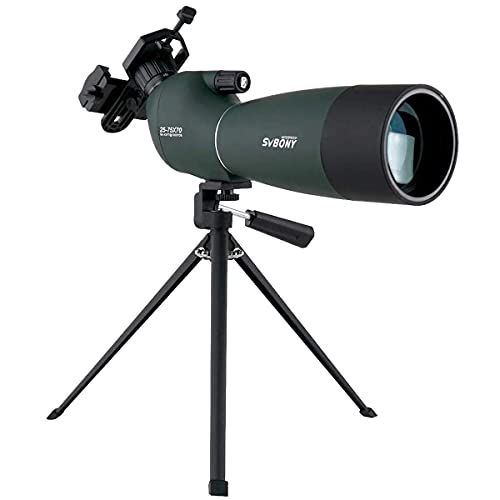
The SV28 offers a 25-75x zoom range paired with a 70mm objective. Its high light-gathering capacity supports brighter views in low light. The design includes an extendable sunshade to reduce glare and a non-slip finish for wet conditions. A phone adapter is included for quick digiscoping or sharing wildlife moments with ease. The scope is described as waterproof and fog resistant, making it suitable for variable outdoor environments. This makes it a solid option for beginners who want a versatile, all-weather spotting scope that can transition into basic telescope-like viewing setups.
Gosky Flagship DiamondEdge 20-60×80

This Gosky model features an 80mm objective with 20-60x magnification and includes a carrying bag and quick phone holder. It uses a high-quality BAK4 prism and fully multi-coated optics to deliver brighter, crisper images with improved color fidelity. The scope is nitrogen-filled and sealed for waterproof and fog-proof operation, making it reliable in diverse weather. The rubber-armored body provides a secure grip, while the stretchable eyepiece shield adds lens protection. Ideal for bird watching, wildlife viewing, and distant landscape observation in varied climates.
Gosky Flagship 25-75×80 Spotting Scope

This upgraded Gosky flagship combines 25–75x magnification with an 80mm objective for bright, wide views. The 23mm eyepiece and large objective lens deliver a broad field of view and vivid color accuracy. Its nitrogen-filled body and O-ring sealing provide dependable waterproof and fog-proof protection for year-round use. BAK4 prism and FMC optics enhance light transmission and image clarity, making it a strong choice for serious enthusiasts who value image quality and reliability in challenging conditions.
Celestron Ultima 20-60×80 Angled Spotting Scope

The Ultima series is designed for versatility with an 80mm objective and 20-60x zoom in an angled format. It ships with essential viewing accessories, including a soft carrying case and a digiscoping-ready eyepiece setup. The multi-coated optics maximize brightness and color contrast for clearer distant scenes. This model emphasizes practicality for outdoor enthusiasts who want a reliable, well-rounded scope with occasional digiscoping capability.
Bushnell Trophy Xtreme Spotting Scope

The Trophy Xtreme combines rugged durability with a 20-60x zoom on a 65mm objective. It features a rubber-armored housing and 100% waterproof construction for demanding field use. The compact, ergonomic design includes a built-in sunshade and an integrated lens cover, supporting extended sessions in variable environments. This model is suited for serious outdoor observers who require a durable, dependable scope with solid magnification and reliable performance in adverse weather conditions.
Buying Guide: Key Purchase Considerations
When selecting a spotting scope to pair with a telescope setup, consider these factors to align with your observing goals:
- Magnification range and objective size: Larger objectives gather more light for brighter images, while higher zoom extends range. Balance weight and portability with desired detail.
- Optical quality: Look for fully multi-coated lenses and prisms (BAK4 is common) for brightness, color accuracy, and contrast. FMC coatings further improve light transmission.
- Weather sealing and fogproofing: Nitrogen or argon purging and O-ring seals help prevent internal fogging and water intrusion in damp or cold conditions.
- Digiscoping compatibility: If you plan to photograph through the scope, ensure a compatible adapter and camera setup are available for your model.
- Durability and grip: Rubber armor, non-slip finishes, and robust tripod compatibility improve field usability, especially in wet or rugged environments.
- Tripod and stability: A sturdy tripod with adjustable height and a level bubble helps maintain sharp images, particularly at higher magnifications.
- Weight and portability: Heavier scopes offer stability but may be less convenient for long hikes. Consider your typical use-case and carrying method.
- Price and warranty: More advanced optics and build often come with higher costs. Check warranty terms and service options for long-term support.
These considerations help you compare models across the key dimensions of brightness, durability, versatility, and ease of use. The five selections above provide a spectrum from entry-level to more capable options, enabling a practical fit for hobbyists and enthusiasts who want to extend telescope-like viewing into distant landscapes, wildlife, and nature observation.