Best Stem Toys for a 5-Year-Old: Hands-on Learning That Builds Brains
Finding engaging stem toys for a 5-year-old helps cultivate curiosity, problem-solving, and fine motor skills while keeping playtime fun. The following selections cover pattern matching, building challenges, pixel art, and science exploration—all age-appropriate and designed to grow with your child. Each pick emphasizes hands-on activities, clear learning goals, and safe, child-friendly design.
Summary table of chosen products
| Product | Brand | Key Focus |
|---|---|---|
| Brainometry | Learning Resources | Pattern blocks, brain games, fine motor skills |
| 10 in 1 STEM Toys | Tsomtto | Multiple models, hands-on building, collaboration |
| Pixel Art Challenge | Learning Resources | Critical thinking, fine motor, counting |
| Doctor Jupiter Science Kit | Doctor Jupiter | 100+ experiments, science exploration |
| Lite Brite Classic | Lite Brite | Light art, creativity, early design thinking |
Brainometry: 3D Puzzles And Pattern Blocks

Brainometry combines tactile pattern blocks with brain-teaser activities to develop critical thinking and early math skills. The kit uses colorful blocks to create patterns that challenge spatial relationships while sharpening fine motor control. It is designed for children aged 5 and up, making it a suitable starting point for curious kindergartners ready for more complex problem solving. The 10 double-sided activity cards provide progressive difficulty, helping learners push forward at a comfortable pace.
10 In 1 STEM Toys For Ages 4-8

This 10-in-1 building set includes 167 pieces that can be assembled into ten different models, such as a crane, rocket car, helicopter, robot, and more. It fosters STEM learning by encouraging children to follow guides, understand engineering concepts, and adapt designs. The kit is especially useful for small-group play, where children can collaborate to plan, build, and troubleshoot. The set targets a broad age range, with a focus on hands-on experimentation and creativity.
Pixel Art Challenge: Hands-On STEM

This activity set blends art with STEM, requiring kids to solve problems and plan pixel placements to complete 2D patterns. The challenges grow in difficulty, supporting scalable learning as your child gains confidence in spatial reasoning and problem-solving. Foam pixel pieces help develop hand-eye coordination and dexterity, while the screen-free format offers an engaging alternative to screen time.
Doctor Jupiter My First Science Kit

Doctor Jupiter offers 100+ experiments designed to foster early scientific curiosity. The kit encourages kids to observe, ask questions, and conduct experiments in a safe, guided way. It covers a range of topics from chemistry to physics, turning learning into a discovery journey. The hands-on projects promote critical thinking and pattern recognition while delivering screen-free engagement for 4- to 8-year-olds.
Lite Brite Classic: Light Art And STEM
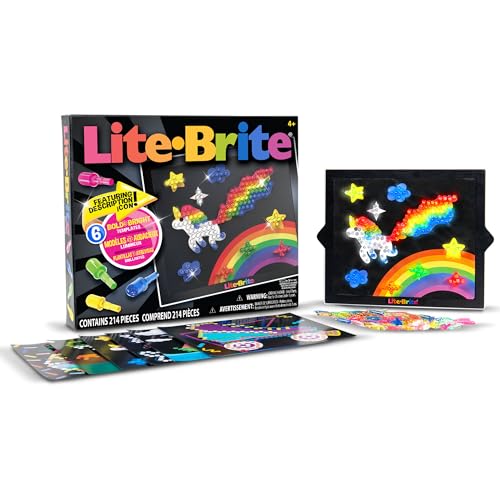
Lite Brite blends art with engineering by letting children create glowing images using pegs and light. With six color options, multiple patterns, and four light modes, kids can explore design thinking, color theory, and spatial awareness. This retro-inspired toy remains a timeless way to spark creativity while reinforcing fine motor skills and attention to detail in a playful format.
Qirptey STEM Building Toys Set

Although not one of the top five, Qirptey’s 125-piece set provides vibrant blocks and an idea booklet to build race cars, robots, trucks, and more. It emphasizes fine motor development, spatial reasoning, and teamwork as kids follow instructions or innovate their own models. It’s a versatile option for home or classroom use, suitable for a broad age range from preschool to early elementary years.
Officygnet Dinosaur STEM Set

Take-apart dinosaur kits combine hands-on construction with STEM learning. The electric drill and varied dinosaur models support problem-solving, fine motor control, and early engineering concepts. Designed for children around 3–8, it can be a collaborative play activity that echoes real-world engineering tasks while teaching tool usage and sequencing.
Laradola Take-Apart Dino Kit
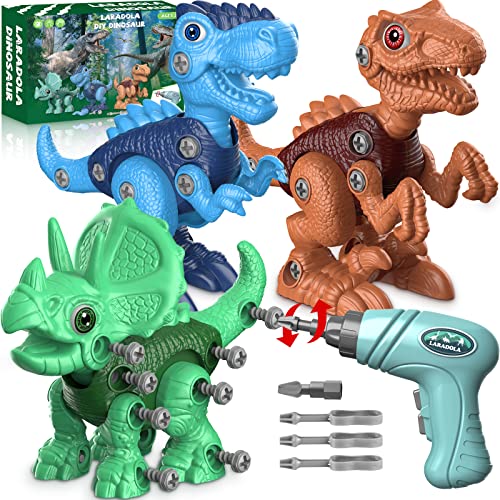
Laradola’s 3D construction experience emphasizes sequencing, color-coding, and independent play. With a kid-safe screwdriver and oversized parts, children can assemble and reassemble dinosaurs, building confidence and fine motor skills while exploring basic engineering principles. This kit supports solo play and cooperative family sessions alike.
Buying Guide: Key Purchase Considerations And Comparisons
- Age appropriateness and safety: Look for kits designed for ages 4–8 with age-appropriate pieces, rounded edges, and non-toxic materials. Consider whether your child benefits from simpler instructions or more open-ended building projects.
- Learning goals: Identify toys that target specific skills—pattern recognition, spatial reasoning, counting, fine motor control, or basic science concepts. A mix of activities helps cover multiple STEM domains.
- Hands-on vs. screen time: Choose predominantly screen-free options to promote tactile learning, problem-solving, and collaboration with family or peers.
- Progression and difficulty: Select products that offer increasing challenges so children can grow with the toy. Double-sided activity cards or multiple models support this.
- Group play and collaboration: Some sets are designed for multiple participants, fostering teamwork, communication, and shared problem-solving.
- Storage and organization: Consider sets with clear organization systems or compact storage to encourage regular use and easy cleanup.
- Durability and value: Prioritize sturdy components and safe, long-lasting materials, especially for younger hands that may handle parts roughly.
- Expansion potential: Some kits align with classroom curricula or come with additional sets that extend the learning journey.
The selection above provides a range of approaches to stem learning for a 5-year-old, from pattern-based logic to hands-on engineering and artistic expression. Each product emphasizes safe, interactive exploration, helping cultivate curiosity while building foundational STEM skills that support future academic and life success.