Best STEM Toys for an 11-Year-Old Boy: Top Hands-on Projects
This guide highlights five engaging STEM toys that are well-suited for an 11-year-old boy who loves hands-on experiments, building, and exploring science and technology. Each option below offers screen-free learning, creative problem-solving, and durable components designed for curious tweens. The selections cover engineering, electronics, solar power, robotics, and maker-style play to support a broad range of interests and skills.
| Product | Brand | Key Focus |
|---|---|---|
| Smartivity DIY Pinball Machine | Smartivity | Mechanical engineering, motion concepts |
| Snap Circuits Jr. SC-100 | Snap Circuits | Electronics, circuits, safety |
| Lucky Doug Solar Power Kits | Lucky Doug | Solar energy, robotics |
| National Geographic Gross Science Kit | Blue Marble | Hands-on chemistry and biology basics |
| 14-in-1 Solar Robot Kit | KIDWILL | Solar robotics, multi-model building |
Smartivity Pinball Machine

The Smartivity DIY Pinball Machine provides a 100% screen-free engineering experience that helps develop key skills such as spatial reasoning, planning, and hand-eye coordination. Designed for ages 8–14, it guides kids through assembling a fully functional mechanical pinball arcade at home. The kit emphasizes step-by-step instructions and includes parts that are designed for easy assembly, fostering confidence and creativity while delivering hours of action-packed play. A lifetime parts replacement policy adds ongoing value for future projects.
Snap Circuits Jr. SC-100

Snap Circuits Jr. SC-100 introduces electronics fundamentals through hands-on projects. With over 100 possible configurations and a full-color instruction manual, this kit is safe and engaging for kids aged 8 and up. The clear, modular parts enable rapid experimentation, from simple circuits to more complex devices, supporting iterative learning and a solid foundation in electrical engineering. The variety of projects helps sustain curiosity across a broad age range, making it a versatile choice for long-term STEM development.
Lucky Doug Solar Power Kit
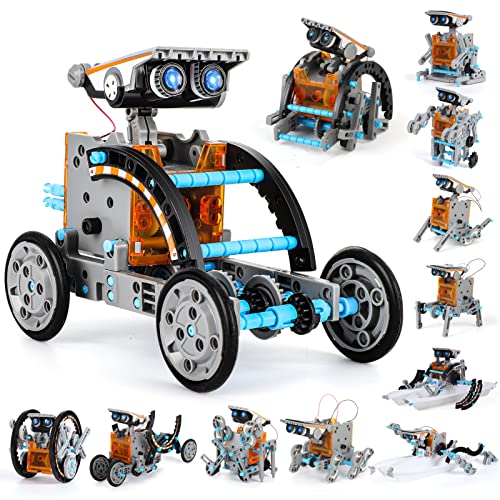
This 12-in-1 solar robotics kit uses solar energy to power multiple robot configurations, making it ideal for teaching renewable energy concepts. Kids can build and reassemble a variety of robots that crawl, roll, or float under sun exposure, reinforcing science topics such as energy transfer and sustainability. Clear, beginner-friendly instructions help young engineers complete projects successfully, and the solar-powered design introduces practical engineering workflows without reliance on batteries in sunny conditions.
National Geographic Gross Science Kit

The National Geographic Gross Science Kit blends humor with science through 15 gross experiments and an additional 30 activities using household items. Age-appropriate experiments—such as creating slime, silly dissections, and other gooey marvels—build curiosity and foundational scientific literacy. The kit includes kid-friendly illustrated guides that explain the science in accessible terms, supporting independent exploration while emphasizing observation and curiosity in biology and chemistry.
14-in-1 Solar Robot Kit

The 14-in-1 Solar Robot Kit from KIDWILL empowers kids to build a Sun-powered rover of 14 distinct forms, all from a single kit. The project supports engineering flexibility as children transform the model into different walking, floating, or rolling configurations. Powered by solar energy or a backup battery, this kit fosters understanding of renewable energy principles and iterative design practices. It’s a solid option for kids who enjoy tinkering with multiple models and experimenting with mechanisms.
Buying Guide
Key considerations when choosing STEM toys for an 11-year-old boy include learning objectives, durability, complexity, and safety. Here are perspectives to help compare options:
- Educational focus: Decide whether your child prefers electronics, robotics, solar energy, or mechanical engineering. Kits that blend multiple disciplines can offer broader exposure.
- Skill progression: Look for projects with scalable challenges, clear instructions, and opportunities to iterate. This supports growth from beginner to more advanced levels.
- Safety and age appropriateness: Ensure parts are durable, kid-friendly, and labeled for appropriate age ranges. Snap-based electronics sets often provide safer, modular experimentation.
- Durability and longevity: Replacements parts policies or modular components help extend the life of a toy, encouraging sustained engagement and learning.
- Environmental impact: Solar-powered options teach renewable energy concepts and reduce reliance on disposable batteries, aligning with eco-conscious learning.
- Supplementary learning: Some kits pair with manuals, online guides, or activity sheets that reinforce concepts beyond the hands-on build.
- Budget and storage: Consider the amount of pieces and the included storage solutions. Larger kits can require organized space but offer expanded exploration.
In sum, the best choice balances immediate engagement with long-term learning potential. For an 11-year-old, a mix of mechanical, electronic, and solar projects often delivers the most comprehensive STEM experience, fostering curiosity, problem-solving, and confidence in tackling hands-on challenges.