Best Talking Globe for Kids: Interactive World Learners for Fun and Education
Discover engaging, kid-friendly globes that turn geography into an exciting adventure. This guide highlights five top talking globes designed to spark curiosity, teach world facts, and support STEM learning for children ages 4 and up. Each option blends interactive tech with geography basics, helping young explorers remember continents, landmarks, languages, and cultures through audio, visuals, and hands-on play.
| Product | Brand | Key Feature |
|---|---|---|
| Little Experimenter Interactive 9” Globes | Little Experimenter | Smart pen with real-time voice info; 300 trivia questions |
| GeoSafari Jr. Talking Globe | Educational Insights | Wildlife Bindi Irwin narration; over 1,000 facts |
| LeapFrog LeapGlobe | LeapFrog | 48 touch points; multiple exploration modes |
| Orboot Earth Explorer | Shifu | AR-powered globe with 400+ wonders |
| Replogle Intelliglobe | Replogle | Intelliglobe pen with narrated Discovery Book |
Little Experimenter 9” Interactive Globe

The Little Experimenter globe introduces kids to world geography with a built-in smart pen that delivers real-time audio. It covers countries, capitals, climates, languages, populations, currencies, and more. With a library of 300 trivia questions, it challenges young learners while keeping sessions lively and interactive. The 9-inch globe provides a compact, kid-friendly size for desks and shelves, making it a versatile addition to homeschool routines or classroom centers.
GeoSafari Jr. Talking Globe With Bindi Irwin
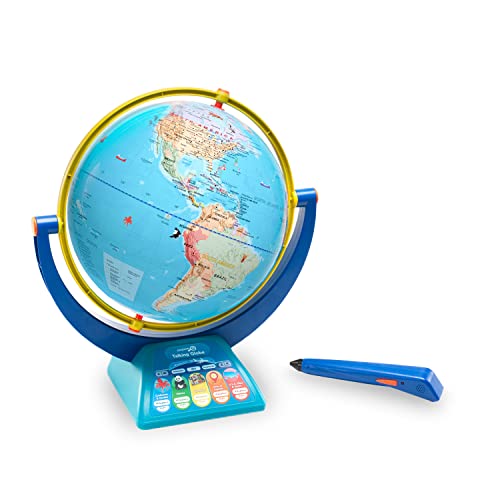
This globe features Wildlife Warrior Bindi Irwin as a guide, sharing more than 1,000 facts and quiz questions. The smart pen lets children touch the globe to hear explorations about animals, oceans, continents, and cities. Its dual focus on geography and nature makes it ideal for classrooms and family learning alike, offering an approachable entry into map study and STEM topics through storytelling and interactive questions.
LeapFrog LeapGlobe Light-Up

The LeapGlobe offers a multi-sensory learning experience with 48 touch points that reveal landmarks, animals, languages, and foods. It includes modes for exploration, music, and a “Find-It” quiz, helping kids connect geography with cultural elements through engaging sounds and activities. This option suits homes with younger or beginner geography learners who benefit from guided discovery and playful challenges.
Orboot Earth Explorer Globe

Orboot Earth Explorer blends physical and digital learning through an augmented-reality experience. The 10-inch smart globe is paired with a companion app that unlocks 400+ wonders, animals, and cultures. It includes a constellation mode that lights up star patterns for night-sky learning. A modern STEM toy that supports independent exploration and guided lessons, Orboot enriches geography with interactive games and storytelling.
Replogle Intelliglobe Interactive Globe
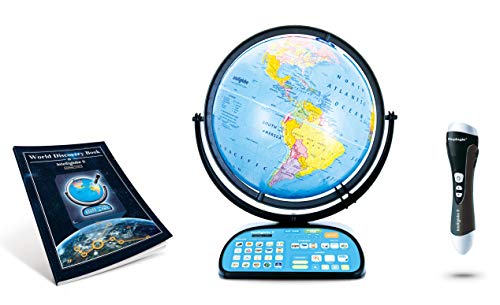
The Replogle Intelliglobe combines a talking globe with a discovery book and a rechargeable pen. Designed for classroom-grade learning, it offers thousands of facts, national anthems, population data, and geographic trivia. The included pen provides narration and interactive features across multiple challenges, maps, and world records. This option is well-suited for educators seeking a robust, discussion-friendly tool with multimedia support.
Buying Guide: Key Considerations For Choosing A Talking Globe
- Age and learning goals: Younger children may benefit from a globe with bright visuals and simple prompts, while older kids can handle more complex datasets and trivia challenges.
- Interactivity and modes: Look for devices with multiple modes (exploration, quiz, music, constellation lighting) to keep sessions varied and engaging.
- Content depth: Some globes emphasize basic geography and landmarks; others offer 1,000+ facts, languages, and cultural insights. Match depth to your child’s interest.
- Pen or touch-based input: Smart pens enable real-time voice responses, while touchpoints offer tactile exploration. Consider which feels most intuitive for your child.
- Augmented reality options: AR-enabled globes add digital layers to the physical globe, expanding discovery through apps and screens. Assess device compatibility and screen time balance.
- Durability and size: Choose a globe size appropriate for desks, shelves, or classrooms. Sturdy builds and child-safe materials are important for frequent handling.
- Power and updates: Check battery life or USB recharge options. Some devices include ongoing content updates or companion apps for new facts and features.
- Educational fit: If using in homeschool or a classroom, assess whether the globe aligns with curriculum needs, such as geography, science, or world cultures.
- Price-to-value: Compare content breadth, build quality, and included accessories like styluses, discovery books, or protective stands to gauge overall value.