Best Tap Dance Floor for Home, Studio and Outdoor Practice
Finding a reliable tap dance floor that adapts to different spaces—home studios, outdoor venues, or event spaces—can improve practice accuracy and sonic feedback. This guide highlights five top-rated portable options, focusing on stability, cushioning, and ease of transport. Each product below offers genuine surface-specific benefits, from bamboo-infused builds to cushioned layers designed for reduced fatigue. Read on to compare features, surface compatibility, and portability to help choose the right board for your practice needs.
| Product | Surface Type | Size | |
|---|---|---|---|
| Tristcily Tap Dance Floor | Wooden, cushioned | 47.8″ x 38.5″ | Storage bag included |
| Besutosera Tap Board | Portable, stable surface | Compact portable size | Anti-slip and impact resistant |
| ODOXIA Tap Board (Dark) | Wood with cushioning | Compact portable board | Versatile surface compatibility |
| LEARNIBEE Tap Dance Floor | Solid wood with cushioning | 46.4″ x 29.5″ | Waterproof layer, quiet support |
| Tristcily Bamboo Tap Floor | Bamboo, cushioned | 47.8″ x 38.5″ | Enhanced durability |
Note: All products are evaluated for portability, surface compatibility, and acoustic fidelity. Prices and availability may vary by seller. The table above is for quick reference only and does not replace full product details.
Tristcily Tap Dance Floor

The Tristcily Portable Tap Dance Floor delivers a full-size practice surface suitable for home studios, classrooms, and event spaces. Its 47.8″ x 38.5″ plane contributes to comfortable foot placement during complex routines, while a durable folding design supports easy transport and storage. The kit includes a storage bag with reinforced seams, enabling space-efficient organization after practice. The surface is designed to maintain sonic clarity and accurate kinesthetic feedback across various substrates, helping dancers preserve technique when locations change. This model is well-suited for flamenco, jazz, and tap disciplines where consistent rhythm and strike response matter.
Features highlighted include studio-grade dimensions that resist deformation through repeated folding, a balance of firmness and feedback, and a portable ecosystem that streamlines setup and teardown. Dancers benefit from reliable response at multiple tempo levels, with transportation features that suit home use and mobile teaching environments. The floor mat supports long practice sessions by delivering a controlled bounce and stable footing, reducing the risk of slips during intricate footwork.
Besutosera Tap Board

The Besutosera portable tap board emphasizes versatility for both indoor practice and outdoor demonstrations. It provides a stable surface across varied substrates, including grass and concrete, making it ideal for on-the-go rehearsals and outdoor showcases. The board’s anti-slip and impact-resistant construction enhances safety, giving dancers confidence to execute fast-paced sequences. Its lightweight design facilitates quick transport between studio rooms or venues while maintaining a solid feel underfoot during rhythmic footwork.
Key benefits include a flat, even surface that supports precise strike feedback, a design that accommodates multiple dance styles beyond tap, and a focus on user safety through non-slip performance. The board is suitable for home practice sessions, small classes, or impromptu outdoor performances where a reliable dance floor is required. With its portable frame, dancers can expand their practice repertoire beyond typical studio constraints and explore new spaces without compromising technique.
ODOXIA Tap Board (Dark)

The ODOXIA Dark Tap Board is crafted to transform any surface into a functional dance floor. It combines a sturdy wood base with a cushioning layer to balance stability and impact absorption. The board tolerates practice on various substrates, including carpets and patios, while preserving sound clarity and consistent feedback essential for tempo control and rhythm accuracy. This model emphasizes portability with foldable elements and a compact footprint for easy storage and travel between studios or outdoor stages.
Its versatility shines through in its compatibility with a broad range of dance styles, including tap, flamenco, and Irish step dance. The cushioning layer protects joints during longer sessions, and the wood construction supports durable wear. For dancers prioritizing resilient performance in multiple environments, this board offers dependable responsiveness and a straightforward setup that minimizes preparation time before rehearsals or performances.
LEARNIBEE Tap Dance Floor

The LEARNIBEE Tap Dance Floor focuses on portability and size, offering a large 46.4″ x 29.5″ surface designed to accommodate broader movement space for beginners and experienced dancers alike. The surface features multi-layer solid wood panels delivering an authentic foot feel with reliable cushioning. A durable wear-resistant and waterproof layer extends product longevity, while a bottom silent rubber pad enhances cushioning and minimizes floor impact. This combination supports quiet, controlled practice sessions, enabling dancers to refine timing without disturbing others nearby.
Designed for both private indoor use and public outdoor performances, the LEARNIBEE floor balances size and weight to facilitate travel between rehearsal spaces and venues. Its construction seeks to optimize sound responsiveness, ensuring that step sounds match the intended tempo and dynamics. The board suits tap, flamenco, and other rhythm-based disciplines that demand precise footwork on a stable, comfortable platform.
Tristcily Bamboo Tap Floor
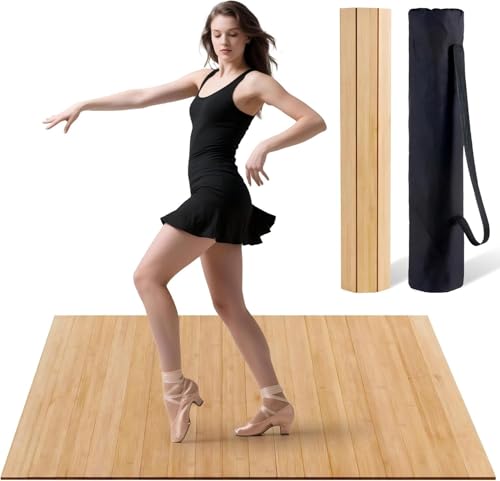
The Bamboo Tap Floor by Tristcily emphasizes sustainability and enhanced surface resilience. Built with a bamboo fiber core, this board delivers crisp acoustic feedback and controlled slide, suitable for intense tap and jazz sessions. The bamboo-reinforced design improves durability, offering better resistance to wear and edge chipping on hardwood or tile floors. A grippy underside helps maintain stability, reducing shifting during dynamic footwork while the cushioned layer protects joints and supports long practice intervals.
With a generous studio-sized surface of 47.8″ x 38.5″ and a 0.3″ thickness, this model mirrors professional studio standards while maintaining practical portability. Dancers can use it indoors or on patios, with a surface that responds predictably to heel sounds and toe taps. Its eco-friendly material selection makes it a popular choice for studios aiming to align practice gear with sustainable practices.
Buying Guide: Key Purchase Considerations
- Surface Feel and Sonic Feedback: Look for a board with a cushioned layer or a bamboo/wood core that provides clear, consistent tap sounds and comfortable footfall.
- Size and Portability: Studio-size boards offer spacious movement but may be heavier. Balance surface area with weight and foldability for transport between spaces.
- Durability and Substrate Compatibility: Consider whether the floor needs to perform on concrete, wood, grass, or carpet. Durable edges and non-slip bottoms reduce risk during fast footwork.
- Weight and Storage: A compact foldable design with a durable bag or case simplifies travel and storage for instructors and students.
- Maintenance and Cleaning: Surfaces with water-resistant coatings are easier to clean and maintain in public spaces where moisture or dust can affect performance.
- Audience and Environment: Outdoor setups require weather-resistant finishes and stable underfoot performance to protect technique in varied conditions.
- Budget and Longevity: Higher-quality bamboo or multi-layer wood boards tend to last longer, delivering more consistent practice over time.
When selecting a tap dance floor, weigh the balance between surface feel, footprint, and transport needs. For frequent classroom use, a larger, stable surface with excellent sound feedback may be ideal. For solo practice and travel, a lighter, foldable board that preserves rhythm accuracy can offer greater flexibility. Across the board, the right choice should support consistent technique, reduce fatigue, and translate well between practice spaces and performance venues.