Best Telescope and Kids Optics for 7 Year Olds
Finding a kid-friendly telescope or optics set helps derive early interest in science and astronomy. This guide highlights five beginner-friendly options that suit a 7-year-old’s curiosity, safety needs, and growing observation skills. Each pick blends sturdy construction with clear optics, easy setup, and engaging features that make stargazing and nature watching a fun, educational activity.
Overview of selected products:
| Product | Brand | Key Benefit |
|---|---|---|
| HSL70400 Telescope for Kids | HSL | 70mm aperture and 400mm focal length for bright, easy-to-see celestial views |
| LET’S GO! Best Toys Binoculars for Kids | LET’S GO! | Durable, kid-safe binoculars with safety features and adjustable focus |
| Telescope for Adults 70mm (White) | FREE SOLDIER | Simple, portable entry telescope with multiple eyepieces and a remote option |
| Pirate Spyglass Telescope Pocket Compass Set | SSZS | Compact, collapsible monocular with classic design and magnification |
| ESSENSON Binoculars for Kids | ESSENSON | Kid-friendly binoculars with safety features and a rugged build |
HSL70400 Telescope for Kids 70mm Refractor
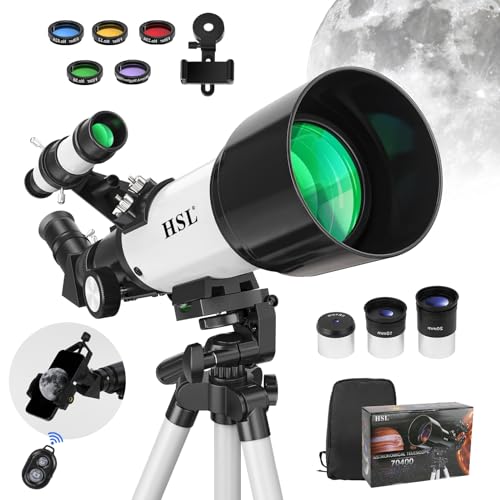
The HSL70400 is designed with young observers in mind. Its 70 mm aperture and 400 mm focal length offer bright planetary and lunar views suitable for first-time stargazers. Fully-coated optical glass lenses contribute to clear images, while a kid-friendly design helps maintain interest during learning sessions. Three eyepieces (20 mm, 10 mm, 4 mm) provide versatile magnification—from wide daytime views to higher-magnification celestial observations at night. The telescope arrives in a colorful gift box, making it an appealing gift for birthdays or holidays while encouraging curiosity about astronomy and science.
This model emphasizes safe handling and straightforward setup, which is important for younger users. While it’s a beginner instrument, it supports foundational astronomy skills—learning to align sights, observe the Moon’s phase, and spot bright planets or star clusters as confidence grows. For parents, the HSL70400 offers a balanced mix of affordability and educational value, making it a practical entry point into backyard astronomy.
LET’S GO! Compact Waterproof Kids Binoculars

These compact binoculars are built for little hands and curious eyes. Safety features include soft rubber eyepieces to protect eyes and face, plus protective coatings around the lenses to withstand minor impacts. The ergonomic, non-slip grip is optimized for children who are still developing fine motor skills. With adjustable focus and kid-friendly sizing, young observers can quickly lock onto subjects—from birds in the yard to distant objects on family trips. This option is less about deep astronomy and more about developing observational habits and outdoor curiosity.
Key strengths include portability and a design that accommodates adult and child viewing alike, helping siblings or parents join in on exploration. While not a telescope, binoculars foster critical skills like aiming, measuring distance, and comparing what’s seen with prior observations. For budget-conscious families, these binoculars provide a solid, durable entry into outdoor science play.
Telescope For Adults 70mm, Portable 300mm Focal Length
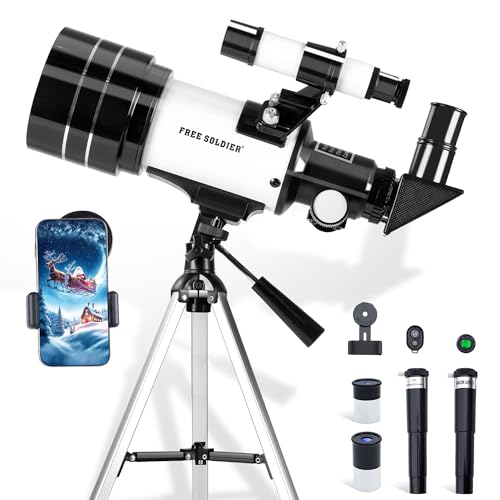
This telescope combines family-friendly features with more capable optics. A 70 mm aperture delivers brighter images, and the 300 mm focal length provides a compact, portable profile suitable for backyard astronomy and travel. The 3X Barlow lens and two eyepieces (H20mm and H6mm) enable magnifications ranging from 15X to 150X, offering flexibility as a child’s skills grow. A 5X24 finder scope helps locate objects quickly, which reduces frustration for beginners. The included carry bag, adjustable tripod, smartphone adapter, and wireless remote support budding learners who wish to capture celestial moments or terrestrial scenes for sharing with friends.
For households exploring introductory astronomy, this model offers room to grow into more detailed observations while remaining accessible to younger users with guided supervision. The kit’s balance of ease-of-use and expandability makes it a suitable stepping stone from simple optics to more involved telescope setups as children mature.
Pirate Spyglass Telescope Pocket Compass Set

This pocket monocular offers a classic, compact option for young explorers who enjoy story-themed gear. The 25×30 magnification provides a surprisingly broad field of view (270 feet at 1000 yards), helping kids discover distant objects with confidence. The brass design presents a tactile, museum-like feel while remaining lightweight and easy to carry. A collapsible form factor means it fits into small hands or a travel bag, supporting on-the-go observation during nature walks or pretend play. The set’s compass adds a simple navigation element, encouraging basic geography and direction sense as part of outdoor learning.
As a supplemental tool, the pirate spyglass supports imaginative engagement with science, while still offering practical viewing capabilities. It may be used with supervision to model lens behavior, magnification concepts, and the idea of looking farther than the naked eye allows. This item pairs well with more traditional optics in a balanced, multi-tool learning approach for curious children.
ESSENSON Binoculars For Kids

ESSENSON’s kid-friendly binoculars are designed with safety and durability in mind. The set includes a 4×30 binocular configuration, carrying bag, neck straps, and a lens cleaning cloth. Rubberized outer surfaces provide shock absorption, essential for younger users who may drop or mishandle equipment during outdoor adventures. The binoculars offer a practical way to observe wildlife, bird life, and landscapes, supporting science learning through real-world observation. A non-slip grip helps children focus and align their eyes for clearer views, promoting steady, confident exploration without excessive tilt or fatigue.
These binoculars serve as an approachable bridge between basic scoping tools and more advanced astronomical gear. They enable everyday science play—watching birds, nearby trees, or distant landmarks—while reinforcing fine motor control and attention to detail. The results are durable, educational, and suitable for repeated use in varied outdoor settings.
Buying Guide: Key Purchase Considerations
- Safety and age appropriateness: Look for eyepiece protectors, non-slip grips, and robust builds designed for children 5–8 years old.
- Optics quality and ease of use: Prioritize models with simple focusing mechanisms, large clear optics, and forgiving fields of view to minimize frustration.
- Portability and storage: Lightweight, compact designs with carrying cases or bags support easy transport during family outings or classroom activities.
- Upgrade path and expansion: Consider whether the kit includes multiple eyepieces or adjustable tripods that enable growth as a child’s curiosity expands.
- Educational value: Binoculars foster observation skills and nature awareness, while entry-level telescopes introduce basic astronomy concepts like alignment, lunar phases, and planetary visibility.
- Durability and warranty: Check for rubberized exteriors, shock protection, and clear return policies to withstand active use by children.
When comparing options, balance beginner-friendly features with opportunities for extended learning. For a 7-year-old, a telescope with a bright image, simple controls, and a few eyepieces can be paired with binoculars to broaden observational activities. Parents should supervise initial uses to teach safe handling, basic astronomy terms, and how to interpret what’s seen through the optics. A staged approach—start with close, bright targets like the Moon and nearby bright planets, then gradually introduce fainter objects—helps sustain engagement and confidence.