Best Toy Computer for Babies: Top Learning Laptops and Pretend Play Tablets
Finding the right toy computer for a toddler involves balancing engaging features with safe, age-appropriate design. The items below represent popular, educational options that encourage early literacy, numbers, and imaginative play. Each product blends interactive lights and sounds with pretend-computer activities to support cognitive development and fine motor skills in a child-friendly format. The selections focus on reliability, durability, and accessibility for kids aged 12-3 years, making them suitable gifts for birthdays or holidays.
Summary of chosen products:
- GMAOPHY Learning Toy for Kids 1-3 (Green) – 2-in-1 learning laptop with 120+ themes.
- VTech Toddler Tech Laptop – Interactive learning play with weather, email, camera modes.
- Fisher-Price Laugh & Learn Smart Stages Tablet – 100+ songs and 3 stages of learning.
- GMAOPHY Learning Toy for Kids 1-3 (Pink) – Similar 2-in-1 design with 120+ themes.
- VTech Tote and Go Laptop – Portable kid-friendly laptop with 60+ words and melodies.
GMAOPHY Learning Toy for Kids 1-3 Years (Green)

The 2-in-1 design switches between a desktop-style keyboard and a detachable tablet base, promoting flexible play. It includes lights, sounds, music, and more than 120 learning themes to introduce letters, words, numbers, and colors. This toy supports cognition, vocabulary, listening, and pronunciation through interactive modes, suitable for children aged 1-3. Its simulated computer environment encourages social interaction and early computer skills through pretend play.
Play modes include Learning (numbers, letters, colors), Spelling (instant feedback), Quiz (70+ questions), and Music (melodic interaction). The device helps develop fine motor skills and memory while offering opportunities for independent exploration and collaborative play with caregivers. A practical choice for toddlers beginning to engage with technology in a safe, age-appropriate way.
VTech Toddler Tech Laptop
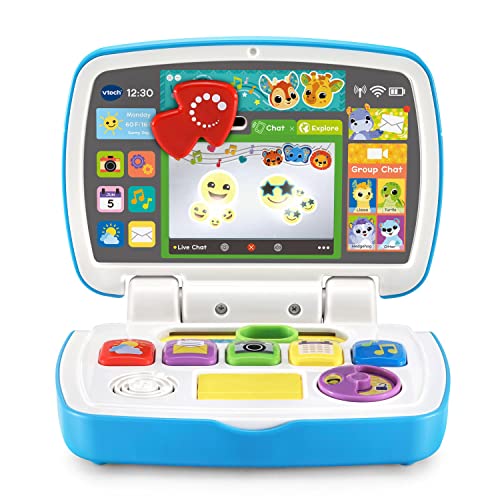
This toddler-friendly laptop emphasizes cause-and-effect play with five app buttons covering weather, email, camera, calendar, and music. A spinning disc, slider, and a sliding animal chooser engage little fingers in exploratory tasks. The design introduces early language and practical concepts as kids explore songs and phrases during interactive play, helping to build foundational communication skills in a durable, kid-sized device.
Fisher-Price Laugh & Learn Smart Stages Tablet

This pretend tablet features lights, sounds, and more than 100 songs, sounds, and phrases. It includes 3 Smart Stages levels to grow with the child, introducing alphabet, objects, and colors. With 28 app-style buttons, the toy delivers interactive feedback while guiding early literacy and numerical recognition. The tablet-style form factor resembles a grown-up device, which can appeal to toddlers exploring daily routines and imaginative play.
GMAOPHY Learning Toy for Kids 1-3 Years (Pink)
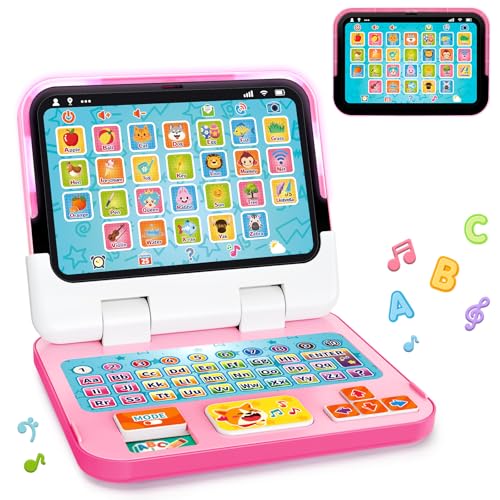
The pink version mirrors the green model with a 2-in-1 laptop design, detachable base, and 120+ learning themes. It supports 4 interactive modes—Learning, Spelling, Quiz, and Music—aimed at building cognition, vocabulary, and social communication. The toy emphasizes pretend-play scenarios like making calls or composing messages, fostering confidence and independence in young children through realistic, age-appropriate activities.
VTech Tote and Go Laptop, Orange

This portable laptop offers 20 learning activities to teach over 60 words, spelling, shapes, and logic. It features progressive learning levels and 30 songs from a pre-K music center. A built-in mouse introduces basic pointer skills, while the customize option allows entering a name, age, and avatar, enriching the personalization aspect of screen-free play and early computer literacy in a rugged, kid-friendly chassis.
ABCmouse Level-Up Learning Keyboard

While not a direct laptop, this keyboard toy from Just Play complements early learning apps like ABCmouse with three learning modes and pretend-play features. It is included here as a reference point for parents seeking cross-device play that motivates kids to translate keyboard familiarity into broader literacy and math concepts. The product is recognized for its educational value and remains an accessible option for younger learners building foundational skills.
Buying Guide: Key Purchase Considerations
Age-appropriateness and safety take priority. Look for sturdy construction, rounded edges, and non-toxic materials designed for toddlers who may put objects in their mouths. Ensure the toy is lightweight and portable for travel or quiet play rooms.
Learning content and modes vary. Products with multiple modes (Learning, Spelling, Quiz, Music) support diverse skills such as letter recognition, numbers, vocabulary, and fine motor control. A mix of pretend-play features helps align with social-emotional development by simulating real-world tasks.
Durability and battery use matter. Choose models with durable shells and securely attached screens. Consider whether the toy uses batteries or rechargeable options, and verify battery life expectations and safety features like automatic shutoff to preserve power and safety during unattended play.
Engagement and age range. Some devices are better for early toddlers (12–24 months) while others target 2–3-year-olds. The best choice often blends simple, chunky controls for younger kids with more advanced features for growing learners.
Content variety and guidance. Prefer devices offering incremental learning levels and parental controls or guidance. Tools that encourage caregiver involvement, storytelling, and collaborative play can reinforce learning outcomes while ensuring safe, supervised interactions.