Best Toy Smartphones for Kids: Safe, Educational Picks for Ages 3-10
Finding a kid-friendly, feature-rich toy phone can help children learn, play, and build healthy tech habits away from real smartphones. The following five models offer tactile touchscreen play, dual cameras, learning games, and habit-tracking tools to support early development. Each product below uses a safe, offline experience with age-appropriate activities designed for children aged roughly 3 to 10.
| Product | Key Features | Ideal For |
|---|---|---|
| BESTOONE Kids Phone | 2.8″ IPS touchscreen, dual 8MP cameras, music, photos, alarm, calendar, habit tracking | 3-8 year olds; creative photography and routines |
| WEOLULI Kids Smart Phone | Selfie camera, games, MP3, stories, alphabet lessons, landmarks, timer | 4-12 year olds; broad educational content |
| KOKODI Kids Smart Phone | Photo/video, 2.8″ screen, 31 preloaded games, memory for media | 3-5 year olds and up; interactive learning |
| Byserten Kids Smart Phone | 3.5″ touchscreen, dual cameras, 30 wallpapers/themes, habit tracker | 3-10 year olds; daily routines and learning |
| Luoba Kids Smart Phone | 2.8″ screen, 13 puzzle games, 24 landmarks, alphabet learning | 3-12 year olds; language and cultural knowledge |
Protected from real connectivity, these devices emphasize creativity, memory-building, and time-management skills. Read on to compare each option and discover how they support independent play, parent supervision, and safe screen time.
BESTOONE Kids Phone For Toddlers

The BESTOONE toy phone mirrors a real device while omitting internet access, texting, and calling. It includes a 2.8-inch IPS touchscreen, front and rear 8MP cameras for photos and videos, and a variety of tools such as a flashlight, calculator, alarm clock, and calendar. Kids can also enjoy learning games, music, stories, and 19 cartoon sticker options to customize photos. A built-in habit-tracking function helps establish daily routines—an appealing feature for parents seeking structured playtime. The device targets children aged 3 to 8, offering a safe, creative first smartphone experience.
WEOLULI Kids Smart Phone With Games And Music

WEOLULI’s upgraded toy phone batches multiple features into a kid-friendly package: a selfie camera, MP3 player, various games, and a robust educational package with alphabet lessons, fables, and landmarks. It emphasizes cognitive development, with 26 alphabet lessons, 10 storybooks, and 24 country landmarks to broaden knowledge. A timer, alarm, and habit tracker support daily routines and focus. The device suits children roughly 4 to 12 years old, aiming to blend entertainment with foundational learning and time-management practice.
KOKODI Kids Smart Phone Toys

KOKODI combines an all-in-one toy phone with 31 pre-installed educational games and 23 funny selfie stickers. The 2.8-inch touchscreen keeps interactions easy for small hands, while dual cameras support photo and video capture with playful editing options. Built to foster storytelling and creative exploration, the device includes memory for media and a focus on empathy and logical thinking through its exclusive ABC, story, and painting features. It’s well-suited for ages 3 to 5, and travel-friendly for busy families.
Byserten Kids Smart Phone For Learning

Byserten provides a 3.5-inch touchscreen with dual cameras, MP3 player, and a thoughtful habit-tracker system. The device highlights learning content such as ABCs, stories, global adventures, and math games, designed to engage children for extended periods. The inclusion of daily routines—alarm, timer, and stopwatch—helps children build independence and time-management skills. The product is marketed for ages 3 to 10 and emphasizes a balanced mix of education, entertainment, and routine-building in one compact toy phone.
Luoba Kids Smart Phone For Girls

Luoba’s model emphasizes a wide range of activities, including 13 puzzle games, a 24-landmark learning module, and 24-hour functionality through a 2.8-inch touchscreen. It also offers a 10-piece music player and a 8GB memory card for storage. The phone targets children aged 3 to 12 and includes letter-based learning with animal sounds, encouraging language development and cultural awareness. It’s a compact option with diverse educational content and creative play tools like graffiti painting and stories.
Luyiilo Kids Smart Phone Toys For Boys

Luyiilo offers a realistic-feel device with a 2.8-inch touchscreen and 16 built-in learning games. While no calling features are available, the dual cameras enable front and back photography, with kids able to add stickers to photos. The device emphasizes memory-building through photo capture and editing, plus 10MP/1080P video capabilities for budding filmmakers. It suits a broad age range, encouraging creative expression, hand-eye coordination, and early digital literacy in a safe, offline setting.
MOMILLA Kids Toys Smart Phone
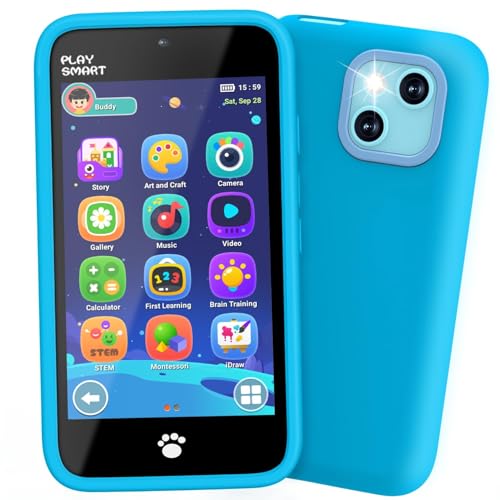
MOMILLA presents a robust library of educational content with over 200 puzzle games. The dual-camera setup supports creative photography, while a large library of themes and wallpapers keeps play engaging. Parental controls help manage screen time and ensure a safe digital environment for children ages 3 to 8. The device also includes a calendar, alarm, and a wide array of activities to encourage steady learning, problem-solving, and independent exploration.
Buying Guide: Key Purchase Considerations
- Age-appropriate content: Look for devices with learning games and storytelling that align with your child’s developmental stage. Some models emphasize early literacy and basic math, while others offer broader cultural content.
- Safety and offline design: Prioritize toys that block internet access and calls. Built-in cameras should be age-appropriate and secure, with parent controls to limit time and access to content.
- Durability and comfort: Choose devices with sturdy construction and a screen size that matches small hands (2.8″ to 3.5″ screens are common for this category).
- Habit tracking and routines: Models with alarm clocks, timers, and daily habit reminders help cultivate time-management skills and independence.
- Storage and media: Consider devices with enough memory or expandable storage to save photos, videos, and games, especially for longer play sessions or travel.
- Educational balance: Compare the mix of games, alphabet/story content, and puzzle activities. A well-rounded device supports cognitive development alongside creative expression.
- Parental controls: Features that allow account creation, time limits, and activity monitoring provide safety and peace of mind for caregivers.
- Ease of use: Simple navigation, clearly labeled icons, and accessible settings help children feel confident while exploring.
- Portability: Lightweight designs and compact charging options are practical for car trips, commutes, and school days.
- Value and longevity: Look for devices with expandable content or multi-year utility as skills progress from preschool to early elementary.