Best Toys for ABA Therapy: Engaging, Educational Picks for Young Minds
ABA therapy often benefits from toys that promote fine motor skills, visual discrimination, language development, and social engagement. The following hand-picked toys are designed to support therapy goals while keeping children engaged through play. Each product is evaluated for safety, quality, and educational value to help caregivers and educators choose effective tools for early intervention.
Summary of selected products:
| Product | Brand | Key Benefit |
|---|---|---|
| Yetonamr Montessori Toys for 1-3 Years | Yetonamr Store | Fine motor, color and shape recognition, stacking puzzles |
| Colors and Shapes Sensory Pad | hand2mind Store | Sensory exploration, motor planning, shape sorting |
| Double-Sided Snake Puzzles | LovesTown Store | Alphabet and number recognition, durable wooden design |
| I Know What to Do Flipbook | Thought-Spot Store | Emotional regulation, coping skills, social communication |
| Rainbow Spin Tower | LBAIBB Store | Color discrimination, hand-eye coordination, sensory exploration |
Yetonamr Montessori Wooden Stacking Puzzle

This wooden Montessori-inspired puzzle uses chunky pieces to fit small hands, supporting hand strength and dexterity. The edges are smooth, with sturdy pegs and non-toxic, odorless paint. The design emphasizes safe, large pieces that are easy for toddlers to grasp and assemble, making it a practical option for early therapy sessions and home practice.
Learning through play is embedded in the 20-piece setup, featuring five colors and four geometric shapes. Children practice fine motor skills, hand-eye coordination, and problem-solving as they navigate stacking and sorting tasks. Colors and shapes provide language and cognitive opportunities, encouraging verbal labeling and descriptive play during ABA activities. The simple stacking mechanic also helps kiddos develop core balance and spatial reasoning.
Therapy alignment: This toy supports goals in motor planning, visual discrimination, and color/shape naming, while offering a calm, repetitive activity that can be scaffolded for prompting and fading strategies. It is well-suited for one-on-one or small-group sessions focused on cognitive-challenge sequencing.
Colors and Shapes Sensory Pad

Designed as a flexible sensory tool, this pad invites children to count, sort, and explore with tactile engagement. The mat can be used with various liquids, enabling therapists to adapt texture and resistance for sensory processing goals. A back valve supports easy filling and draining, making it practical for dynamic sessions.
With 24 plastic shapes across four shapes and six colors, children guide pieces through activity cards to boost fine motor control and hand-eye coordination. The repetitive, structured layout supports routine-building and can be integrated into calm-down routines or transition activities.
Therapy alignment: Useful for sensory integration, tactile discrimination, and motor planning. The mat’s manipulatives encourage precise finger movements and controlled hand actions, aligning with ABA targets that emphasize independence and task completion.
LovesTown Wooden Puzzles: Alphabet & Numbers

This double-sided wooden snake puzzle offers letters on the front and numbers on the back, delivering a compact, portable way to address early literacy and numeracy. The natural wood construction, smooth edges, and water-based finish ensure safe handling during therapy sessions. The design promotes cognitive flexibility as children switch between alphabet recognition and counting tasks.
The robust, burr-free pieces are gentle on little hands, helping reduce frustration during motor tasks. The pacing of the activity allows therapists to scaffold instructions and model turn-taking when used in group settings.
Therapy alignment: Supports alphabetic awareness, number sense, sequencing, and progressive complexity. It can be used to practice verbal labeling, memory, and cognitive recall in a structured but playful format.
Thought-Spot I Know What to Do Flipbook
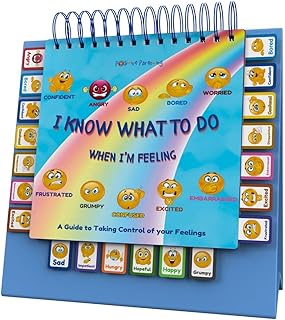
This emotion-focused flipbook visually guides children aged 3–5 to recognize and name everyday feelings, building emotional vocabulary essential for social communication. It pairs each feeling with simple coping ideas to help kids calm down, self-regulate, and make positive behavior choices in different settings. An interactive element lets children add their own coping strategies, personalizing the learning experience.
Easy-to-use emotion tabs provide quick access to guidance, with 20 common moods featured across pages. This tool supports the development of self-awareness, resilience, and a proactive approach to managing emotions, which are core components of inclusive therapy plans.
Therapy alignment: Addresses social-emotional learning, emotion regulation, and executive functioning by offering concrete coping strategies and a means to practice articulation of feelings during sessions.
Rainbow Spin Tower: Spinning Stacking Toy

The Rainbow Spin Tower combines visual appeal with tactile stimulation in a rotating stacking design. Bright rainbow colors, varying textures, and a smooth, BPA-free construction encourage sensory exploration while supporting fine motor control as children spin, stack, and align the pieces. The staggered spacing reduces finger-pinch risk, making it suitable for guided play in therapy sessions.
Therapy alignment: Encourages bilateral coordination, visual tracking, and cause-and-effect understanding. The rotating mechanism offers opportunities for prompting and fading strategies, reinforcing patience, turn-taking, and goal-oriented play.
Buying Guide: Key Purchase Considerations for ABA Therapy Toys
- Safety and materials: Look for BPA-free, non-toxic finishes and smooth edges to minimize choking and injury risks during therapy sessions.
- Therapy goals alignment: Choose toys that support fine motor skills, tactile discrimination, color/shape recognition, language development, and emotional regulation, depending on the child’s plan.
- Durability and size: Opt for sturdy, toddler-friendly dimensions that withstand frequent handling and accidental drops in a clinical or home setting.
- Versatility: Toys that can be used across multiple ABA goals, with scalable prompts and fading options, provide more value for a broader therapy plan.
- Portability and setup: Consider compact designs and easy setup for one-on-one sessions and group activities, as well as the ability to use them in different environments.
- Sensory considerations: For children with sensory processing needs, select items offering varied textures, colors, and auditory cues to support engaging, controlled exposure.
- Cost and accessibility: Balance educational value with budget, and look for items that can be used in multiple ways to maximize return on investment.
- Progress tracking: Prefer toys that allow therapists to observe improvements in motor planning, language use, and emotional regulation over time.
These products provide a spectrum of learning opportunities aligned with ABA therapy goals, from early cognitive and motor milestones to social-emotional development. When integrating these tools, consider pairing them with structured prompts, reinforcement strategies, and data-driven progress notes to optimize outcomes for children in home and classroom settings.