Best Toys for Babies Learning to Crawl and Explore
Choosing the right toys can support babies as they strengthen neck and core muscles, develop tracking skills, and practice crawling. The five selected products here offer engaging movement, light and sound cues, and safe, age-appropriate design to align with early motor and sensory milestones. Each toy promotes crawling motivation, cause-and-effect understanding, and multi-sensory exploration, helping caregivers foster active play while observing growth across the first year.
| Product | Brand | Age Range | Key Benefit |
|---|---|---|---|
| Baby Einstein Ocean Explorers Go Opus Go 4-in-1 | Baby Einstein | 3 Months to 5 Years | Multi-mode activity that grows with baby |
| Skip Hop Follow-Me Bee | Skip Hop | 5 months+ | Three-stage crawls with sensory cues |
| Jyusmile Musical Turtle | Jyusmile | 6–12 Months | Light, music, and buttons to encourage crawling |
| Ussybaby Musical Unicorn | Ussybaby | 6–12 Months | Two-in-one moving toy with paths and sensors |
| Fisher-Price Laugh & Learn Sit & Steer Driver | Fisher-Price | 6+ Months | Interactive steering wheel and dashboard play |
Baby Einstein Ocean Explorers Go Opus Go 4-in-1

The Baby Einstein Ocean Explorers Go Opus Go 4-in-1 adapts to a growing baby, featuring Tummy Time, Sit & Play, Chase, and Dance modes. It introduces numbers, shapes, colors, and opposites through engaging visuals and sounds. The toy emphasizes gross and fine motor skills, listening, and cause-and-effect learning with 150+ songs and phrases. In Tummy Time, a touch on Opus activates light and motion, while Sit & Play mode teaches foundational concepts through interactive play. This versatile toy supports infants through preschool years.
Crawling Crab Baby Toy

This Crawling Crab toy moves quickly and skitters sideways, emitting sounds and lights to captivate a baby during tummy time or crawling practice. It includes obstacle-avoidance sensors that reverse direction when near an obstacle, encouraging babies to chase while developing neck strength and coordination. The toy offers simple early-play interactions for infants beginning tummy time and supports motivation to crawl toward a moving target.
Skip Hop Follow-Me Bee
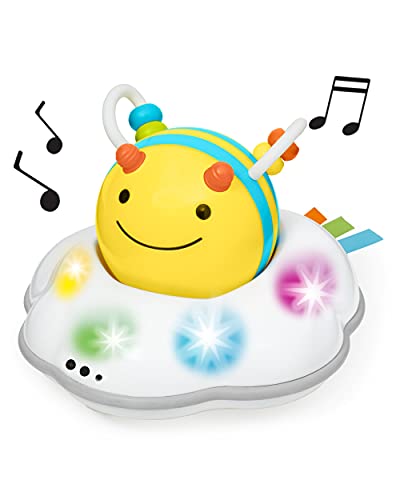
Skip Hop’s Follow-Me Bee is designed to grow with babies, offering three developmental stages that promote discovery, motor skills, and sensory development. In the earliest stage, the bee acts as a gentle rattle that won’t topple, with teething-ready features. In later stages, a cloud companion moves in a circular pattern, then randomly, encouraging crawling in a controlled, engaging way. This toy provides a balanced mix of cause-and-effect play and physical activity for early walkers.
Jyusmile Musical Turtle Crawling Toy
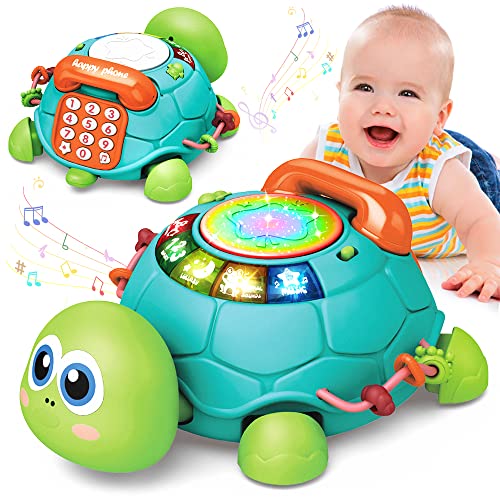
This 6–12 month turtle toy combines light, music, and motion to encourage crawling. Pressing buttons activates various songs and LED lights, while rotating beads on the shell support finger dexterity. The toy’s interactive features help babies develop gross motor skills, eye-hand coordination, and early language concepts such as counting and letters, making it a well-rounded option for navigating early crawling stages.
Ussybaby Musical Unicorn

The 2-in-1 unicorn toy provides a detachable musical play mode and a cloud-based crawling mode. In cloud mode, it offers three crawling paths—circular, straight, and random—guided by obstacle sensors to help babies chase along while building motor skills. The unicorn’s soft textures, lights, and music stimulate sensory development, and its movable legs and wings offer tactile engagement for fine motor practice during tummy time and crawling practice.
Fisher-Price Sit & Steer Driver

The Fisher-Price Sit & Steer Driver combines a car-themed activity center with Smart Stages for growing minds. A 360-degree play area allows babies to crawl around the toy while engaging with a light-up dashboard, a multi-button keypad, a pretend steering wheel, and a horn. The Smart Stages teach the alphabet, counting, shapes, and more through songs and phrases, supporting early language and cognitive development as little ones begin to move toward independent exploration.
Buying a crawl-focused toy set involves evaluating safety, durability, and developmental fit. The five products above offer varied approaches: movement-based play, sensory stimulation, fine motor work, and language-rich interaction. When selecting, consider your baby’s current mobility, sensory preferences, room size, and the level of parental involvement you prefer during playtime. Below is a concise guide to key purchase considerations and how these toys compare on essential factors.
Buying Guide
- <strongAge appropriateness: Choose toys aligned with your baby’s current stage. Some items are best for tummy time, others for early crawling and chasing.
- <strongMovement encouragement: Look for toys with responsive movement, obstacle sensing, or dynamic paths to motivate crawling without frustration.
- <strongSensory features: Toys with lights, music, textures, and buttons support visual, auditory, and tactile development, but ensure volume levels are safe for little ears.
- <strongDurability and safety: Soft edges, non-toxic materials, and sturdy bases minimize tipping and damage during enthusiastic play.
- <strongMulti-function value: Products offering multiple modes or stages reduce the need for new toys as babies grow, delivering longer-term use.
- <strongParent involvement: Some toys require minimal setup, others invite guided interaction. Consider your time and preferred play style.
- <strongPortability and size: If space is limited, opt for compact designs or toys with fold-away features for easy storage and travel.
- <strongBattery and care: Check battery types, duration, and ease of replacement; regularly clean any squeakers or electronic components.
- <strongBrand variety and warranty: Reputable brands often provide safer designs and customer support; review warranty terms if available.
- <strongValue for development: Prioritize toys that encourage gross motor practice (crawling, reaching) and early cognitive skills (cause and effect, problem solving).