Best Upright Pianos for Intermediate Players: Top Picks for Growth
Choosing an upright piano that suits an intermediate player involves balancing touch, sound quality, and classroom-friendly features with the ability to grow into more complex repertoire. The following selections offer weighted keyboards, realistic grand piano tone, and robust features that support practice, learning, and performance at an intermediate level. Each option is well-suited to home studios, classrooms, or small performance spaces.
| Product | Key Features | Best For |
|---|---|---|
| Yamaha Arius YDP105R | 88-key Graded Hammer Standard, Grand Piano Voice, 3-pedal unit, Rosewood cabinet, bench included | Traditional upright aesthetics with authentic touch |
| Yamaha Arius YDP105B | 88-key Graded Hammer Standard, Grand Piano Voice, 3-pedal unit, upright design, bench included | Classic black finish and reliable Yamaha feel |
| Flatsons 88-key Weighted Keyboard | 192kHz/32-bit sampling, 88 weighted keys with graded hammer action, 6 touch levels, 128 tones | Realistic grand-piano feel with rich sound library |
| Donner DDP-200 Upright Digital Piano | DGHS keyboard action, 3-pedal, upgraded speaker system, edge-friendly footprint | Balanced practice and performance power |
| The ONE 88-key Digital Piano | 88 hammer action keys, lighted-learning keys, 4 Hi-Fi speakers, grand piano sampling | Structured learning and expressive playing |
These selections emphasize weighted or graded hammer actions, realistic touch, and sound quality appropriate for intermediate repertoire, while offering usable features like learning aids, multiple voices, and integrated pedals. The list also considers different design aesthetics—from traditional wood cabinetry to modern black finishes—to suit various room styles.
Yamaha Arius YDP105R Upright Digital Piano

Essential Grand Piano Sound and Acoustic Piano Touch combine to deliver a familiar feel for intermediate players. The YDP105R features a rich grand piano voice with dynamic response and a Graded Hammer Standard keyboard that mimics the weighting of an acoustic instrument. Its elegant upright design, wood grain finish, and a 3-pedal unit with a bench create a traditional setup that fits neatly in living rooms or studios. This model is particularly appealing for players transitioning from beginner instruments who still value a classic piano experience in a compact footprint.
Yamaha Arius YDP105B Upright Digital Piano

The YDP105B mirrors the YDP105R’s heritage with a traditional upright silhouette and a bench as part of a complete home setup. The 88-key Graded Hammer Standard (GHS) keyboard delivers a robust touch response, supporting nuanced dynamics across the keyboard. The included bench and 3-pedal system add practical value for consistent practice sessions, making it a reliable choice for developing pianists who appreciate a restrained yet expressive instrument in a familiar cabinet style.
Flatsons 88 Key Weighted Keyboard

This model spotlights a high-fidelity sound sampling approach at a 192kHz/32-bit rate, aimed at reproducing the depth and resonance of a real grand piano. It uses a Dream5504 chip to deliver clear, dynamic tones with 88 fully weighted keys and graded hammer action, producing a faithful piano touch. With six levels of touch sensitivity, it accommodates a wide range of playing styles, from delicate legato to confident fortissimo. It also provides a broad learning toolkit with 128 built-in tones, 100 preset rhythms, and 88 demo songs, plus a metronome for timing practice—helpful for students building technique and rhythm accuracy.
Donner DDP-200 Upright Digital Piano

The DDP-200 emphasizes an upgraded DGHS action keyboard with a triple pedal, delivering a realistic expressive range suitable for intermediate players. The “3D” sound system and a modern speaker arrangement help project tone more effectively within practice rooms or small studios. Donner markets this model as a balance between appearance and tonal quality, aiming to provide a compact footprint without sacrificing the perceived power of an acoustic piano. The included features support both daily practice and performance-ready playing.
The ONE 88-Key Digital Piano
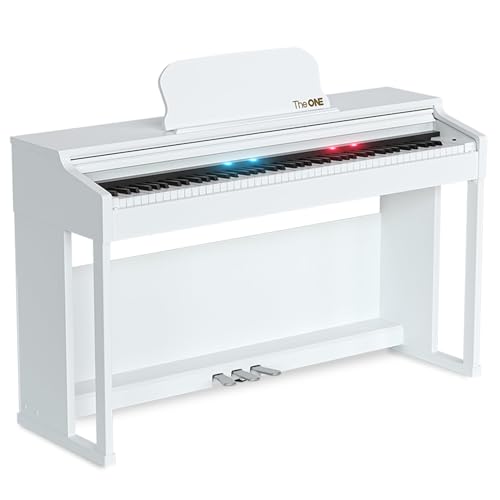
The ONE provides 88 hammer-action keys with a focus on education and progress. Its lighted learning keys, built-in 4 Hi-Fi speakers, and grand piano sampling create a compelling package for intermediate players who want guided practice and strong tonal realism. The app-based learning features help players visualize fingering, while the robust keyboard allows expressive phrasing across dynamics, making it a popular choice for home studios seeking an all-in-one learning and playing solution.
Buying Guide: Key Purchase Considerations
When selecting an upright or upright-style digital piano for intermediate players, consider the following dimensions to ensure the instrument aligns with technique development, repertoire goals, and living space constraints.
- Touch and action: For intermediate players, a weighted or graded hammer action (GH) keyboard better simulates an acoustic piano. Compare touch weight across bass and treble ranges to support dynamic expression and control.
- Sound quality: Look for grand piano voices or sampling that respond to velocity and aftertouch. A rich, resonant tone helps with tonal balance across classical pieces and contemporary works alike.
- Pedals: A three-pedal setup (soft, sostenuto, sustain) enables nuanced phrasing and pedal techniques essential to classical and modern pieces.
- Build and cabinet style: Choose a finish and cabinet that match room aesthetics, especially if the instrument sits in a living room or study. Upright designs conserve space while offering a traditional visual.
- Learning features: Some models include lighted keys, teaching aids, built-in rhythms, and demo songs. These can support consistent practice and technique development but may add cost.
- Connectivity: USB or MIDI compatibility with learning apps can enhance practice routines, though it may be less critical for purely traditional learners.
- Speaker system and amplification: Integrated speakers should be sufficient for small rooms; external amplification may be considered for larger spaces or performance use.
- Durability and maintenance: A sturdy cabinet, quality keys, and reliable action help sustain use over years. Consider warranty terms and customer support for ongoing maintenance.
- Budget and room constraints: Weigh the benefits of a heavier, more authentic-feeling keyboard against portability and space. A compact upright with good action can deliver a strong practice experience without overwhelming the space.
- Future readiness: If you anticipate moving toward advanced repertoire, prioritize models with richer sample banks, more expressive pedal control, and compatibility with learning software to support progression.
These considerations help differentiate models that are well-suited for ongoing skill development from those better suited for casual practice. In practice, the best choice aligns touch, tone, and room constraints with the player’s long-term goals, providing consistent practice cues and a reliable source of inspiration for each session.