Best Robot Kits for Kids to Learn, Build and Play
Parents seeking engaging, educational toys that blend creativity with hands-on STEM learning will find a great selection among these kid-friendly robot kits. Designed for ages roughly 6 to 14, these sets encourage problem solving, experimentation, and basic engineering concepts while delivering hours of screen-free fun. The following five products come from reputable brands and offer varied build-and-play experiences—from solar-powered and remote-controlled designs to multi-model kits that grow with your child.
| Product | Brand | Focus | Best For |
|---|---|---|---|
| BeAndge 6-Set STEM Kit | BeAndge | Solar and wind powered builds + obstacle avoidance | Young makers who love variety |
| Sillbird 5-in-1 Robot Building Kit | Sillbird | Remote control + programmable basics | 8+ year olds seeking flexible control |
| Sillbird 12-in-1 Solar Robot | Sillbird | Solar-powered multi-model builds | Outdoor play and renewable energy demos |
| Bottleboom 13-in-1 Solar Robots | Bottleboom | 13 different solar robot types | Experimenters who love solar power |
| Henoda Robot Kit | Henoda | 468+ pieces + remote/app control | Advanced builders ready for coding |
BeAndge 6-Set STEM Kits

The BeAndge 6-Set STEM Kit introduces children to multiple power sources and robotic concepts within one gift. The set includes a solar powered car, a wind powered car, an obstacle avoidance robot, a transmission tank, and a glider. While AA batteries are required, the variety supports hands-on exploration of energy transformation, motion, and basic robotics. It is well-suited for family STEM activities and classroom projects, and its gift-box packaging makes it a compelling gift idea for birthdays or holidays.
Sillbird 5-in-1 Remote Control Robot Kit

This 5-in-1 programmable robot set from Sillbird blends construction with coding foundations. It supports dual control modes via a Bluetooth app and a physical remote, enabling basic programming, path planning, and precise movement. The kit targets ages 8 and up, offering a growth path from simple builds to more complex, screen-based programming. It’s ideal for kids who want a flexible device that evolves with their developing skills.
Sillbird 12-in-1 Solar Robot Kit

The solar-powered 12-in-1 kit invites kids to explore renewable energy through building varied robots that operate outdoors or under strong indoor lighting. With 190 pieces, it emphasizes problem solving and mechanical assembly, encouraging learners to observe how different designs respond to sunlight. This kit is a strong option for budding designers who enjoy hands-on, solar-powered experiments without relying on batteries for operation.
Bottleboom 13-in-1 Solar Robots

The Bottleboom solar robot kit includes 13 different configurations, with parts that clip and reassemble into land and water movers. The kit comes with non-toxic ABS components designed for durability and long-term use. It emphasizes learning through building, while promoting safety with smooth edges and child-friendly materials. The solar drive encourages exploration of energy transfer and mechanical design without reliance on batteries, sparking curiosity about sustainable tech.
Henoda Robot Kit
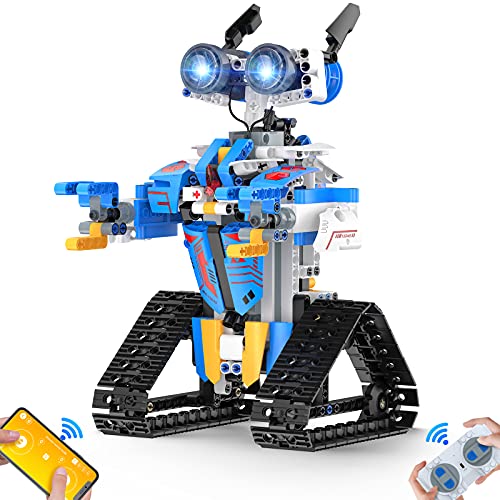
Henoda’s robot kit combines 468+ pieces with remote and app-based control options. The kit supports multiple modes including remote control, path navigation, voice control, gravity sensing, and STEM programming. This breadth makes it suitable for older kids who want to experiment with more sophisticated robotics concepts, long-term projects, and hands-on engineering challenges, all while offering practical, screen-based coding experiences.
Buying Guide: Key Considerations For Choosing a Kid-Friendly Robot Kit
When selecting a robot kit for kids, consider the child’s age, interest level, and the kind of learning experience you want to promote. Multi-model kits offer variety and extend usability as skills grow, while single-model sets emphasize depth over breadth. Here are important factors to weigh:
- Age and safety: Look for age-appropriate piece counts, small parts suitability, and non-toxic materials. High-quality kits avoid sharp edges and include clear assembly instructions.
- Power source: Solar-powered designs cultivate interest in renewable energy and physical concepts, while battery-powered and remote-controlled kits offer consistent performance indoors and under varied lighting.
- Learning path: Decide between basic mechanical building, remote or app-based programming, or a full STEM curriculum that introduces engineering principles and problem solving.
- Expansion potential: Some kits support additional projects or future upgrades, enabling a longer lifespan and continued challenge as the child grows.
- Hands-on vs. screen time: Consider a balance between unplugged building activities and coding experiences to suit family routines and screen-time guidelines.
- Maintenance and parts: Check for durability, available spare parts, and ease of cleaning. Simpler sets tend to offer easier repairs and replacements.
- Gift suitability: Gift-ready packaging and the option for collaborative family projects can enhance learning outcomes and engagement during holidays or birthdays.
In summary, the right kit blends engaging design, practical electronics, and appropriate challenge. For younger builders, kits that emphasize energy concepts and safe, multi-model builds can spark curiosity. For older kids, kits with app-based control and programmable features introduce foundational coding and system thinking. The five selections above provide diverse paths into robotics and STEM, making them strong options for families new to the field or seasoned young makers.