Best Building Toys for 12 Year Olds: STEM Robots and Engineering Kits
Finding engaging, educational building toys for 12-year-olds helps kids deepen problem-solving, spatial reasoning, and creativity through hands-on play. The following selections focus on solar-powered, mechanical, and engineering kits that align with tween interests. Each option emphasizes safe materials, clear instructions, and expandable challenges to keep curious minds engaged over time.
| Product | Brand | Why It Fits 12-Year-Olds |
|---|---|---|
| Bottleboom STEM 13-in-1 Solar Power Robots (Green) | Bottleboom | 13 builds, solar power, hands-on engineering challenges |
| Klutz Lego Gear Bots | Klutz | 8 kinetic builds with LEGO Technic bricks and papercraft |
| Smartivity DIY Robotic Mechanical Hand | Smartivity | Step-by-step build, screen-free, durable parts, long-term re-buildability |
| COBFDHA STEM Projects: 6 Robots, Solar/Battery Power | COBFDHA | Sun-powered and battery-driven builds, exploration of energy concepts |
| KIDWILL 14-in-1 Solar Robot Kit | KIDWILL | Multiple robot forms powered by sun or battery for varied challenges |
Bottleboom 13-in-1 Solar Power Robots (Green)

The 13-in-1 kit enables tweens to assemble 13 different robots from the same set, with moving parts such as gears, plates, tires, and shafts. Children follow a step-by-step manual to split and reassemble components, allowing moves on land and water. The kit emphasizes non-toxic ABS construction, ensuring safer play and durability for repeated builds. Its solar-powered operation demonstrates renewable energy concepts and supports ongoing experimentation as kids rebuild new configurations.
Klutz Lego Gear Bots

Klutz Gear Bots combines LEGO Technic bricks with papercraft to build eight physics-driven kinetic creatures. The 64-page book includes STEM content about axles, cams, cranks, and the engineering behind everyday machines, paired with step-by-step instructions. This kit supports hands-on exploration of motion and gearing while fostering planning and problem-solving as kids iterate between designs.
Smartivity DIY Robotic Mechanical Hand

This action-packed kit invites kids to construct a mechanical hand, following a detailed, kid-friendly manual. It’s designed for extended, screen-free play, helping build confidence in engineering concepts while developing fine motor skills. The set includes replacement parts and encourages multiple attempts, reinforcing perseverance and iterative thinking as users refine their builds and understand how components translate into motion.
COBFDHA STEM Projects: 6 Robots
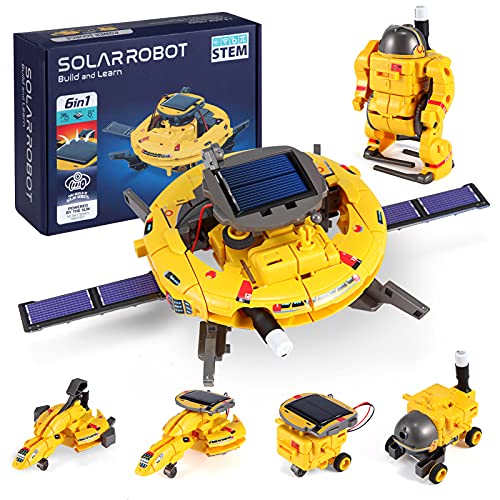
This set includes six robot builds powered by solar energy or a battery, combining science exploration with practical assembly. The project scope supports hands-on learning about energy transfer, motion, and mechanism design. It’s suitable for independent work or cooperative group activities, with emphasis on creativity, problem solving, and cognitive growth as kids experiment with different configurations.
KIDWILL 14-in-1 Solar Robot Kit

With 14 distinct robot forms, this solar-powered kit demonstrates energy conversion and movement. The inclusion of a solar panel allows kids to observe direct solar-to-electric energy transformation, while a battery option extends use when sun is unavailable. Clear instructions and varied builds promote sustained curiosity, hand-eye coordination, and the joy of discovering how simple machines work in real-world scenarios.
Buying Guide: Key Purchase Considerations for Building Toys
- Age-appropriateness and safety: Look for durable, non-toxic materials with smooth edges and clear safety guidelines. Tween-focused kits should balance challenge with achievable goals.
- Learning objectives: Align purchases with core STEM concepts—energy (solar vs. battery), gears and mechanics, circuitry basics, and problem-solving strategies.
- Modularity and replay value: Kits that support multiple builds or future expansions provide extended engagement and progressive learning.
- Materials and durability: ABS plastics and robust connectors reduce wear during repeated assembly and disassembly efforts.
- Instruction clarity: Step-by-step manuals or guided online tutorials help maintain momentum and reduce frustration.
- Indoors vs. outdoors: Solar-powered kits are ideal for sunny spaces, while battery-driven options offer flexible indoor use; consider weather and space constraints.
- Group vs. solo play: Some sets are well-suited for collaborative projects, while others encourage independent exploration and self-paced mastery.
- Replacement parts and support: A lifetime or long-term replacement-part policy helps keep a kit usable after inevitable wear or misplacement.
- Budget and value: Compare how many builds each kit offers, and whether the set’s educational content justifies the cost relative to alternatives.
- Brand reliability and reviews: Look for brands with consistent safety records, positive feedback, and transparent product details.