Best Coding Toys for 8 Year Olds: Engaging Kits to Build Skills and Fun
Discover top hands-on coding toys that blend play with STEM learning for eight-year-olds. The following selections emphasize safe electronics, robotics, and beginner-friendly coding concepts, providing screen-free options and app-enhanced experiences. Each product offers age-appropriate challenges, clear instruction, and opportunities to develop problem-solving, critical thinking, and collaboration. Use this guide to compare kits that introduce circuitry, robotics, and basic programming in an age-appropriate way.
| Product | Brand | Key Focus |
|---|---|---|
| Snap Circuits Jr. SC-100 Electronics Exploration Kit | Snap Circuits | Electrical fundamentals, 100+ projects |
| Sillbird 12-in-1 Solar Robot Kit | Sillbird | Solar power, hands-on robotics, outdoor play |
| Teach Tech Mech 5 Mechanical Coding Robot | Snap Circuits | Mechanical coding, introductory robotics |
| Learning Resources Botley the Coding Robot | Learning Resources | Screen-free coding with remote control |
| Snap Circuits Explore Coding | Snap Circuits | Electrical projects plus coding app |
Snap Circuits Jr. SC-100 Electronics Exploration Kit

Snap Circuits Jr. SC-100 introduces eight-year-olds to electronics with a safe, modular system. The kit features 28 parts and a full-color project manual, enabling young learners to build 100+ projects. The colorful, snap-together components simplify circuit concepts and reinforce the basics of electrical engineering. The included activities cover a range of circuits, from lights to sound alarms, which fosters experimentation and hands-on understanding. This kit serves as a foundational tool for kids who enjoy building and tinkering and can be a gateway to more complex electronics learning.
Sillbird 12-in-1 Solar Robot Building Kit

This solar-powered STEM kit provides a screen-free robotics experience. With 190 pieces and 12 different builds, children explore how solar energy drives motion and mechanism, developing problem-solving and engineering thinking. The kit is suitable for outdoor play and can be used with artificial light indoors for consistent use. Its practical, hands-on design emphasizes renewable energy concepts and iterative building, helping kids understand the connection between science, engineering, and real-world applications.
Klutz Lego Gear Bots Science/STEM Activity Kit

Klutz Gear Bots blends LEGO Technic bricks with papercraft to teach basic gears, axles, cams, and cranks. The 64-page book includes step-by-step instructions that guide kids through constructing eight physics-driven kinetic creatures. This kit emphasizes mechanical engineering concepts in a tangible, low-tech way, making it accessible for younger builders while still challenging them with real engineering principles. It’s ideal for collaborative play and family project time, promoting teamwork and spatial reasoning through hands-on construction.
Teach Tech Mech 5 Mechanical Coding Robot
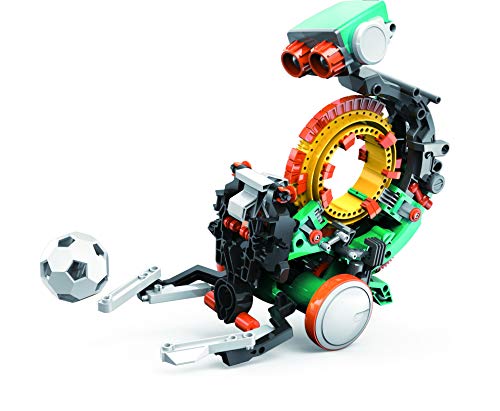
Mech 5 combines mechanical coding with modular play. This mission-based robot invites young engineers to explore mechanical engineering and basic coding concepts by snapping coding buttons onto a central wheel. The design enables actions like throwing, lifting, kicking, and drawing, offering a dynamic, interactive way to learn sequencing and cause-and-effect. The kit supports open-ended exploration, allowing kids to experiment with different actions and configurations to understand how control systems translate into physical movement.
Learning Resources Botley The Coding Robot

Botley offers screen-free coding for early learners. This robot teaches programming fundamentals through remote control and simple coding sequences. Suitable for children ages 5 and up, Botley grows with skill level, featuring 80-step programming possibilities, loops, and obstacle detection for increasing challenge. Ready to use out of the box, Botley emphasizes hands-on logic, problem-solving, and sequencing without screens, making it a strong option for families seeking traditional computational thinking in a tangible form.
Snap Circuits Explore Coding Kit

Snap Circuits Explore Coding blends classic circuits with modern coding concepts. It offers over 30 parts to build electrical projects while introducing coding through the optional app that lets kids control lights, sounds, and a motor after linking with the kit. This hybrid approach helps bridge tactile circuit-building with digital control, providing a broader understanding of how code interacts with hardware. The kit also serves as a versatile gift that can grow with a child’s curiosity and curiosity about programming and electronics.
ELEGOO UNO R3 Smart Robot Car Kit V4

Aside from the five chosen products, this kit appears in the catalog as a robust Arduino-based option for older kids. It includes 24 modules for robotics learning, such as obstacle avoidance and line tracing, with the ability to control via Android or iOS devices. While it may push beyond basic eight-year-old capabilities, it illustrates the progression path from simple circuits to programmable robotics, offering a future learning horizon for curious kids who outgrow beginner kits.
BeAndge STEM Robotics Kit

This BeAndge kit packs six different STEM activities into one box, including a reptile robot, a balance car, a bubble machine, a fiber lamp, and a buzzer game. Designed to engage kids aged 8-13, it encourages creative problem-solving and hands-on experimentation. While it requires some adult assistance for setup, the variety appeals to diverse interests—science, engineering, and maker-style projects—making it a versatile gift choice for curious learners seeking multiple avenues of exploration.
Buying Guide: Key Purchase Considerations And Comparisons
When selecting coding toys for eight-year-olds, consider a balance between hands-on construction, age-appropriate coding concepts, and future learning potential. Here are factors to weigh:
- Skill progression: Look for kits that start with basic concepts and scale to more complex tasks as skills improve. This helps maintain engagement over time.
- Screen-use balance: Some options are fully screen-free, while others blend physical builds with app-based control. Choose based on your child’s preference and household guidelines.
- Hands-on vs. guided learning: Kits with clear, illustrated manuals support independent exploration, while those with open-ended challenges encourage creativity and problem-solving collaboration.
- Durability and safety: Check snap-together systems and non-toxic components suitable for younger builders. A sturdy setup reduces frustration and improves learning time.
- Learning outcomes: Consider whether the kit emphasizes electrical basics, robotics, mechanical engineering, or programming logic to align with your child’s interests.
- Expansion potential: Some kits pair with additional parts or other sets to broaden the learning path. This can extend the life and value of the purchase.
In comparative terms, screen-free bots like Botley or the Sillbird solar robot emphasize physical engineering and renewable energy concepts, while Snap Circuits kits provide a straightforward path into circuitry with abundant projects. For children who enjoy coding-specific play, {Explore Coding} and mechanical coding systems like Mech 5 offer a bridge to computational thinking. Parents may weigh the need for collaborative, family-building activities versus independent exploration when selecting the best match for their child.