Best Developmental Toys for 18 Month Olds: Fine Motor, Sorting and More
Choosing developmentally appropriate toys for 18-month-olds supports early motor skills, hand-eye coordination, and basic problem-solving. The following selections focus on fine motor activities, sorting, color recognition, and cause-and-effect play—essentials for toddlers taking their first learning steps. Each toy offers engaging, safe design tailored to little hands, with varying levels of complexity to grow with the child.
| Product | Brand | Key Benefit |
|---|---|---|
| Spike The Fine Motor Hedgehog | Learning Resources | Fine motor precision, color and pattern recognition |
| Kidoozie Ball Drop | Kidoozie | Cause-and-effect, motion tracking, sensory play |
| PEBIRA Sorting & Stacking Toys | PEBIRA | Color and shape differentiation, hand-eye coordination |
| Farmer’s Market Color Sorting Set | Learning Resources | Color sorting, language development through pretend play |
| GOPO TOYS Montessori Toys | GOPO TOYS | Problem-solving, stacking and sorting with non-toxic materials |
The following five products are selected for their strong developmental value, clear age suitability, and engaging play patterns that align with typical 18-month milestones.
Spike The Fine Motor Hedgehog
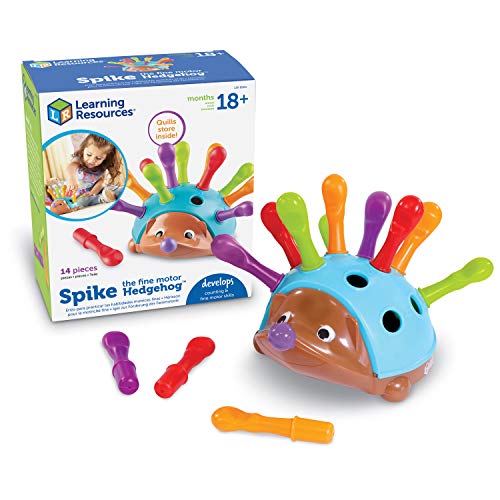
This Learning Resources toy targets essential fine motor development by guiding toddlers to remove and place quills into the hedgehog’s back. The bright colors and textured pieces help build hand muscles and hand-eye coordination. It scales with growth, supporting basic colors, counting, and pattern recognition as children reach preschool years.
Kidoozie Ball Drop

The Kidoozie Ball Drop offers multiple levels to boost fine motor control as kids maneuver balls down a colorful tower. The setup reinforces cause-and-effect understanding and features rattling sounds that attract attention during play. The toy emphasizes sensory engagement while encouraging deliberate hand movements and coordination.
PEBIRA Montessori Sorting Puzzle

PEBIRA’s wooden sorting and stacking puzzle includes 20 pieces across five colors and five shapes. It supports color and shape differentiation, basic counting, and early geometry. The wooden design with smooth edges is toddler-friendly, and the large handles facilitate safe grip and dexterity development.
Battat – Cause And Effect Pop-Up Pals
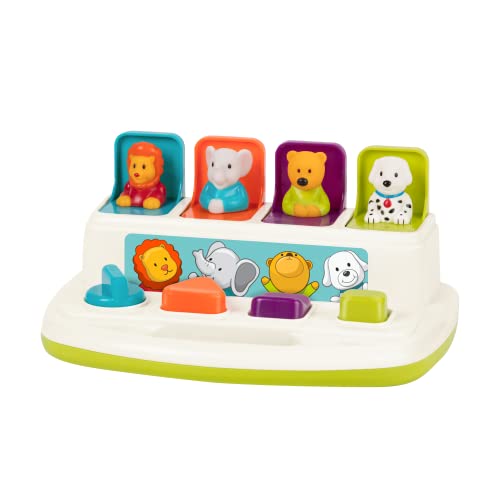
Battat’s pop-up pals toy introduces cause-and-effect concepts through simple button presses that reveal animals. The assortment of buttons—turn, press, flip, slide—adds variety while helping children understand how actions lead to outcomes. It also promotes color recognition and basic animal identification in a playful context.
GOPO TOYS Montessori Shape Sorter
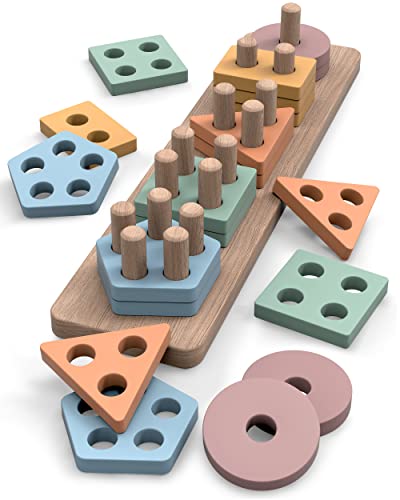
GOPO TOYS emphasizes Montessori-inspired problem solving with wooden shapes, stacking, and matching. The hands-on activities foster independence, early cognitive development, and fine motor skills without screens. The non-toxic materials and rounded edges align with safe play for toddlers, supporting repeatable, calming tasks that build dexterity.
Aigybobo Farm Animals Sorting Set
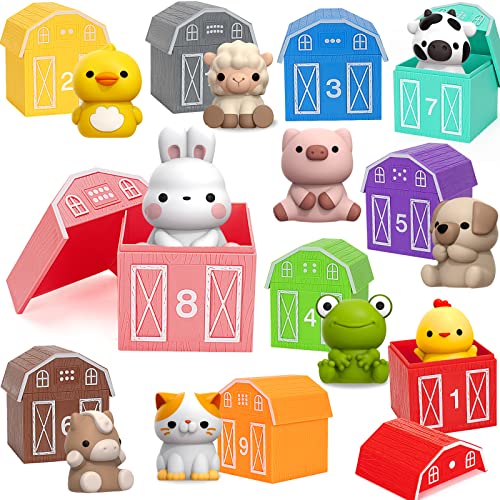
Note: This product is included here for additional context regarding animal-themed sorting and counting activities. It features 20 pieces with farm animals and barns to support pretend play, color matching, and number recognition. It offers flexible role-play opportunities that enhance verbal development and social interaction during playtime.
Buying Guide: Key Purchase Considerations
Age appropriateness and safety are primary considerations. Look for toys labeled for 18 months and up, with smooth edges, non-toxic finishes, and sturdy construction that can withstand rough handling. Pieces should be large enough to prevent choking hazards and designed to fit small hands for easy manipulation.
Developmental targets should guide choices. Fine motor practice via stacking, threading, and manipulating small parts helps hand strength and coordination. Color and shape sorting supports early math concepts. Cause-and-effect toys build cognitive resilience by teaching predictable outcomes.
Complexity levels should match growth. Some toys offer easy single-step tasks suitable for early toddlers, while others provide progressively challenging activities to sustain engagement as skills advance. Look for toys that can evolve with the child’s abilities, avoiding early obsolescence.
Durability and age-appropriate materials matter. Wooden toys often offer lasting durability and tactile appeal, while plastic options can introduce varied textures and sounds. Ensure finishes are safe and comply with safety standards such as ASTM and CPSIA where applicable.
Play value and versatility are beneficial. Toys that combine multiple skills—sorting, counting, memory, and pretend play—can deliver richer learning experiences in a single purchase. Consider how a toy can support social play with caregivers or siblings to promote language growth.
Portability matters for on-the-go learning. Compact options or modular designs help families pack learning into car rides, restaurants, or travel. Look for simple storage solutions to encourage tidy, repeatable play sessions.
Availability and value should be weighed. Check for solid warranty or return policies and consider how often new activities will be added to a play routine. A mix of sensory-rich and puzzle-based toys can provide a well-rounded development toolkit for toddlers.