Best Discovery Kits for Kids: Fun Science Experiments and Hands-on Learning
Discovering science becomes exciting when kids can touch, build, and explore. The following five discovery kits for kids offer a mix of chemistry, biology, engineering, and environmental projects designed to spark curiosity while developing critical thinking and problem-solving skills. Each kit includes age-appropriate experiments, engaging activities, and clear instructions to guide young scientists through hands-on learning at home or in the classroom.
| Product | Brand | Format | Key Focus |
|---|---|---|---|
| NATIONAL GEOGRAPHIC Science Magic Kit | Blue Marble | Experiments + Magic Tricks | Science principles with magic tricks |
| Creativity for Kids Grow ‘N Glow Terrarium Kit | Creativity for Kids | Terrarium building | Botany, ecosystems, glowing effects |
| National Geographic Craft Kits for Kids – Crystal Growing Kit | Blue Marble | Crystal growth craft | Geology, crystals, color design |
| National Geographic Light Up Terrarium Kit for Kids | Blue Marble | Terrarium with USB light | Plant science, habitat design |
| Discovery Model Engine Building Kit | Discovery | Working model engine | Engineering, mechanics |
NATIONAL GEOGRAPHIC Science Magic Kit

The Science Magic Kit combines more than 100 experiments with magic tricks to teach core science concepts through entertaining demonstrations. Activities include bending metal with water, vanishing test tubes, and floating coins, all designed to be performed as magic tricks. The kit supplies materials for 20 science-magic tricks and includes a wand and gloves so kids can perform like a real magician while learning physics and chemistry. This dual approach keeps young learners engaged while reinforcing scientific thinking and curiosity.
Creativity for Kids Grow ‘N Glow Terrarium Kit

This terrarium kit lets kids explore botany and ecology in a hands-on format. The set includes a plastic terrarium jar, potting mix, chia and wheatgrass seeds, and glow-in-the-dark figurines to illuminate the miniature ecosystem. Kids plant, water, observe growth, and then glow it at night with glow-in-the-dark accents. The project encourages understanding of plant life cycles, habitats, and the basic science behind ecosystems, all wrapped in a creative craft experience.
National Geographic Craft Kits for Kids – Crystal Growing Kit

Grow crystal-covered trees in minutes and customize colors with watercolor pens. The kit includes evergreen, cherry, bonsai, and dragon-blood trees that crystallize within hours, turning “science” into a vivid art project. A genuine geode specimen is included for real-world geology exploration, along with a full-color guide filled with crystal facts. The combination of chemistry-inspired crystal growth and creative coloring makes this kit a well-rounded STEM learning experience.
National Geographic Light Up Terrarium Kit for Kids

Build a miniature dinosaur habitat with real plants and gemstones. The terrarium features a wide-mouth design for easy setup and a panoramic view to monitor the evolving habitat. The USB-powered light eliminates the need for batteries and doubles as a gentle night light. This kit emphasizes plant care, habitat design, and observation skills while delivering a visually engaging science display suitable for home or classroom use.
Discovery Model Engine Building Kit
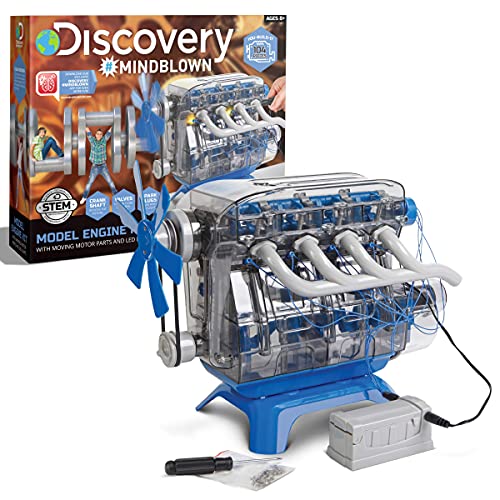
The Discovery Model Engine Building Kit challenges kids to assemble a four-cylinder combustion engine complete with pistons, belts, LED lighting, and a working mechanism. The kit supports development of critical thinking, mechanical reasoning, and fine motor skills as children follow steps to assemble and observe how an engine design translates into motion. It’s a robust engineering experience that appeals to curious minds and budding tinkerers.
Buying Guide
Key purchase considerations help match a kit to a child’s interests and learning stage:
- Age and skill level: Choose kits with age-appropriate complexity and illustrated instructions that guide independent or guided play.
- Learning goals: Identify whether the focus is chemistry, biology, environmental science, or engineering, and pick kits aligned to those topics.
- Hands-on opportunities: Prefer kits that actively require assembly, experimentation, or observation rather than passive activities.
- Safety and materials: Look for non-toxic components, child-safe tools, and clear safety guidelines for curious learners.
- Durability and reuse: Some kits offer one-time experiments while others allow ongoing exploration with refill materials or modular components.
- Educational value: Consider kits that include a learning guide, real-world science explanations, and opportunities to document findings or create a portfolio.
- Engagement and multimedia: Kits pairing experiments with digital content, interactive lessons, or glow features can boost engagement and retention.
When comparing options, balance variety with depth: a mix of introductory kits for younger children and more advanced projects for older kids can support a continuum of STEM learning. Check for compatibility with classroom activities or homeschooling curricula, and consider how each kit fosters curiosity, critical thinking, and problem-solving through guided discovery.