Best Emotion Cards for Autism: Visual Tools for Social Skills
Emotion cards are widely used to support social-emotional learning for children with autism. This guide highlights five well-regarded sets that help kids identify feelings, express themselves, and build communication skills. Each product below is described with its key features, use cases, and how it can fit into therapy or home routines. Readers will find options that include mirrors, double-sided cards, and durable designs to support ongoing use in various settings.
Summary at a glance:
| Product | Brand | Key Benefit | Use Case |
|---|---|---|---|
| Feelings & Emotions Puzzle Cards | Learning Resources | Self-correcting puzzles to match emotion words and faces | Classroom and therapy sessions |
| Emotions Flashcards (Lachilly) | Lachilly | High-frequency words with cartoon illustrations | Vocabulary building, early reading |
| MEROCO Feelings Emotions Cards | MEROCO | Realistic expressions plus a mirror | Emotional awareness and imitation practice |
| 50 Emotions Flash Cards Volume 1 | CreateFun | Ten core emotions with coping skills | Therapy and home learning |
| 40PCS Autism Emotions Cards | ZOIIWA | Portable set with ring and retractable rope | Everyday use and on-the-go learning |
Feelings & Emotions Puzzle Cards

These 48-piece double-sided puzzles pair emotion words with emoji-style faces and action pictures, supporting recognition and verbal expression. The self-correcting design helps children independently verify matches, reinforcing memory and comprehension. A sturdy carry handle doubles as storage, making it easy to bring to therapy or classroom activities. The set supports social-emotional learning by encouraging kids to identify feelings, discuss scenarios, and practice appropriate responses in a playful format.
Lachilly Emotions Learning Flashcards

Offering 28 emotion words across 15 double-sided cards, this set uses cute cartoon imagery to strengthen word association and memory. Double-sided printing reduces cost and weight, making it practical for at-home practice or classroom use. Designed for kindergarten through first grade, it also serves as a classroom resource for building vocabulary, reading readiness, and expressive language, which are core areas in autism-focused language development.
MEROCO Feelings Emotions Cards

This set features realistic child facial expressions to aid recognition and imitation. A mirror enables children to observe and imitate their own expressions, enhancing emotional awareness. The cards cover a broad range of emotions, helping learners discuss joy, anger, sadness, surprise, and more. The durable design supports long-term use in speech therapy, autism support, and special education contexts, with multiple cards per emotional category to ensure practice opportunities.
50 Emotions Flash Cards Volume 1

Created by CreateFun, this set is widely used by speech-language pathologists and therapists. It presents ten core emotions—happy, sad, angry, scared, surprised, tired, stressed, love, excited, and disgust—paired with engaging imagery. The inclusion of coping skills on the reverse side helps learners translate recognition into practical strategies for managing feelings, supporting both emotional literacy and executive function development.
40PCS Autism Emotions Cards

ZOIIWA offers a compact 40-card set with a ring and retractable rope for easy organization and portability. Each card presents a vivid feeling word with corresponding imagery, designed to facilitate quick recognition in home, school, or therapy sessions. The ring binder keeps cards together to prevent loss, while the retractable string enables easy access during on-the-go learning scenarios, making it a practical tool for ongoing emotional education.
Emotions Flash Cards by Teacher Created Resources
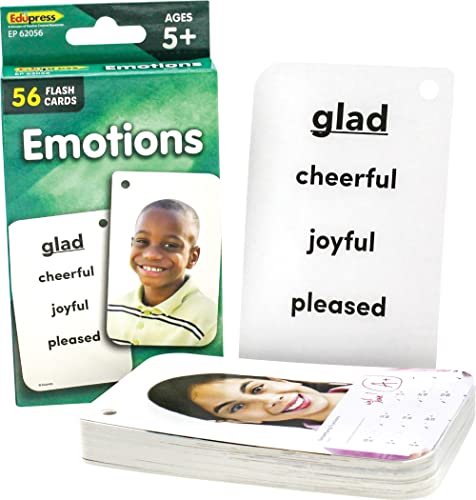
This set includes 56 durable, double-sided cards with teaching tips and hole punching for neat organization and storage. The larger quantity of cards supports broader exploration of emotions in group settings or extended home practice. By combining visual cues with practical tips, it helps educators and parents guide discussions about feelings, coping strategies, and social responses in a structured way.
Emotions Flashcards with Coping Skills

This set emphasizes 50 emotions with cartoon expressions and a separate coping-skills side. It’s designed to help kids identify moods and learn practical strategies to manage them, strengthening emotional regulation. The flip-card format supports interactive therapy sessions and home exercises, promoting conversation, empathy, and self-awareness in children with autism and related needs.
CHEFAN 120 Autism Communication Cards

This comprehensive set delivers 120 cards across three themes, plus flip rings and a retractable buckle for portability. Visual cues help nonverbal and speech-delayed individuals express needs, emotions, and routines. The large quantity supports extensive practice across environments, while the durable design and organizational accessories promote consistent use in therapy and daily life.
Buying Guide: Key Purchase Considerations
- Age and language level: Choose cards that match the child’s reading ability, from picture-based to word-rich sets.
- Durability and format: Look for sturdy materials, double-sided printing, and portable options like rings or boxes for home or school use.
- Emotional range: Ensure the set covers a broad spectrum of emotions, including coping strategies or social situations.
- Therapy alignment: Consider whether the product supports speech therapy, ABA, or social skills groups with guided activities.
- Storage and portability: Cards with rings, pouches, or carry handles help maintain organization and reduce losses during travel.
- Multimodal cues: Sets that combine words with pictures, mirrors, or action scenes can enhance recognition and expression.
- Assess accessibility: Some cards include mirrors or large print; check for features that suit sensory needs and attention spans.