Best Engineering Kits for Kids: Hands-on STEM Toys for Young Builders
Kids learn best when they can explore, experiment, and create. The following engineering kits for kids are designed to spark curiosity, build foundational STEM skills, and provide safe, hands-on experiences. Each selection blends colorful instructions with real-world engineering concepts—from circuits to hydraulics, bridges to solar-powered robots. Whether your child is just discovering electronics or enjoys constructing complex models, these kits offer engaging activities that translate into lasting skills.
| Product | Brand | Key Benefit | Age Range |
|---|---|---|---|
| Snap Circuits Jr. SC-100 | Snap Circuits | 100+ projects introducing basic electronics and circuitry | 8+ |
| Teach Tech Hydrobot Arm Kit | TEACH TECH | Water-powered hydraulic arm with multiple axes for real-world robotics | 12+ |
| Snap Circuits Classic SC-300 | Snap Circuits | Over 300 projects to explore advanced electronics and circuits | 8+ |
| Thames & Kosmos Structural Engineering | Thames & Kosmos | 20 models teaching force, load, compression and tension | 10+ |
| Sillbird 12-in-1 Solar Robot | Sillbird | Solar-powered robots for outdoor STEM play and renewable energy concepts | 8-13 |
Note: This summary highlights five engaging kits that cover a broad range of engineering topics—electrical circuits, hydraulics, structural engineering, and solar power. Each product comes with age-appropriate activities, safety-conscious designs, and abundant opportunities for hands-on learning.
Snap Circuits Jr. SC-100 Electronics Exploration Kit

The Snap Circuits Jr. SC-100 kit offers an accessible entry point into electronics. With more than 100 projects and a full-color project manual, kids can build gadgets using 28 parts in a safe, snap-t together design. The kit emphasizes foundational electrical engineering concepts—conductors, circuits, switches, and sound and light effects. Its modular parts and clear instructions help children visualize how circuits power everyday devices, reinforcing cause-and-effect thinking and problem-solving as projects are assembled and tested. Ideal for ages 8 and up, the set also serves as a flexible educational toy that families can explore together, expanding curiosity beyond single projects.
Teach Tech Hydrobot Arm Kit

Hydraulics bring mechanical engineering to life with the Hydrobot Arm Kit. Designed for ages 12+, this kit guides learners through building a working robot arm powered by water pressure. The arm includes six axes and can rotate up to 270 degrees, offering a hands-on demonstration of multi-axis movement and control without batteries. Learners use levers to manipulate a gripper, which can open, close, or be swapped with suction components to pick up objects. The Hydrobot Arm reinforces core engineering principles such as hydraulic systems, leverage, and motion transfer while providing a tangible, interactive model that motivates experimentation and iterative design.
Snap Circuits Classic SC-300 Electronics Exploration Kit
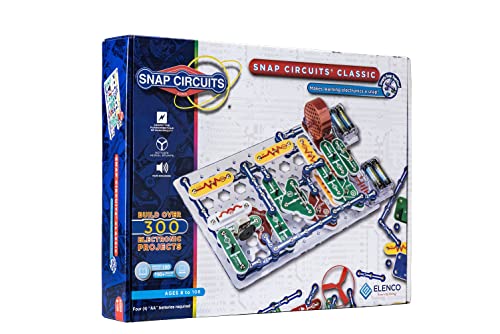
The Classic SC-300 builds on the basic ideas in Snap Circuits, expanding to more than 300 projects and over 60 components. This kit introduces a broader range of circuits—for radios, burglar alarms, doorbells, and more—while maintaining the same safe, snap-together design. The included manual coloration helps young learners map circuit paths and system relationships, encouraging deeper exploration of how power flows through devices. The kit also offers social learning opportunities as kids can collaborate on multi-part projects or challenge friends to complete circuit-based tasks. Suitable for children eight and older, it supports gradual progression from basic to more complex circuitry concepts.
Thames & Kosmos Structural Engineering: Bridges & Skyscrapers

This Thames & Kosmos kit focuses on structural engineering fundamentals. With 285+ interchangeable building pieces and an illustrated 36-page manual, learners build 20 different models to explore force, load, compression, tension, and more. The project-based approach helps children understand how structures respond to different forces, promoting spatial reasoning, planning, and teamwork as students experiment with different configurations and assess stability. The kit suits curious minds aged around 10 and up, providing a bridge between theoretical lessons and practical application through hands-on design challenges.
BeAndge STEM Robotics Kit

The BeAndge STEM Robotics Kit offers a 6-in-1 design featuring a reptile robot, balance car, bubble machine, fiber lamp, and a buzzer wire game. Aimed at ages 8-12, the kit emphasizes family learning and interactive problem solving, with a focus on practical robotics skills. It includes a gift-ready package and encourages students to build, test, and showcase their inventions. Although the parts list requires some additional items for full operation, the project variety supports diverse interests—from mechanical design to basic automation—while fostering collaboration and critical thinking in a home or classroom setting.
Sillbird 12-in-1 Solar Robot

The Sillbird 12-in-1 Solar Robot introduces students to renewable energy concepts through solar power. With 190 pieces and sun-powered operation, kids can build multiple robot configurations that rely on solar energy or alternative indoor light sources. The kit encourages outdoor exploration and environmental science while developing problem-solving and fine motor skills. Its modular design supports a range of ages and skill levels, making it suitable for a family project or classroom use where sustainable engineering principles are demonstrated in a tangible way.
Buying Guide: Key Considerations And Comparisons
- Age appropriateness: Match the complexity of the kit to the child’s age and prior experience. Some sets are ideal for beginners (8+), while others are better suited for older children (12+ or teens).
- Educational focus: Decide whether you want electronics and circuits, hydraulics, structural engineering, or renewable energy. Each topic builds different cognitive skills—logical thinking, spatial reasoning, and scientific literacy.
- Hands-on engagement: Look for kits that offer a broad range of projects and interactive components. Kits with multiple models encourage experimentation and iterative learning.
- Safety and durability: Confirm age-appropriate safety features and robust construction. Snaptogether components reduce risk and simplify assembly for younger kids.
- Expansion and compatibility: Consider whether the kit can be expanded with additional sets or combined with other brands to extend learning opportunities.
- Instruction quality: Colorful manuals and clear diagrams help kids follow procedures independently, enhancing confidence and comprehension.
- Learning outcomes: Some kits emphasize problem-solving and design thinking; others focus on fundamental STEM knowledge. Align outcomes with your educational goals.
- Outdoor vs. indoor play: Solar-powered and hydraulics kits may encourage outdoor exploration, while electronic kits often suit indoor activities. Balance based on available space and weather.
Across these options, parents and educators can select kits that not only entertain but also cultivate core competencies: critical thinking, experimentation, collaboration, and persistence. The best choices blend safe, engaging activities with real engineering principles, helping children build confidence as they turn ideas into tangible creations.