Best Learning Tools for 2 Year Olds: Montessori, Alphabet Puzzles and More
Discover engaging, age-appropriate tools designed to build language, early literacy, and cognitive skills for 2-year-olds. This guide highlights five top toys and learning aids that blend playful interaction with foundational development. From talking flash cards to wooden alphabet puzzles and interactive books, these picks support early speech, memory, and hand-eye coordination while keeping little ones engaged. Each product below draws on proven pedagogical approaches, including Montessori-style learning, multisensory play, and screen-free activities.
| Product | Brand | Key Benefit |
|---|---|---|
| Airbition Talking Flash Cards for Toddlers | Airbition | 224 words with sounds for vocabulary expansion |
| Zeoddler Alphabet Puzzles | Zeoddler | Wooden alphabet puzzles for fine motor and letter recognition |
| LeapFrog Learning Friends 100 Words Book | LeapFrog | 100+ words with interactive sound effects |
| Learning Resources Preschool Flipbook | Learning Resources | Three flipbooks covering numbers, letters, and emotions |
| Learnabee Toys Box Set | Learnabee | Combo of books, flashcards, games, and crafts |
The selections below are organized to help caregivers compare language development, early math readiness, fine motor skills, and imaginative play. All items are suitable for toddlers and aim to minimize screen time while maximizing constructive interaction and parent-child engagement.
Airbition Talking Flash Cards For Toddlers

Airbition’s talking flash cards offer a Montessori-inspired, interactive way to grow vocabulary and comprehension. The set includes 224 illustrated cards featuring animals, vehicles, foods, and everyday objects. The device delivers content in a standard American accent, with a repeat function and five-volume levels to adjust the audio output. This tool is positioned as helpful for speech therapy and autism-related learning, providing a multisensory cue that links sound to image and concept. It’s simple to operate: power on, insert a card, and listen as content plays. The calm, engaging voice helps maintain attention during short, purposeful sessions.
Zeoddler Alphabet Puzzles

Zeoddler Alphabet Puzzles focus on solid wood construction and uppercase letters, fostering fine motor skills and letter recognition. The natural wood design provides a sturdy grip for little hands, supporting hand-eye coordination as children manipulate pieces to complete the alphabet. The puzzles offer a hands-on route to early literacy and critical thinking, with a size and thickness designed for easy grasping. As a versatile preschool activity, they encourage repeated play that reinforces memory and concentration while integrating basic letter knowledge into playtime.
LeapFrog Learning Friends 100 Words Book
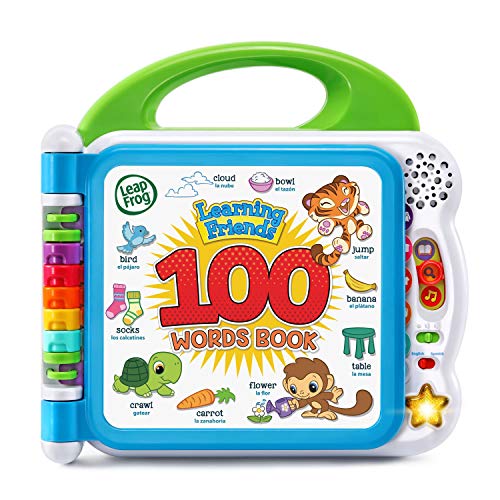
LeapFrog’s Learning Friends 100 Words Book introduces a curated set of everyday terms across themes like pets, colors, foods, and activities. The book features interactive touch responses: tapping pages plays words, sounds, and a short song, with a light-up star button triggering a word and a friendly theme tune. This format supports auditory and tactile learning, encouraging word association and early language patterns. The content is designed to be age-appropriate and engaging, helping toddlers build a growing lexicon through exploration and familiar contexts.
Learning Resources Preschool Flipbook

The Preschool Flipbook set from Learning Resources provides three spiral-bound books that target key early skills: counting and numbers, letters and beginning sounds, and emotions for social-emotional learning. The flipbook format supports sequence recognition and memory through short, digestible reads. Each section encourages language use, prediction, and verbal labeling, aligning with typical early childhood curricula. The compact and durable design makes it suitable for classroom centers or home use, allowing caregivers to tailor short, focused sessions that reinforce classroom learning.
Learnabee Toys Box Set

Learnabee’s box set combines several engaging learning components for two-year-olds: premium board books that cover manners, alphabets, numbers, and colors; brain-boosting flashcards; a matching Where’s Baby game to develop logical thinking; a reward chart to reinforce positive behavior; and a sticker craft set that encourages creativity. This multi-activity kit supports diverse developmental domains—language, math readiness, cognitive flexibility, and social-emotional learning—within a cohesive, screen-free package. It’s designed as an all-in-one gift that encourages play-based exploration and routine-building in daily learning moments.
Buying Guide: Key Considerations For 2 Year Old Learning Tools
Selecting effective tools for toddlers involves balancing developmental targets, safety, and engagement. Consider the following perspectives to optimize learning outcomes:
- Developmental fit: Choose toys that target language development, early math concepts, fine motor skills, and social-emotional growth. Multisensory options (visuals, sounds, textures) tend to hold attention longer and support memory encoding.
- Montessori principles: Tools that encourage self-directed exploration, open-ended play, and gentle guidance are often most effective for toddlers. Look for items that allow repeated use without passive consumption.
- Durability and safety: Wooden puzzles and board books typically offer durability for rough toddler handling. Check for non-toxic materials and secure parts.
- Screen-free focus: For 2-year-olds, hands-on activities that minimize screen time are generally recommended to support healthy attention spans and physical development.
- Progression and variety: A mix of vocabulary-focused, letter-focused, and concept-focused tools helps cover different learning domains. Rotating items can maintain interest and prevent overstimulation.
- Parental involvement: Toys that facilitate caregiver-child interaction can boost learning. Look for features that invite guided storytelling, prompting questions, and shared activities.
- Portability and setup: Compact, easy-to-use products are better for day trips and short sessions. Cards, puzzles, and flipbooks should be simple to operate for independent use with occasional adult support.
These considerations help structure a developmentally appropriate, play-based learning routine. The five products highlighted above each emphasize practical, child-centered approaches that align with early childhood education goals while remaining engaging and safe for everyday use.