Best Learning Towers for Kids: Safe Kitchen Step Stools for Toddlers
Finding the right learning tower for kids helps toddlers reach counters safely while encouraging independence. This guide highlights top options designed for stability, safety, and growth. Each pick supports early cooking experiences, crafts, or bathroom routines, with features like anti-tip designs, removable railings, and adjustable heights. Below, you’ll find a quick product snapshot and detailed sections to compare build quality, safety certifications, and versatility for 18 months through 3 years old.
Summary of chosen products:
| Product | Brand | Key Feature |
|---|---|---|
| COSYLAND Kids Kitchen Step Stool | COSYLAND | |
| Woodure 4-in-1 Toddler Kitchen Step Stool | Woodure | |
| COSYLAND Toddler Standing Tower Adjustable Height | COSYLAND | Three levels, removable anti-drop board, high stability |
| HBTower Kids 2 Steps Step Stool | HBTower | Aluminum construction, no assembly, anti-drop railing |
| INNOD Kitchen Step Stool for Toddlers | INNOD | Three adjustable heights, solid wood and steel |
COSYLAND Kids Kitchen Step Stool

The COSYLAND unit emphasizes child safety with CPC certification and a patented anti-drop railing design. Its four-sided rails provide sturdy support, and the A-shaped frame reduces tipping risk. The stool is built from natural materials with a child-safe finish and can safely support toddlers up to 150 lbs. A removable railing offers extra fall protection as needed, making it suitable for 18 months to 3 years old.
Woodure 4-in-1 Toddler Kitchen Step Stool
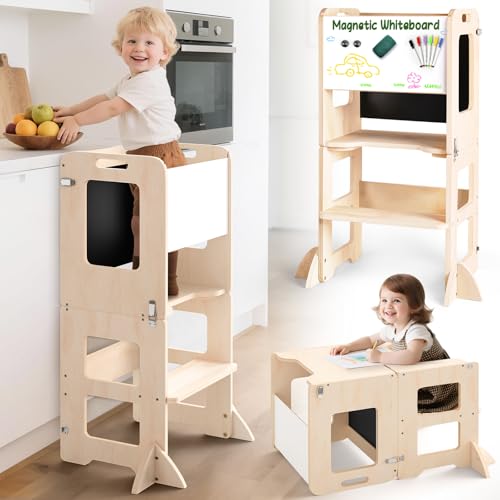
Woodure’s 4-in-1 design blends a foldable learning tower with a chalkboard/whiteboard surface, promoting creativity during stand-up activities. The sturdy A-frame minimizes tipping, with an extra removable safety bar to enhance stability. Its versatility is complemented by a quick transition into a small table and chair setup, expanding its use for meals, drawing, or toddler-sized projects as children grow from 1 to 3 years old.
COSYLAND Toddler Standing Tower Adjustabe Height

This COSYLAND model focuses on long-term usability with three height levels and a removable anti-drop board. Its design prioritizes safety via a stable base and reinforced feet. The tower is designed to rise with the child, supporting continued use as they reach different kitchen heights or participate in family cooking, washing up, and other activities at counter height.
HBTower Kids 2 Steps Step Stool
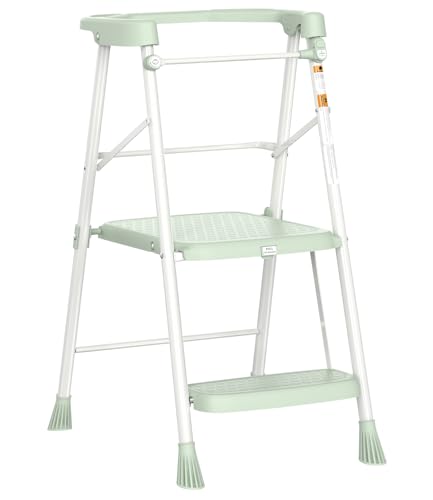
HBTower offers a no-assembly, ready-to-use design with an “A” frame for stability and non-slip feet. The countertop features non-slip bumps and four rails for comprehensive support. The lightweight aluminum construction balances durability with portability, making it easy to move between kitchen islands or bathrooms as kids grow.
INNOD Kitchen Step Stool for Toddlers

INNOD combines wood and steel for a sturdy, stable platform with three adjustable height settings. The design emphasizes durability and safety, reducing cracking and instability. Its height adaptability makes it suitable for toddlers from roughly 18 months up to 3 years old, ensuring continued utility as children grow and their kitchen activities expand.
Buying Guide
- Safety certifications and certifications: Look for CPC or similar government-backed certifications that indicate adherence to child safety standards, especially for materials and construction.
- Stability and anti-tip design: Prioritize an A-frame or four-sided rail system with non-slip feet to minimize tipping and ensure secure footing on different floor surfaces.
- Height adjustability: Choose towers with multiple height settings to align with your child’s growth and kitchen counter heights. This fosters longer use and better ergonomics for cooking and learning activities.
- Removable safety rails and anti-drop features: Rails that can be removed or reconfigured allow gradual independence while maintaining safety during early stages.
- Versatility and learning features: Some models include boards or surfaces for drawing, or transform into small tables and chairs, increasing the stool’s value as a learning space beyond kitchen tasks.
- Durability and materials: Natural wood or solid composite materials with smooth finishes reduce scratches, and a sturdy base with reinforced feet improves longevity and safety with everyday use.
- Weight capacity: Ensure the product supports the child’s current weight and a reasonable future limit to avoid early replacement.
- Assembly requirements: Some models arrive ready to use; others may require assembly. If you prefer quick setup, check for no-assembly-needed options.
- Maintenance: Look for finishes that are easy to wipe clean, especially since little ones use these near kitchens and craft areas.
In selecting a learning tower, balance safety certifications, stability, and adaptability with the child’s age, height, and daily activities. The listed options provide a range of features—from strict safety rails and CPC certification to foldable designs and integrated boards—so caregivers can choose a tower that aligns with their family’s routines and growth trajectory.